Cannabinoids and homeostasis are closely linked in scientific research because the endocannabinoid system (ECS) plays an important role in maintaining the body’s internal balance. Homeostasis refers to the body’s ability to regulate and stabilize internal conditions despite changes in the external environment. Researchers continue to study how naturally occurring cannabinoids interact with the ECS and […]
Tag Archives: CB2 receptors
Cannabinoids pharmacology is the study of how naturally occurring cannabinoids interact with biological systems. As research into hemp-derived cannabinoids continues to grow, scientists are exploring how compounds such as CBD, CBG, CBC, CBN, and other phytocannabinoids interact with cannabinoid receptors, enzymes, and signaling pathways within the body. Pharmacology focuses on the behavior of compounds in […]
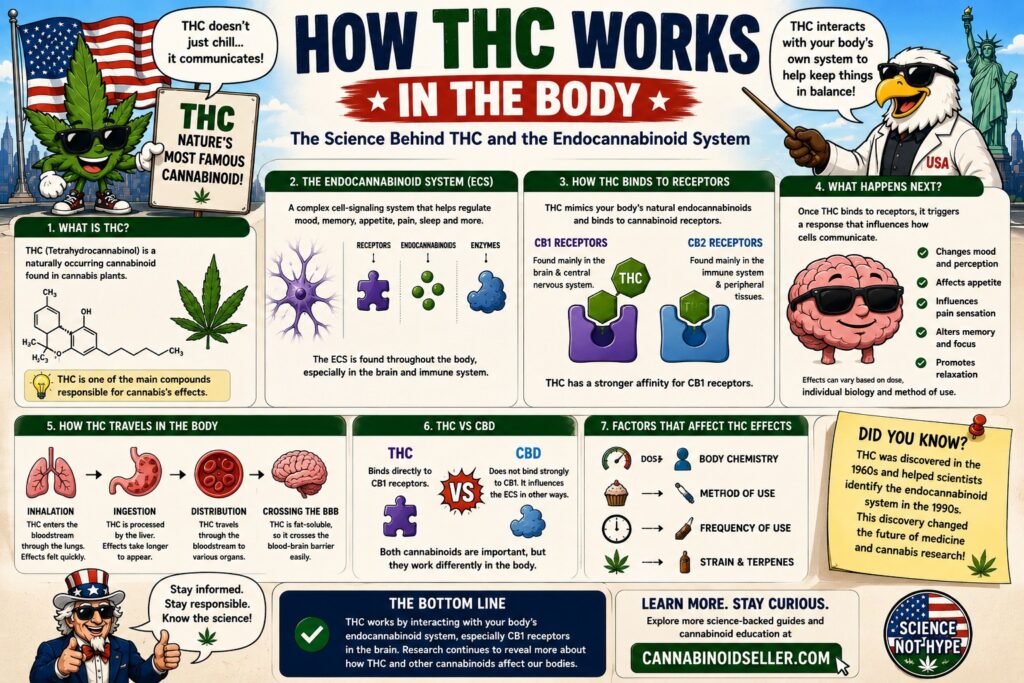
How THC works in the body is one of the most widely studied topics in cannabis science. Tetrahydrocannabinol (THC) is among the best-known naturally occurring cannabinoids found in cannabis plants, and decades of scientific research have helped researchers better understand how it interacts with the body’s biological communication systems. THC does not act alone. Its […]
How cannabinoids affect the nervous system is one of the most researched topics in cannabis science. Scientists have spent decades studying how naturally occurring cannabinoids interact with the body’s communication network, particularly the nervous system and the endocannabinoid system (ECS). These discoveries have transformed our understanding of cannabis biology and continue shaping modern cannabinoid research. […]
How cannabinoids interact with receptors is one of the most important questions in cannabis science. Every cannabinoid found in cannabis, whether naturally occurring or newly discovered, is studied to understand how it communicates with the body’s biological systems. These interactions form the foundation of modern cannabinoid research and have helped scientists uncover one of the […]
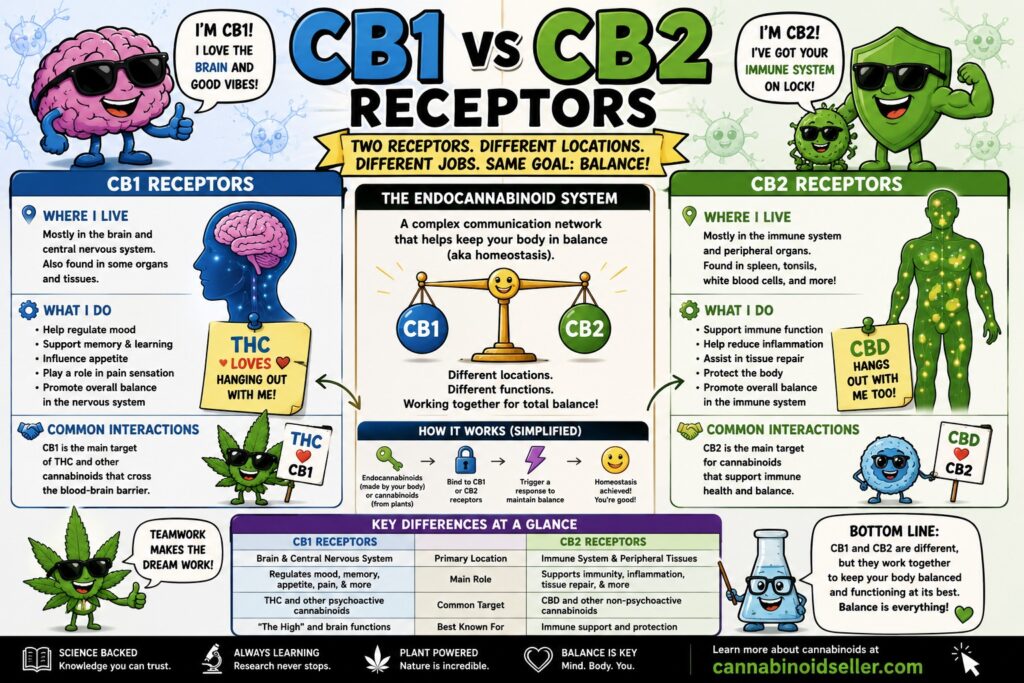
CB1 vs CB2 receptors is one of the most important topics in cannabinoid science because these two receptors form the foundation of the endocannabinoid system. While both receptors help regulate biological communication throughout the body, they differ significantly in their location, function, and interaction with cannabinoids. The discovery of CB1 and CB2 receptors transformed scientific […]
What is the endocannabinoid system? It is one of the most important biological systems discovered in modern science and plays a central role in how the body maintains internal balance. Despite its importance, many people have never heard of it until they begin researching cannabinoids, cannabis science, or the relationship between the body and plant […]
Receptor binding cannabinoids are cannabinoids that interact with specialized receptors throughout the body as part of the endocannabinoid system. Understanding receptor binding is one of the most important aspects of cannabinoid science because it helps researchers explain how cannabinoids communicate with biological systems and influence cellular signaling. As scientists continue discovering new cannabinoids, receptor-binding studies […]
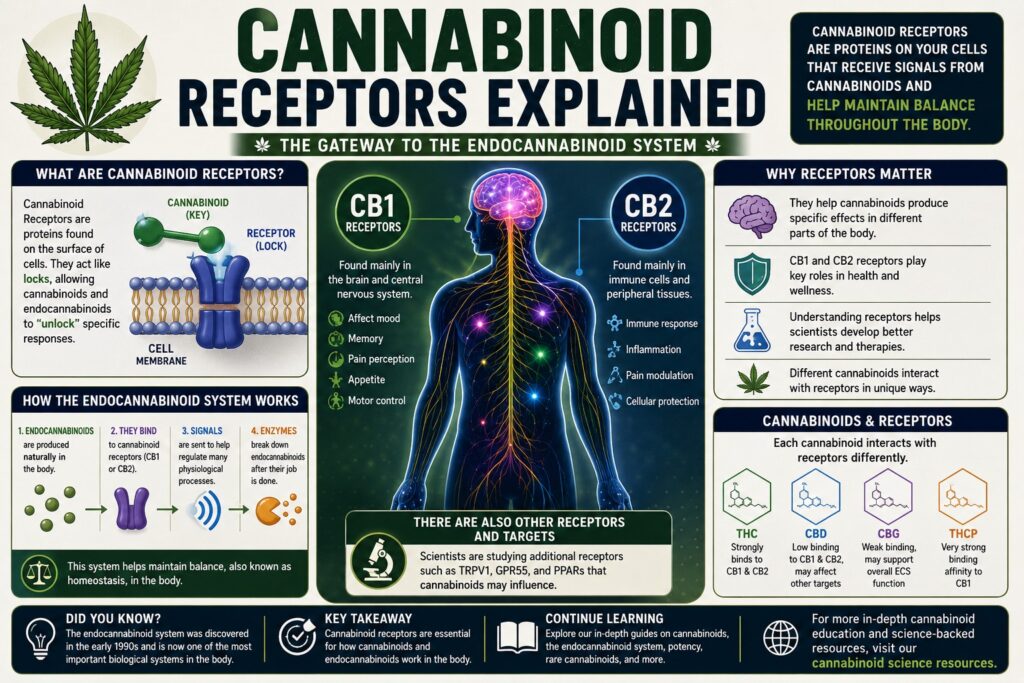
Cannabinoid receptors explained in simple terms means understanding the communication system that allows cannabinoids to interact with the human body. These specialized receptors are a central part of the endocannabinoid system, a biological network that helps regulate numerous physiological processes. Although cannabinoids such as THC, CBD, CBG, and THCP often receive most of the attention, […]
Endocannabinoid deficiency is a scientific theory that has gained increasing attention as researchers continue studying the body’s endocannabinoid system (ECS). Although the concept remains an area of ongoing research, some scientists believe that lower-than-optimal endocannabinoid activity may help explain certain physiological imbalances and health conditions. The endocannabinoid system plays a vital role in maintaining internal […]