
Uncategorized
CB1 vs CB2 Receptors: Understanding the Key Differences in the Endocannabinoid System
Jun
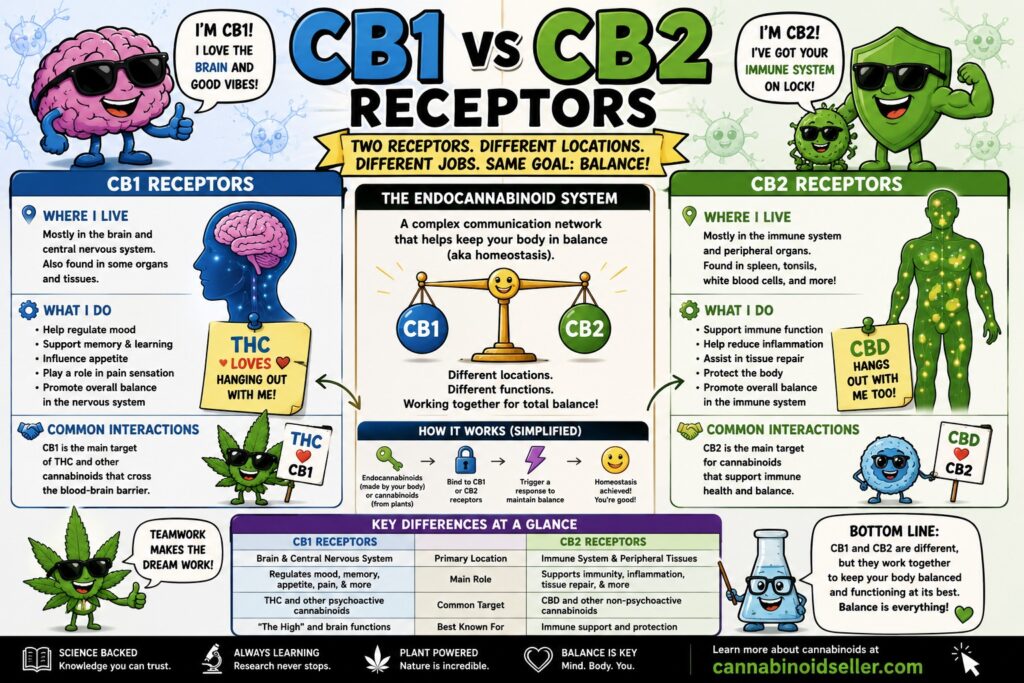
CB1 vs CB2 receptors is one of the most important topics in cannabinoid science because these two receptors form the foundation of the endocannabinoid system. While both receptors help regulate biological communication throughout the body, they differ significantly in their location, function, and interaction with cannabinoids.
The discovery of CB1 and CB2 receptors transformed scientific understanding of cannabis and cannabinoids. Before researchers identified these receptors, scientists knew cannabinoids produced biological effects but could not fully explain how those interactions occurred.
Today, CB1 and CB2 receptors remain central to cannabinoid research and continue helping scientists understand the complex relationship between cannabis compounds and the human body.
Understanding the Endocannabinoid System
To understand the differences between CB1 and CB2 receptors, it is important to first understand the endocannabinoid system.
The endocannabinoid system, commonly known as the ECS, is a biological signaling network found throughout the body. It consists of cannabinoid receptors, naturally occurring signaling molecules called endocannabinoids, and enzymes that regulate their activity.
Researchers believe the ECS plays a critical role in maintaining homeostasis, the body’s natural ability to maintain internal balance.
The discovery of this system remains one of the most significant breakthroughs in modern cannabinoid science.
Readers who are new to this topic can explore our guide explaining what is the endocannabinoid system for a deeper understanding of ECS function and biological communication in https://cannabinoidseller.com/.
What Are Cannabinoid Receptors?
Cannabinoid receptors are specialized proteins located on the surface of cells.
These receptors act as communication points that receive chemical signals and help coordinate cellular responses throughout the body. When cannabinoids or endocannabinoids interact with these receptors, signaling pathways become activated and biological communication occurs.
Researchers often compare receptors to locks and cannabinoids to keys. When the appropriate cannabinoid interacts with a receptor, it can influence how signals are transmitted within the endocannabinoid system.
Understanding these receptors is essential for anyone studying cannabis science and cannabinoid biology.
For a broader introduction to cannabinoid signaling, readers may find our article on cannabinoid receptors explained useful.
What Is a CB1 Receptor?
CB1 receptors are among the most abundant receptors found within the human body.
Researchers have identified CB1 receptors primarily within the brain and central nervous system, although they can also be found in other tissues throughout the body.
Because of their location, CB1 receptors have become a major focus of cannabinoid research. Scientists continue investigating how cannabinoids interact with these receptors and how receptor signaling contributes to overall biological communication.
Many well-known cannabinoids demonstrate varying levels of affinity for CB1 receptors, making them important targets for scientific study.
What Is a CB2 Receptor?
CB2 receptors differ from CB1 receptors in both location and function.
Researchers have found CB2 receptors primarily throughout immune-related tissues and peripheral systems. Although they share structural similarities with CB1 receptors, they participate in different aspects of endocannabinoid signaling.
Scientists continue exploring how CB2 receptor activity contributes to communication throughout the body and how cannabinoids interact with these receptors.
As research expands, CB2 receptors remain an increasingly important area of investigation within cannabinoid science.
The Primary Difference Between CB1 and CB2
The most significant difference between CB1 and CB2 receptors is where they are located.
CB1 receptors are concentrated mainly within the brain and central nervous system, while CB2 receptors are more commonly associated with immune-related tissues and peripheral biological systems.
Because these receptors appear in different areas of the body, cannabinoids may interact with them differently depending on their molecular structure and receptor affinity.
This distinction helps explain why cannabinoid research often focuses on receptor-specific interactions and signaling pathways.
How Cannabinoids Interact With CB1 and CB2 Receptors
Different cannabinoids interact with CB1 and CB2 receptors in unique ways.
Researchers often evaluate cannabinoids by studying receptor affinity, which refers to how strongly a cannabinoid binds to a receptor. Some cannabinoids demonstrate stronger affinity for CB1 receptors, while others may interact differently with CB2 receptors or influence signaling through alternative pathways.
Understanding receptor interactions remains one of the most important aspects of modern cannabinoid research.
Readers interested in receptor affinity and cannabinoid signaling can learn more through our guide on receptor binding cannabinoids in https://cannabinoidseller.com/.
THC and CB1 Receptors
THC remains one of the most extensively studied cannabinoids because of its relationship with CB1 receptors.
Research involving THC played a major role in the discovery of the endocannabinoid system and continues contributing to scientific understanding of receptor activity.
Scientists frequently use THC as a reference point when comparing newly discovered cannabinoids and evaluating receptor interactions.
Readers interested in this major cannabinoid can explore our complete guide explaining what is THC and why it remains central to cannabis science.
CBD and Receptor Activity
CBD interacts differently than THC and continues to be one of the most researched cannabinoids in the world.
Rather than strongly binding to CB1 or CB2 receptors, researchers believe CBD influences cannabinoid signaling through multiple pathways. This unique behavior has made CBD an important subject within cannabinoid research.
Readers can learn more about cannabidiol in our guide discussing how CBD works in the body and its relationship with the endocannabinoid system.
Why Receptor Research Matters
The study of CB1 and CB2 receptors has helped researchers better understand how cannabinoids communicate with biological systems.
Without receptor research, scientists would know far less about cannabinoid activity, receptor affinity, and cellular signaling. Every major discovery involving cannabinoids ultimately contributes to a deeper understanding of these receptors and the broader endocannabinoid system.
Research involving major cannabinoids and newly discovered rare cannabinoids continues expanding scientific knowledge about receptor interactions and cannabinoid diversity.
As new cannabinoids are identified, receptor studies remain one of the most valuable tools available to researchers.
Looking Toward the Future
Scientists continue investigating how CB1 and CB2 receptors function and how cannabinoids interact with these biological communication networks.
Advances in molecular biology, biotechnology, and receptor analysis are helping researchers uncover new information about cannabinoid signaling every year. Future discoveries may reveal additional receptor functions, new signaling pathways, and deeper insights into endocannabinoid biology.
As cannabis science evolves, CB1 and CB2 receptors will remain at the center of cannabinoid research.
For readers interested in expanding their knowledge of cannabis compounds and cannabinoid science, explore our Complete Cannabinoid Guide and browse additional cannabinoid science resources for educational content and research-based information.
Conclusion
CB1 and CB2 receptors are the foundation of the endocannabinoid system and play a critical role in biological communication throughout the body.
While CB1 receptors are found primarily within the brain and central nervous system, CB2 receptors are more commonly associated with immune-related tissues and peripheral systems. Understanding these differences helps researchers better understand how cannabinoids interact with biological systems and why receptor signaling remains such an important area of scientific study.
As cannabinoid research continues advancing, CB1 and CB2 receptors will remain essential to understanding cannabis science and the remarkable complexity of the endocannabinoid system.
Frequently Asked Questions
What is the difference between CB1 and CB2 receptors?
CB1 receptors are located mainly in the brain and central nervous system, while CB2 receptors are found primarily throughout immune-related tissues and peripheral systems.
What are CB1 receptors?
CB1 receptors are cannabinoid receptors that play a major role in endocannabinoid signaling and are concentrated within the nervous system.
What are CB2 receptors?
CB2 receptors are cannabinoid receptors found primarily throughout immune-related tissues and peripheral biological systems.
Why are CB1 and CB2 receptors important?
They help regulate communication within the endocannabinoid system and are essential for understanding cannabinoid activity.
Do cannabinoids interact with both receptors?
Yes. Different cannabinoids interact with CB1 and CB2 receptors in different ways depending on their molecular structure and receptor affinity.
Where can I learn more about cannabinoid science?
You can explore additional educational guides, cannabinoid research articles, and science-based resources through cannabinoid science resource https://cannabinoidseller.com/ .
