How cannabinoids interact with receptors is one of the most important questions in cannabis science. Every cannabinoid found in cannabis, whether naturally occurring or newly discovered, is studied to understand how it communicates with the body’s biological systems. These interactions form the foundation of modern cannabinoid research and have helped scientists uncover one of the […]
Tag Archives: cannabinoid receptors
What is HHC? As cannabinoid research continues to expand across the United States, HHC has become one of the newest compounds attracting attention from researchers, consumers, and the cannabis industry. While THC and CBD remain the best-known cannabinoids, HHC has emerged as another compound that scientists continue to investigate as they learn more about cannabis […]
Cannabinoid absorption is one of the most important concepts in cannabinoid science because it helps explain how cannabinoids enter the body and interact with biological systems. While much attention is often focused on cannabinoids themselves, understanding absorption provides valuable insight into how these compounds move through the body and become available for biological activity. Researchers […]
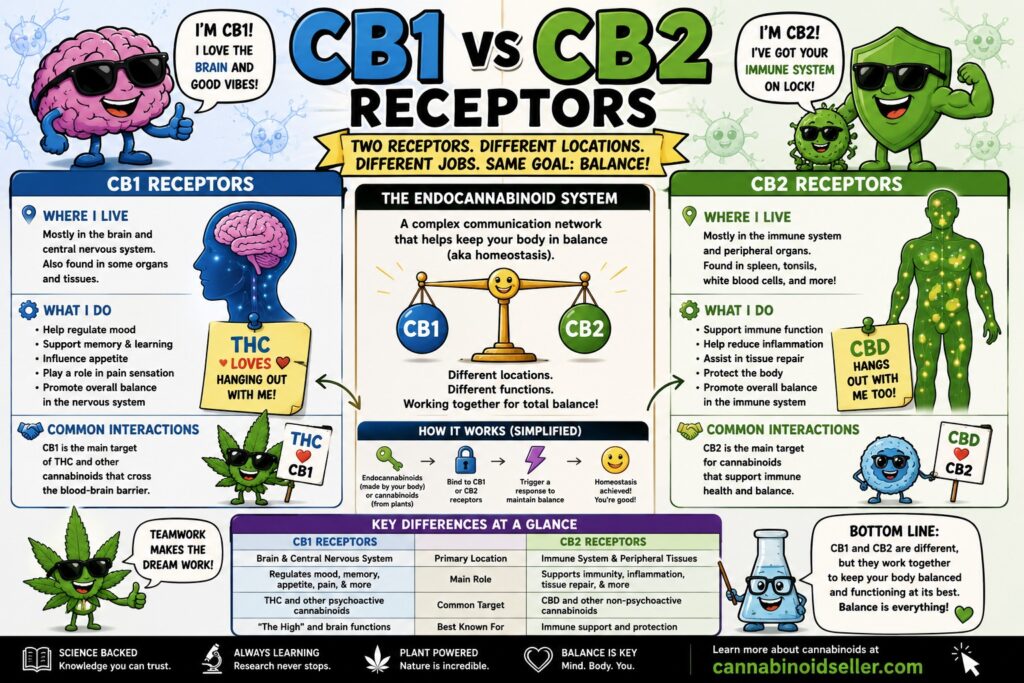
CB1 vs CB2 receptors is one of the most important topics in cannabinoid science because these two receptors form the foundation of the endocannabinoid system. While both receptors help regulate biological communication throughout the body, they differ significantly in their location, function, and interaction with cannabinoids. The discovery of CB1 and CB2 receptors transformed scientific […]
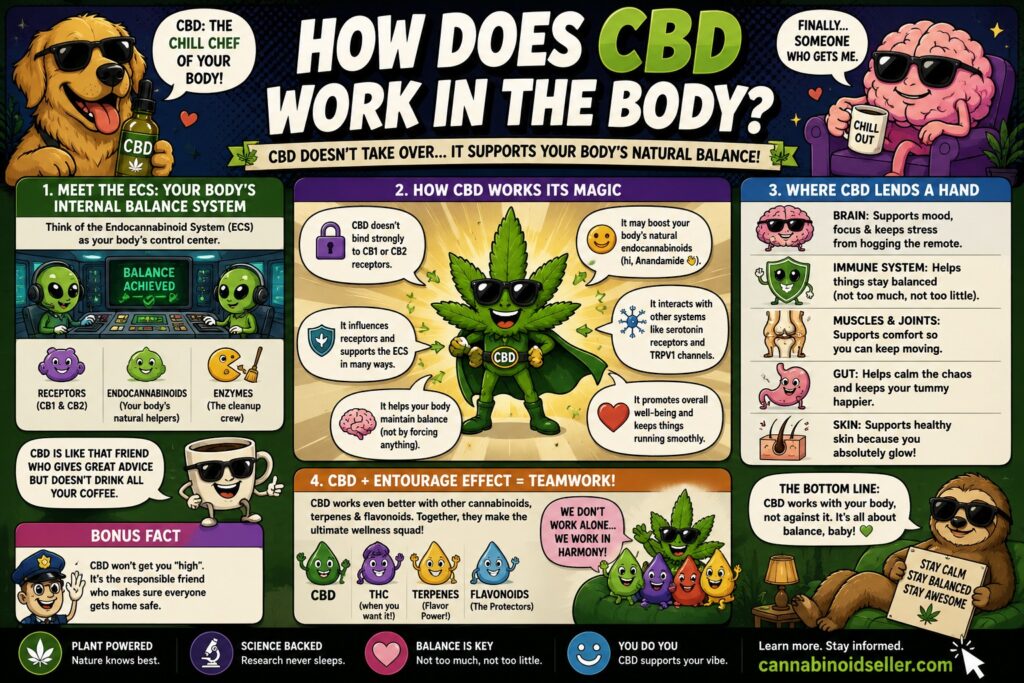
How does CBD work in the body? It’s one of the most common questions people ask when learning about cannabinoids and cannabis science. Although researchers have spent decades studying cannabidiol, scientists continue uncovering new information about how this fascinating compound interacts with biological systems. CBD, short for cannabidiol, is one of the most abundant cannabinoids […]
What is CBD? As interest in cannabinoids continues to grow across the United States, CBD has become one of the most recognized compounds found in cannabis and hemp plants. Researchers have spent decades studying this cannabinoid, making it one of the most extensively investigated compounds in modern cannabis science. CBD, short for cannabidiol, is a […]
What is the endocannabinoid system? It is one of the most important biological systems discovered in modern science and plays a central role in how the body maintains internal balance. Despite its importance, many people have never heard of it until they begin researching cannabinoids, cannabis science, or the relationship between the body and plant […]
Receptor binding cannabinoids are cannabinoids that interact with specialized receptors throughout the body as part of the endocannabinoid system. Understanding receptor binding is one of the most important aspects of cannabinoid science because it helps researchers explain how cannabinoids communicate with biological systems and influence cellular signaling. As scientists continue discovering new cannabinoids, receptor-binding studies […]
What is THC? It is one of the most frequently asked questions in cannabis science, and for good reason. THC is among the most well-known cannabinoids found in cannabis plants and has played a central role in scientific research for decades. Short for tetrahydrocannabinol, THC is a naturally occurring cannabinoid produced by cannabis plants. Researchers […]
Major cannabinoids are the compounds most commonly found in cannabis plants and are often the focus of scientific research. While cannabis contains more than one hundred identified cannabinoids, only a handful occur in significant concentrations and play a prominent role in shaping the plant’s chemical profile. As cannabis science continues to evolve, researchers are learning […]