
Uncategorized
What Is THC? A Complete Guide to the Most Recognized Cannabinoid
Jun
What is THC? It is one of the most frequently asked questions in cannabis science, and for good reason. THC is among the most well-known cannabinoids found in cannabis plants and has played a central role in scientific research for decades.
Short for tetrahydrocannabinol, THC is a naturally occurring cannabinoid produced by cannabis plants. Researchers have studied this compound extensively because of its interaction with the endocannabinoid system and its significance within the broader cannabinoid profile of cannabis.
Although THC is often the first cannabinoid people learn about, it represents only one part of a much larger family of compounds that continue to shape modern cannabis research. Understanding THC provides valuable insight into cannabinoid science and helps explain why cannabis remains one of the most researched plants in the world.
The Discovery of THC
THC became a major focus of scientific investigation during the twentieth century as researchers worked to identify the primary compounds present in cannabis.
The isolation and identification of THC marked a significant milestone in cannabis science. It helped researchers better understand the chemical composition of cannabis and opened the door to decades of scientific exploration.
As analytical technologies improved, THC became the benchmark against which many newly discovered cannabinoids would later be compared.
Today, THC remains one of the most studied compounds in the cannabis plant and continues to play an important role in ongoing cannabinoid research.
Readers seeking a broader introduction to cannabis compounds may benefit from exploring our What Are Cannabinoids guide, which explains how THC fits into the larger cannabinoid family.
Understanding THC’s Role in Cannabis
Cannabis contains hundreds of naturally occurring compounds, including cannabinoids, terpenes, and flavonoids.
Among these compounds, THC is often considered one of the most significant because of its interaction with cannabinoid receptors found throughout the body.
The concentration of THC can vary significantly depending on plant genetics, cultivation methods, environmental conditions, and plant development. Researchers continue studying how these factors influence cannabinoid production and chemical diversity.
Because THC occurs in relatively high concentrations compared to many other cannabinoids, it became one of the first compounds extensively examined by scientists.
How THC Interacts With the Endocannabinoid System
One reason THC has attracted so much scientific attention is its relationship with the endocannabinoid system.
The endocannabinoid system, often referred to as the ECS, is a biological signaling network that helps regulate communication throughout the body. It consists of receptors, naturally occurring endocannabinoids, and enzymes that work together to maintain internal balance.
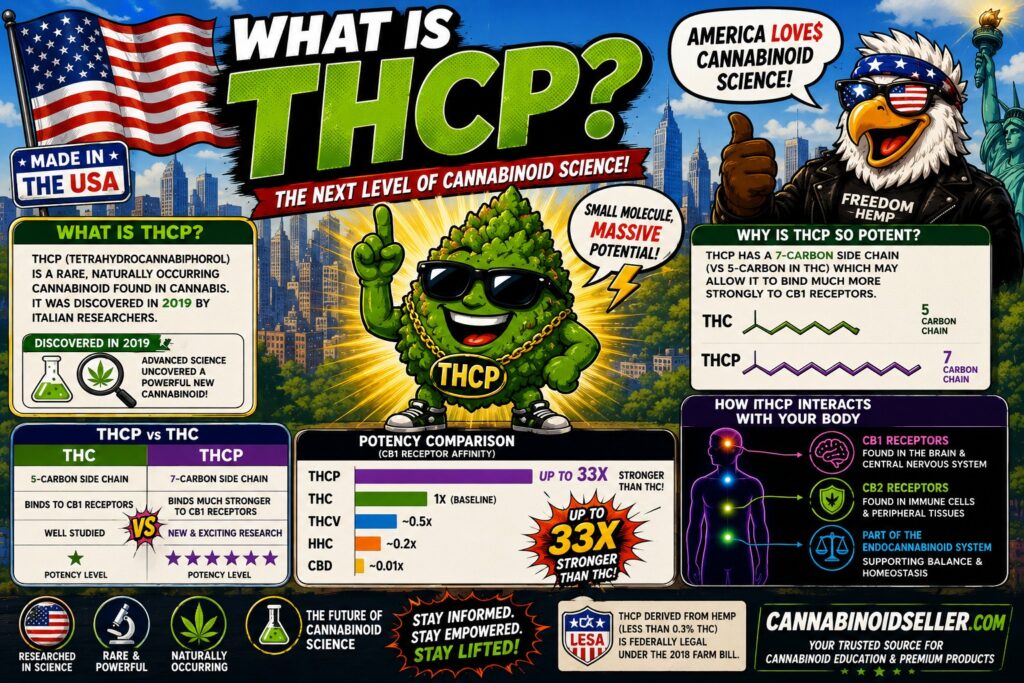
THC interacts primarily with CB1 receptors, which are located largely within the brain and central nervous system. This interaction has made THC an important compound for understanding cannabinoid signaling and receptor activity.
Readers interested in the science behind receptor interactions can learn more in our guide on https://cannabinoidseller.com/.
Why THC Remains Important to Researchers
THC has played a critical role in helping scientists understand how cannabinoids interact with biological systems.
The study of THC contributed directly to the discovery of the endocannabinoid system, one of the most significant breakthroughs in modern cannabinoid research. Without THC research, scientists may never have identified the receptor networks and signaling pathways that are now central to cannabis science.
As research continues, THC remains one of the primary reference points for studying cannabinoid behavior and receptor affinity.
Its importance extends far beyond cannabis itself and continues to influence broader investigations into biological communication systems.
THC Compared to Other Cannabinoids
As researchers have discovered more cannabinoids, THC has become an important reference point for comparison.
Cannabinoids such as CBD, CBG, CBN, THCV, and THCP all possess unique molecular structures and interact differently with cannabinoid receptors. Comparing these compounds helps scientists better understand the diversity of cannabinoid chemistry.
Recent discoveries have highlighted just how complex these comparisons can be. For example, our guide explaining what is THCP examines a cannabinoid that has generated significant interest because of its receptor-binding characteristics.
As new cannabinoids continue to emerge, THC remains an essential benchmark for scientific analysis.
Understanding Potency and Receptor Affinity
One area of cannabinoid research that frequently involves THC is potency analysis.
Scientists often evaluate cannabinoids based on receptor affinity, molecular structure, and biological activity. Because THC has been studied extensively, it serves as a useful reference point when comparing newly discovered cannabinoids.
Readers interested in cannabinoid comparisons can explore our guide to cannabinoid potency levels, which explains how researchers evaluate cannabinoid strength and receptor interactions.
We also examine these concepts further in our article discussing the strongest cannabinoid discoveries identified so far.
THC and the Evolution of Cannabis Science
The importance of THC extends beyond its own chemical characteristics.
Its discovery helped launch modern cannabis research and encouraged scientists to investigate additional cannabinoids that were previously overlooked. This shift eventually led to the identification of compounds that occur in much smaller concentrations.
Today, researchers continue exploring rare cannabinoids that may contribute valuable insights into cannabis chemistry and biological signaling.
The study of THC remains closely connected to these discoveries because it provides a foundation for understanding how cannabinoids function within the cannabis plant.
Looking Toward the Future
Cannabinoid research continues advancing at a remarkable pace.
Researchers are developing new analytical tools, identifying additional cannabinoids, and improving their understanding of receptor interactions. As scientific knowledge expands, THC will likely remain one of the most important compounds used to evaluate cannabinoid activity and biological signaling.
Future studies may reveal new information about THC’s role within cannabis chemistry and its relationship with other cannabinoids.
As interest in cannabinoid science continues growing across the United States and globally, THC will remain a central topic of discussion and research.
For readers interested in learning more about cannabis compounds, plant chemistry, and cannabinoid science, explore our Complete Cannabinoid Guide and browse additional on https://cannabinoidseller.com/.
Conclusion
THC is one of the most recognized and extensively studied cannabinoids found in cannabis plants. Its discovery helped transform cannabis science and contributed directly to the identification of the endocannabinoid system.
Today, THC remains a cornerstone of cannabinoid research and serves as a key reference point for studying cannabinoid diversity, receptor activity, and biological signaling. As scientific understanding continues to evolve, THC will remain one of the most important compounds in modern cannabis research.
Frequently Asked Questions
What is THC?
THC, or tetrahydrocannabinol, is a naturally occurring cannabinoid found in cannabis plants and one of the most studied compounds in cannabis science.
Why is THC important?
THC played a major role in helping researchers discover the endocannabinoid system and understand how cannabinoids interact with biological systems.
How does THC interact with the body?
THC interacts primarily with cannabinoid receptors, particularly CB1 receptors, which are part of the endocannabinoid system.
Is THC considered a major cannabinoid?
Yes. THC is one of the most abundant and extensively researched cannabinoids found in cannabis plants.
How does THC compare to other cannabinoids?
THC serves as a benchmark for comparing newly discovered cannabinoids and studying receptor interactions.
Where can I learn more about cannabinoid science?
You can explore additional educational guides, cannabinoid research articles, and science-based resources through https://cannabinoidseller.com/
