
Tag Archives: cannabinoid biosynthesis

What Is Cannabichromenic Acid? A Guide to CBCA

What Is Cannabichromenic Acid

What is cannabichromenic acid? Cannabichromenic acid, commonly abbreviated as CBCA, is a naturally occurring acidic cannabinoid produced by hemp and cannabis plants. It serves as the precursor to cannabichromene (CBC) and is created during the plant’s natural cannabinoid biosynthesis process. Like other acidic cannabinoids, CBCA exists primarily in fresh cannabis and hemp plants. Over time […]

What Are Phytocannabinoids? Understanding Plant-Derived Cannabinoids

What Are Phytocannabinoids

What are phytocannabinoids? Phytocannabinoids are naturally occurring chemical compounds produced by cannabis and hemp plants. The word “phyto” comes from the Greek word for “plant,” meaning phytocannabinoids are cannabinoids that originate from plants rather than being produced naturally within the human body or synthesized in a laboratory. Scientists have identified more than one hundred phytocannabinoids, […]

Solventless Cannabinoids Extraction: A Guide to Solvent-Free Hemp Processing

Solventless Cannabinoids Extraction

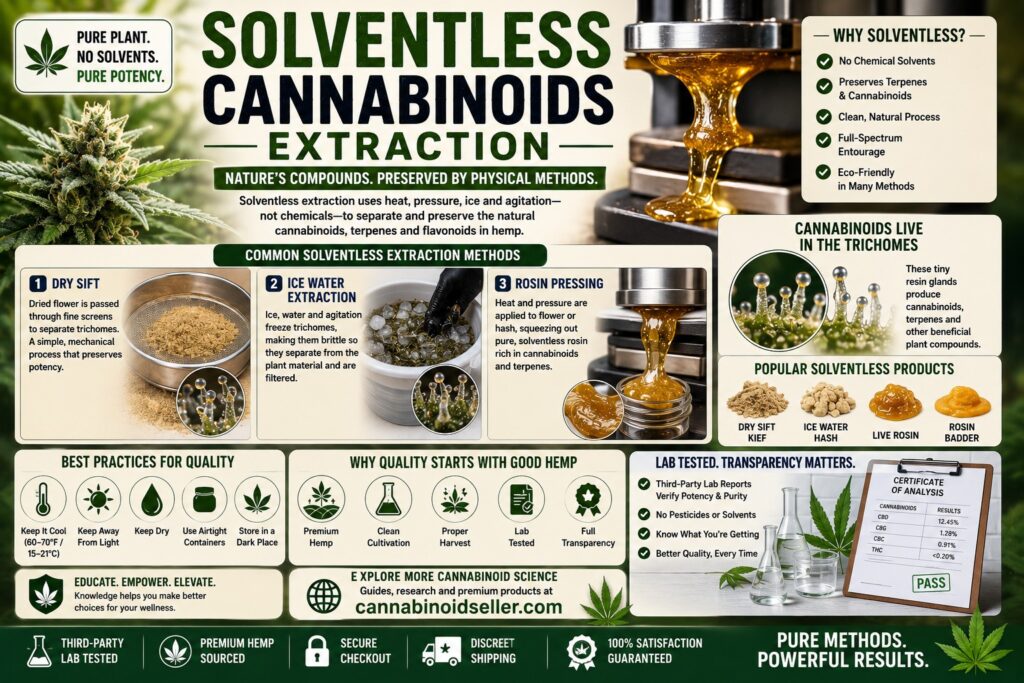
Solventless cannabinoids extraction refers to a group of extraction methods that separate cannabinoid-rich resin from hemp or cannabis plant material without using chemical solvents such as ethanol, butane, propane, or carbon dioxide as the primary extraction medium. Instead, these methods rely on physical processes such as pressure, heat, ice water, or mechanical separation to collect […]

Lipophilic Cannabinoids Explained: Understanding Why Cannabinoids Are Fat-Soluble

Lipophilic Cannabinoids Explained

Lipophilic cannabinoids explained is an important topic for understanding cannabinoid science and cannabis chemistry. The term lipophilic means “fat-loving,” describing substances that dissolve more easily in fats and oils than in water. Most naturally occurring cannabinoids, including CBD, THC, CBG, CBC, and CBN, are lipophilic compounds. This characteristic influences how cannabinoids are extracted from hemp, […]

Cannabinoid Biosynthesis: Understanding How Cannabis Plants Produce Cannabinoids

Cannabinoid Biosynthesis

Cannabinoid biosynthesis is the natural biological process through which cannabis plants produce cannabinoids. Every major cannabinoid—including THC, CBD, CBG, CBC, and many rare cannabinoids—begins its journey through a series of carefully regulated biochemical reactions inside specialized structures known as glandular trichomes. As cannabis research continues expanding across the United States, scientists have gained a much […]

Cannabis Trichomes Explained: Understanding the Tiny Structures Behind Cannabinoid Production

Cannabis Trichomes Explained

Cannabis trichomes explained is an important topic for anyone interested in cannabis science. Trichomes are tiny, hair-like structures that develop on the surface of cannabis plants and play a central role in producing many of the plant’s most valuable natural compounds. Although they are microscopic, trichomes are responsible for synthesizing cannabinoids, terpenes, and several other […]

CBG Cannabinoids: A Complete Guide to Cannabigerol and Its Role in Cannabis Science

CBG Cannabinoids

CBG cannabinoids have become one of the fastest-growing topics in cannabis science as researchers continue exploring the complex chemistry of the cannabis plant. Although THC and CBD are the most recognized cannabinoids, cannabigerol (CBG) has gained significant attention because of its unique role during cannabinoid production. Often referred to as the “mother cannabinoid,” CBG serves […]