
Uncategorized
Solventless Cannabinoids Extraction: A Guide to Solvent-Free Hemp Processing
Jul
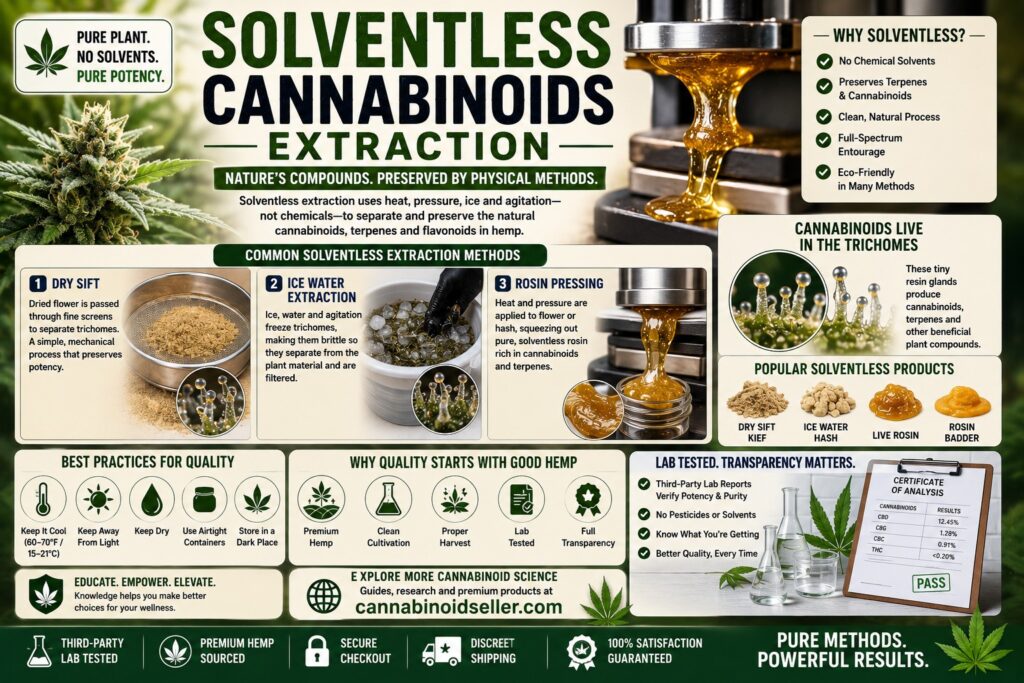
Solventless cannabinoids extraction refers to a group of extraction methods that separate cannabinoid-rich resin from hemp or cannabis plant material without using chemical solvents such as ethanol, butane, propane, or carbon dioxide as the primary extraction medium. Instead, these methods rely on physical processes such as pressure, heat, ice water, or mechanical separation to collect naturally occurring plant compounds.
As interest in hemp-derived cannabinoids continues to grow, solventless extraction has become an important topic in cannabis science and manufacturing. Understanding how these methods work helps consumers learn more about cannabinoid production and product formulation.
This guide explains solventless cannabinoids extraction, common techniques, and why researchers and manufacturers continue to study these processes for more visit https://cannabinoidseller.com/.
What Is Solventless Cannabinoids Extraction?
Solventless cannabinoids extraction is the process of separating cannabinoid-rich trichomes from plant material using physical techniques rather than chemical solvents.
Depending on the method, extraction may involve:
- Heat
- Pressure
- Ice water
- Mechanical agitation
- Fine filtration
The goal is to collect resin glands that naturally contain cannabinoids, terpenes, and other plant compounds.
If you’re new to cannabinoids, start with our guide on What Are Cannabinoids.
Where Cannabinoids Are Produced
Cannabinoids are primarily produced inside glandular trichomes found on hemp and cannabis flowers.
These microscopic resin glands contain:
- Cannabinoids
- Terpenes
- Flavonoids
- Other naturally occurring plant compounds
Learn more in our guide on Cannabis Trichomes Explained.
Common Solventless Extraction Methods
Several solvent-free extraction methods are commonly discussed in cannabis processing.
Dry Sift
Dry sift uses fine mesh screens to mechanically separate trichomes from dried plant material.
Ice Water Extraction
Ice water extraction combines cold water, ice, and filtration bags to separate resin glands from plant material.
Rosin Pressing
Rosin production uses controlled heat and pressure to squeeze resin from flowers or hash without chemical solvents.
Each method relies primarily on physical separation rather than solvent-based extraction.
Advantages of Solventless Extraction
Solventless extraction methods are valued because they:
- Avoid chemical solvents during extraction.
- Preserve naturally occurring plant compounds.
- Use mechanical separation techniques.
- Continue attracting interest from manufacturers and researchers.
The specific characteristics of the final product depend on the plant material, extraction method, and processing conditions.
Solventless Extraction and Cannabinoid Science
Researchers continue studying solventless extraction because it provides insight into:
- Resin gland structure
- Trichome biology
- Cannabinoid preservation
- Terpene profiles
- Processing techniques
These studies contribute to a broader understanding of cannabis chemistry and plant biology.
Understanding Cannabinoid Biosynthesis
Cannabinoids are naturally produced before extraction occurs.
Inside glandular trichomes, specialized enzymes create cannabinoid precursor compounds through cannabinoid biosynthesis.
Learn more through:
- Cannabinoid Biosynthesis
- Major Cannabinoids
Product Quality and Transparency
When comparing hemp-derived cannabinoid products, look for:
- Third-party laboratory testing
- Clear ingredient information
- Transparent manufacturing practices
- Product descriptions
- Batch identification
Independent laboratory reports help consumers understand product specifications.
Continue Learning About Cannabinoids
Expand your knowledge with these educational resources:
- What Is CBD
- What Is Cannabinol
- What Is CBC
- CBG Cannabinoids
- Lipophilic Cannabinoids Explained
- Cannabinoid Stability and Degradation
These articles provide valuable information about hemp-derived cannabinoids and cannabis science.
Why Solventless Extraction Matters
Solventless extraction continues to play an important role in cannabis research and manufacturing because it demonstrates how physical processes can separate naturally occurring plant compounds from hemp material.
Understanding these methods helps consumers better appreciate the science behind cannabinoid production and modern hemp processing.
Visit https://cannabinoidseller.com/ to explore educational articles covering cannabinoids, hemp science, cannabis biology, extraction methods, and emerging research.
Conclusion
Solventless cannabinoids extraction uses physical techniques such as heat, pressure, ice water, and mechanical separation to collect cannabinoid-rich resin without relying on chemical solvents during extraction. As research continues expanding, solventless methods remain an important area of study within cannabis science and hemp processing.
Frequently Asked Questions
What is solventless cannabinoids extraction?
It is the process of separating cannabinoid-rich resin from hemp or cannabis plant material using physical methods rather than chemical solvents.
What are common solventless extraction methods?
Common methods include dry sift, ice water extraction, and rosin pressing.
Where are cannabinoids produced?
Cannabinoids are primarily produced inside glandular trichomes found on hemp and cannabis flowers.
Why is solventless extraction important?
Researchers study solventless extraction because it provides insight into cannabinoid preservation, trichome biology, and physical extraction techniques.
Should I look for laboratory testing?
Yes. Third-party laboratory reports provide important information about product transparency and specifications.
Where can I learn more about cannabinoids?
Visit https://cannabinoidseller.com/ to explore educational guides, cannabinoid research articles, and hemp science resources.
