
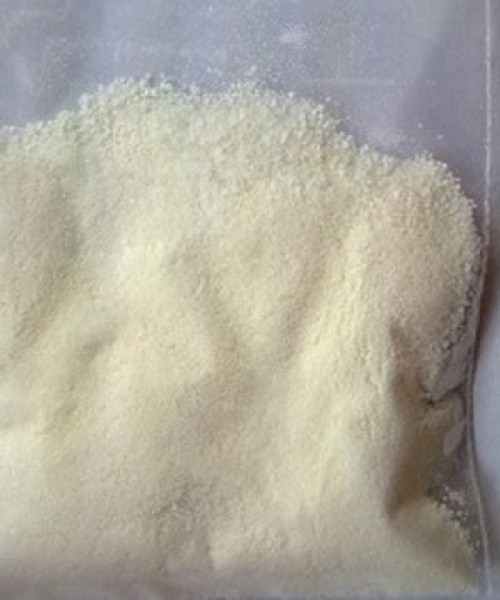


25C-NBOH: Psychedelic Pharmacology, 5-HT2A Receptors, Effects and Types of Psychedelics
What Is 25C-NBOH?
25C-NBOH is an N-benzyl-derived phenethylamine associated with the broader family of synthetic serotonergic psychedelics.
It belongs to a research-chemical area containing several closely related NBOH compounds.
These substances are of scientific interest primarily because of their interactions with serotonin receptors, particularly the serotonin 5-HT2A receptor.
That receptor is strongly associated with the characteristic perceptual and cognitive effects of classical serotonergic psychedelics.
25C-NBOH should not automatically be confused with:
- 25CN-NBOH
- 25I-NBOH
- 25B-NBOH
- 25C-NBOMe
- 25I-NBOMe
- LSD
- psilocybin
- mescaline
Closely related names do not establish identical pharmacology.
For additional educational exploration of emerging psychoactive compounds, visit cannabinoidseller.com.
What Are Psychedelics?
Psychedelics are psychoactive substances capable of producing substantial changes in perception, cognition, emotion and subjective experience.
The term most commonly refers to classical serotonergic psychedelics.
These compounds produce many of their characteristic effects through activation of serotonin 5-HT2A receptors.
Well-known examples include:
- psilocybin
- LSD
- mescaline
- DMT
Numerous experimental phenethylamines and related compounds can also produce psychedelic-like effects through serotonergic mechanisms.
“Psychedelic” therefore describes a broad pharmacological and experiential category rather than one particular molecule.
Psychedelic Definition
A useful psychedelic definition is:
A psychoactive substance that substantially alters perception, cognition and conscious experience, with classical psychedelics acting primarily through serotonin 5-HT2A receptor signaling.
The word comes from Greek-derived roots commonly interpreted as referring to “mind manifesting.”
Modern neuroscience provides a more useful scientific framework by examining receptor pharmacology, neural networks and changes in brain signaling.
How Psychedelics Affect the Brain
Serotonin is involved in many processes, including:
- mood
- perception
- cognition
- sleep
- sensory processing
- behavioral flexibility
Classical psychedelics interact particularly strongly with 5-HT2A receptors.
These receptors are expressed in several brain regions, including areas of the cerebral cortex involved in higher-order information processing.
Activation of 5-HT2A receptors can change neuronal signaling and alter communication among brain networks.
However, the neuroscience is considerably more complicated than simply saying psychedelics “increase serotonin.”
25C-NBOH and the 5-HT2A Receptor
NBOH compounds are especially interesting in psychedelic pharmacology because structural modifications can substantially change affinity and selectivity among serotonin-receptor subtypes.
The 5-HT2 receptor family includes:
- 5-HT2A
- 5-HT2B
- 5-HT2C
These receptors have different distributions and physiological functions.
Research involving closely related NBOH compounds demonstrates that apparently small molecular substitutions can dramatically alter receptor affinity, efficacy and selectivity.
Consequently, pharmacological measurements obtained for one NBOH analogue should not automatically be assigned to 25C-NBOH.
25C-NBOH vs. 25CN-NBOH
The distinction between these names is particularly important.
25CN-NBOH contains a cyano substitution and has become an important experimental pharmacological tool.
It is one of the better-characterized NBOH compounds in peer-reviewed research.
25CN-NBOH has demonstrated high selectivity for the serotonin 5-HT2A receptor and has consequently been used to investigate 5-HT2A signaling.
25C-NBOH refers to a different substitution pattern.
Therefore, data such as exact receptor-binding affinity, potency or pharmacokinetic properties reported for 25CN-NBOH should not simply be copied onto 25C-NBOH.
Why 25CN-NBOH Is Important to Psychedelic Research
Although distinct from 25C-NBOH, 25CN-NBOH illustrates why the NBOH chemical family interests neuroscientists.
Research has characterized 25CN-NBOH as a highly selective 5-HT2A receptor agonist.
Scientists have used it to investigate:
- 5-HT2A receptor signaling
- cortical neuronal activity
- psychedelic-like behavior in animal models
- receptor selectivity
- cognitive flexibility
- intracellular signaling pathways
Recent research continues to use the compound as an experimental probe for understanding psychedelic receptor biology.
These studies do not mean that unapproved NBOH compounds have established therapeutic uses in humans.
Types of Psychedelics
Psychedelic compounds can be organized into several broad chemical families.
| Category | Examples | Important feature |
|---|---|---|
| Tryptamines | Psilocin, DMT | Structurally related to serotonin |
| Lysergamides | LSD | Potent serotonergic psychedelic |
| Phenethylamines | Mescaline, DOI | Aromatic phenethylamine framework |
| N-benzyl phenethylamines | NBOH/NBOMe compounds | Synthetic 5-HT2 receptor ligands |
| Experimental serotonergic compounds | Various research ligands | Primarily laboratory research |
Chemical classification matters because two substances can both produce psychedelic effects while having very different pharmacokinetic and receptor profiles.
List of Psychedelics
Commonly discussed psychedelic compounds include:
Psilocybin and psilocin — tryptamine psychedelics associated with certain mushroom species.
LSD — a semisynthetic lysergamide psychedelic.
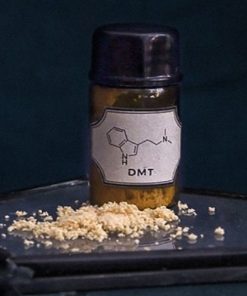
DMT — a naturally occurring tryptamine also studied as a serotonergic psychedelic.
Mescaline — a phenethylamine psychedelic occurring naturally in certain cacti.
DOI — an experimental substituted amphetamine and 5-HT2A receptor agonist frequently used in neuroscience.
NBOH compounds — synthetic N-benzyl phenethylamine derivatives primarily relevant to pharmacological and forensic research.
This is not an exhaustive list.
Thousands of molecules can interact with serotonin receptors, but receptor activity alone does not necessarily establish that a compound produces a classical psychedelic state in humans.
Natural vs. Synthetic Psychedelics
The distinction between natural and synthetic substances does not reliably predict safety.
Naturally occurring examples
These include:
- psilocybin
- DMT
- mescaline
Synthetic or semisynthetic examples
These include:
- LSD
- various substituted phenethylamines
- numerous experimental 5-HT2A agonists
- NBOH derivatives
A naturally occurring compound can still cause significant adverse effects.
Likewise, laboratory synthesis does not automatically make a compound dangerous.
Risk depends on pharmacology, exposure, health status, interactions, purity and other factors.
Psychedelic Compounds and 5-HT2A
One of the strongest recurring findings in psychedelic neuroscience is the importance of the 5-HT2A receptor.
Many classical psychedelics act as agonists or partial agonists at this receptor.
Activation can influence cortical signaling and sensory processing.
However, different psychedelics also interact with additional receptor systems.
Their subjective and physiological profiles therefore cannot be predicted from 5-HT2A affinity alone.
Psychedelics Are Not All the Same
Calling two compounds psychedelic does not make them interchangeable.
Consider:
| Substance | Broad family |
|---|---|
| Psilocybin | Tryptamine-related psychedelic |
| DMT | Tryptamine |
| LSD | Lysergamide |
| Mescaline | Phenethylamine |
| 25C-NBOH | N-benzyl phenethylamine derivative |
| 25CN-NBOH | Experimental selective 5-HT2A agonist |
The compounds differ substantially in chemistry and pharmacology.
Psychedelic Effects
Classical psychedelic experiences can involve changes in:
- visual perception
- color perception
- time perception
- sensory integration
- emotional processing
- thought patterns
- sense of self
- attention
Physiological effects may also occur.
These can include changes in:
- heart rate
- blood pressure
- body temperature
- pupil size
- nausea
- coordination
The profile depends heavily on the particular compound.
Adverse Psychedelic Effects
Possible adverse psychological reactions can include:
- panic
- severe anxiety
- paranoia
- confusion
- disorientation
- frightening perceptual disturbances
Unknown research chemicals create additional uncertainty because their human pharmacology may be poorly characterized.
Severe agitation, seizures, extreme overheating, chest pain or loss of consciousness following an unknown drug exposure requires urgent medical evaluation.
25C-NBOH Safety and Research Limitations
Compared with well-studied classical psychedelics, human data concerning 25C-NBOH are limited.
Important unanswered questions may involve:
- pharmacokinetics
- metabolism
- cardiovascular effects
- neurological toxicity
- drug interactions
- long-term consequences
- human dose-response relationships
Limited evidence should never be interpreted as evidence of safety.
This distinction is particularly important for emerging research chemicals.
NBOH vs. NBOMe Compounds
NBOH and NBOMe compounds are related N-benzyl phenethylamine families but should not be treated as identical.
The substituent on the N-benzyl portion differs.
Structural changes can alter:
- receptor affinity
- receptor selectivity
- efficacy
- metabolism
- pharmacokinetics
Therefore, safety information from one NBOMe compound cannot automatically establish the toxicity of a specific NBOH analogue.
Research Chemical Does Not Mean Clinically Tested
The phrase research chemical is frequently misunderstood.
In legitimate scientific settings, research chemicals are compounds used to investigate biological mechanisms or develop analytical methods.
A research-chemical designation does not establish:
- FDA approval
- pharmaceutical quality
- clinical effectiveness
- safety for human consumption
- accurate labeling
- legal status
Some experimental psychedelics have extensive laboratory literature but almost no controlled human research.
For additional educational information about emerging compounds, visit cannabinoidseller.com.
Buying Psychedelic Drugs Online: Why Online Listings Are Unreliable
Searches for buy psychedelic drugs online create significant safety and legal concerns.
An online listing cannot establish that an unknown material contains the advertised psychedelic.
Unregulated products can be:
- mislabeled
- substituted with another compound
- contaminated
- incorrectly concentrated
- mixed with additional psychoactive substances
Legal status also varies by substance and jurisdiction.
This article therefore does not provide vendors, purchasing instructions or methods for obtaining controlled or unapproved psychedelics.
For legitimate scientific research, researchers rely on appropriately authorized institutions, regulated suppliers and applicable controlled-substance procedures.
Psychedelic Research vs. Recreational Products
Modern clinical psychedelic research should not be confused with unsupervised use of research chemicals.
Clinical studies can involve:
- carefully characterized compounds
- screened participants
- controlled protocols
- professional supervision
- predefined safety procedures
- ethics oversight
- follow-up assessment
An unverified product purchased outside such a framework provides none of those assurances.
Psychedelics and Mental-Health Research
Scientific interest in psychedelics has increased considerably.
Researchers are investigating compounds such as psilocybin for conditions including depression and other psychiatric disorders.
However, promising clinical research on one compound does not establish therapeutic effectiveness for all serotonergic psychedelics.
In particular, evidence involving psilocybin cannot simply be transferred to 25C-NBOH.
Each drug requires independent investigation.
Why Selective 5-HT2A Agonists Matter
Selective experimental compounds can help researchers determine what a particular receptor contributes to psychedelic pharmacology.
25CN-NBOH provides a useful example.
Research has demonstrated strong selectivity for 5-HT2A receptors, allowing investigators to study this receptor while reducing some of the interpretive difficulties created by compounds that strongly interact with numerous receptor subtypes.
A 2025 study using mouse medial prefrontal cortical neurons found that 25CN-NBOH could produce complex excitatory and inhibitory cellular effects.
Such findings demonstrate that even selective receptor agonism can produce complicated downstream neurophysiology.
Again, these findings concern 25CN-NBOH and should not be presented as direct human evidence for 25C-NBOH.
Frequently Asked Questions
1. What is 25C-NBOH?
25C-NBOH is an N-benzyl phenethylamine derivative associated with serotonergic psychedelic research. Human pharmacological and toxicological information remains limited compared with established classical psychedelics.
2. What are psychedelics?
Psychedelics are psychoactive compounds capable of substantially altering perception, cognition and conscious experience. Classical psychedelics produce many characteristic effects through serotonin 5-HT2A receptor activation.
3. What are some examples of psychedelics?
Common examples include psilocybin, LSD, DMT and mescaline. Experimental compounds such as DOI and various NBOH derivatives are also investigated in psychedelic pharmacology.
4. Are 25C-NBOH and 25CN-NBOH the same?
No. Their names indicate different substitutions. 25CN-NBOH is a particularly well-characterized selective 5-HT2A receptor agonist, and its experimental data should not automatically be attributed to 25C-NBOH.
5. Are all psychedelic compounds equally safe?
No. Psychedelics differ considerably in receptor activity, pharmacokinetics, clinical evidence and toxicology. Some research chemicals have very limited human safety information.
6. Can you safely buy psychedelic drugs online?
An online listing cannot establish identity, purity, concentration or legality. Unregulated psychoactive products may be mislabeled or contain unexpected compounds, so this article does not provide purchasing sources or instructions.
Educational Resources
For additional educational exploration of psychedelic pharmacology and research chemicals, visit cannabinoidseller.com.
1. PubMed — 25CN-NBOH and the 5-HT2A Receptor
A peer-reviewed review describes 25CN-NBOH as a potent, selective experimental 5-HT2A agonist and summarizes its use in pharmacological research.
2. PubMed — 5-HT2A Pharmacology of 25CN-NBOH
Research characterizes receptor selectivity, binding and in-vivo pharmacology of the closely related experimental NBOH compound 25CN-NBOH.
PubMed — 25CN-NBOH Pharmacology
3. PubMed — Recent Cellular Psychedelic Research
A 2025 study investigates how selective 5-HT2A agonism with 25CN-NBOH affects medial prefrontal cortical neurons.
For further educational research on emerging psychoactive compounds, visit cannabinoidseller.com and the research material available through cannabinoidseller.com.
| Quantity | 10grams, 50grams, 100grams, 500grams, 1kg, 5kg, 10kg |
|---|
Be the first to review “25C-NBOH”
Related products
tryptamines
New
New

New

New

Reviews
There are no reviews yet.