
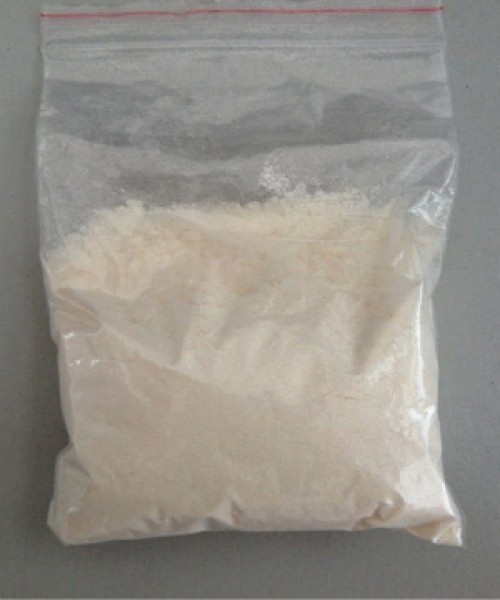
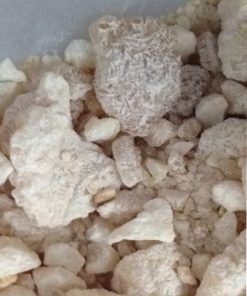
14-CINNAMOYLOXYCODEINONE

$359.00 – $5,937.00Price range: $359.00 through $5,937.00
14-Cinnamoyloxycodeinone: Opioid Pharmacology, Drug Administration and Xanax Classification
What Is 14-Cinnamoyloxycodeinone?
14-Cinnamoyloxycodeinone is an opioid-related codeinone derivative studied primarily in experimental pharmacology. Unlike familiar medications such as oxycodone or alprazolam, it does not have an established role as a routinely prescribed U.S. medication.
The scientific literature on the compound is also comparatively old and limited. A PubMed-indexed paper specifically examining 14-cinnamoyloxycodeinone was published in 1965 and investigated its pharmacological properties in animals, including intravenous and subcutaneous administration.
This historical research makes the compound relevant to medicinal chemistry because scientists have long used modified codeine and morphine structures to understand how relatively small molecular changes alter opioid activity.
However, historical experimental administration should never be interpreted as instructions for human use. There is no established self-administration regimen for 14-cinnamoyloxycodeinone supported by modern FDA prescribing information.
For broader educational exploration of emerging compounds, visit cannabinoidseller.com.
Understanding Codeinone and Morphinan Chemistry
Codeinones belong to the broader chemistry surrounding morphinan opioids.
The morphinan scaffold has produced several important pharmaceutical agents and research compounds. Researchers modify different positions of the molecule and then evaluate how those changes affect opioid receptors.
One area of research involves substitution around the 14-position.
Studies of 14-substituted morphinans and codeinones demonstrate that structural modifications can influence:
- mu-opioid receptor affinity
- agonist activity
- antagonist activity
- efficacy
- duration of action
- metabolism
A review of 14-amino morphinan derivatives describes how extensive chemical modification of these structures produced compounds ranging from opioid agonists to powerful antagonists.
This provides useful background for understanding why researchers investigated compounds such as 14-cinnamoyloxycodeinone.
What Does Cinnamoyloxy Mean?
The name gives chemists structural information.
Cinnamoyl refers to a chemical group derived from cinnamic acid chemistry.
Codeinone identifies the morphinan-related core.
The 14-cinnamoyloxy designation indicates modification at a specific position on that core.
This structural detail matters because opioid pharmacology is highly sensitive to molecular changes.
Scientists refer to this relationship as a structure-activity relationship (SAR).
Structure-Activity Relationships in Opioid Research
A structure-activity relationship describes how changes to molecular structure influence biological activity.
For opioid compounds, changing one substituent can affect:
- receptor binding
- receptor selectivity
- intrinsic efficacy
- metabolism
- duration
- central nervous system penetration
Research on related cinnamoyloxy compounds demonstrates this clearly.
A later study examining 14β-O-cinnamoylnaltrexone and related compounds found predominantly mu-opioid receptor antagonist activity in several cinnamoyloxy morphinones, while related cinnamoyloxycodeinones showed different pharmacological profiles.
Therefore, researchers should not assume that every cinnamoyl-substituted opioid behaves identically.
Is 14-Cinnamoyloxycodeinone an Opioid?
It is appropriately discussed within opioid medicinal chemistry because it is a codeinone derivative investigated for opioid-like pharmacological activity.
However, calling it an “opioid” should not lead readers to assume that it behaves exactly like morphine, fentanyl or oxycodone.
Different opioid ligands can function as:
Full agonists — strongly activate a receptor.
Partial agonists — activate the receptor but produce lower maximal efficacy under relevant conditions.
Antagonists — occupy receptors while blocking agonist activity.
Some experimental ligands can also show different behavior depending on the biological assay being used.
The Mu-Opioid Receptor
Much of the relevant research involves the mu-opioid receptor (MOR).
MOR belongs to the G-protein-coupled receptor family.
It participates in:
- pain regulation
- reward signaling
- sedation
- respiratory control
- gastrointestinal activity
- physical dependence
Many clinically important opioids produce substantial effects through MOR.
But medicinal chemists have also developed MOR antagonists and partial agonists.
Research involving cinnamoyl-substituted codeinones has contributed to understanding how chemical structure determines these different receptor behaviors.
What Does “Administered Medication” Mean?
The supporting phrase administered medication generally describes a drug given to a patient through an established route.
Common routes in legitimate medical practice include:
- oral
- intravenous
- intramuscular
- subcutaneous
- inhaled
- transdermal
- nasal
- rectal
The correct route depends entirely on the medication and its approved formulation.
For example, a tablet intended for oral administration should not automatically be considered suitable for injection.
Drug formulation matters just as much as the active ingredient.
Understanding Drug Administration
Drug administration, sometimes shortened informally to “drug admin,” describes the process through which a medication enters the body.
Healthcare professionals consider several factors when choosing an administration route:
Absorption
How efficiently does the drug reach systemic circulation?
Bioavailability
What proportion of the administered drug reaches circulation in an active form?
Onset
How quickly does the medication begin producing its intended effect?
Duration
How long does clinically meaningful activity persist?
Safety
Can the formulation safely be administered through the selected route?
These principles explain why administration routes cannot be improvised.
Historical Administration Research Is Not Medical Guidance
The original 1965 study of 14-cinnamoyloxycodeinone included intravenous and subcutaneous administration in animal experiments.
That fact has an important limitation:
Animal research does not establish a safe human administration route or dose.
Experimental scientists may administer substances in ways designed to answer a pharmacological question.
Clinical prescribing requires substantially more evidence, including:
- human pharmacokinetics
- toxicology
- controlled clinical trials
- manufacturing standards
- dose-response evaluation
- regulatory review
Readers should therefore not convert historical experimental methods into instructions for personal use.
14-Cinnamoyloxycodeinone vs. Xanax
Your supporting keywords include several questions about Xanax.
These substances belong to fundamentally different pharmacological contexts.
Xanax is the brand name for alprazolam, an FDA-approved benzodiazepine medication.
14-Cinnamoyloxycodeinone is an experimental opioid-related codeinone derivative.
Alprazolam works primarily by enhancing inhibitory signaling associated with GABA-A receptors.
Opioid compounds primarily interact with opioid receptor systems.
The two categories should therefore not be confused.
What Class Is Xanax?
Xanax belongs to the benzodiazepine drug class.
Its active ingredient is alprazolam.
FDA classifies alprazolam pharmacologically as a benzodiazepine, while DEA places Xanax/alprazolam in Schedule IV under the federal Controlled Substances Act.
Therefore:
Drug class: Benzodiazepine
Active ingredient: Alprazolam
Federal schedule: Schedule IV
Primary pharmacological system: GABA-A signaling
This distinction between drug class and controlled-substance schedule is important.
Xanax Drug Classification
The phrase Xanax drug classification can refer to two separate classification systems.
Pharmacologically, Xanax is a benzodiazepine.
Legally, it is a Schedule IV controlled substance in the United States.
These labels answer different questions.
“Benzo” tells you how the medication is pharmacologically categorized.
“Schedule IV” tells you how federal controlled-substance law regulates it.
Is Alprazolam a Controlled Substance?
Yes.
Alprazolam is a federally controlled substance in the United States.
FDA’s Xanax prescribing information explicitly identifies alprazolam as Schedule IV.
DEA also identifies Xanax among its examples of Schedule IV substances.
This means alprazolam remains a legitimate prescription medicine but is subject to additional controls because of abuse and dependence concerns.
Why Is Xanax a Controlled Substance?
People frequently ask why Xanax is a controlled substance if doctors legitimately prescribe it.
Medical usefulness and controlled status are not opposites.
Controlled-substance scheduling considers factors including medical use and abuse or dependence potential.
FDA warns that benzodiazepines, including Xanax, carry risks involving:
- abuse
- misuse
- addiction
- physical dependence
- withdrawal
FDA strengthened boxed warnings across the benzodiazepine class to communicate these risks more consistently.
What Schedule Is Alprazolam?
Under current U.S. federal law, alprazolam is Schedule IV.
The DEA describes Schedule IV substances as having lower abuse potential than Schedule III substances, although they can still cause abuse and dependence.
Other Schedule IV examples include several benzodiazepines.
Scheduling can differ internationally, so U.S. federal classification should not automatically be applied to another country.
Is Xanax a Controlled Medication?
Yes.
Xanax is simultaneously:
- an FDA-approved prescription medication
- a benzodiazepine
- a federally controlled substance
“Controlled” does not mean “prohibited.”
It means the medication is subject to regulatory controls governing prescribing, dispensing and handling.
This distinction is particularly important when discussing legitimate controlled medicines alongside experimental research chemicals.
Is Xanax a Narcotic?
The term narcotic can create confusion.
In everyday language, people sometimes apply it broadly to controlled drugs.
Pharmacologically, however, Xanax is not an opioid.
It is a benzodiazepine.
Alprazolam and opioids act through different primary receptor systems, although both can depress central nervous system activity.
This distinction becomes particularly important when they are combined.
Xanax and Opioids Can Be a Dangerous Combination
FDA’s Xanax labeling contains an important warning about combining benzodiazepines with opioids.
Concurrent exposure can produce:
- profound sedation
- respiratory depression
- coma
- death
FDA advises clinicians to reserve combined prescribing for situations where alternatives are inadequate and to limit dosage and duration appropriately.
This risk provides another reason to distinguish benzodiazepine pharmacology from opioid pharmacology while recognizing how the two can interact.
Xanax Symptoms and Side Effects
People searching Xanax symptoms may mean either expected effects or adverse effects.
FDA information identifies effects such as:
- drowsiness
- impaired coordination
- cognitive effects
- sedation
Benzodiazepines can also produce dependence.
Abrupt discontinuation after continued exposure can produce serious withdrawal reactions. FDA specifically warns against suddenly stopping Xanax without appropriate medical guidance.
How to Take Xanax Safely
For the supporting keyword how to take a Xanax, the medically appropriate answer is straightforward:
Take alprazolam only exactly as prescribed and according to the FDA-approved medication instructions provided with the prescription.
The correct regimen depends on factors such as:
- indication
- formulation
- age
- liver function
- other medications
- individual clinical response
Patients should not increase their dose, alter their schedule, combine it with other sedatives, or suddenly discontinue long-term treatment without guidance from the prescribing clinician.
For additional educational material about pharmacological compounds, readers can visit cannabinoidseller.com.
What About 10 mg of Xanax?
The phrase 10 mg of Xanax requires particular caution.
It should not be treated as a routine self-selected amount.
FDA labeling uses substantially smaller individual tablet strengths and individualized dosing. Taking an amount beyond what was prescribed can increase the risk of severe sedation, impaired consciousness and overdose—particularly when alcohol, opioids or other CNS depressants are involved.
Anyone who has taken substantially more alprazolam than prescribed, especially with another depressant or with unusual sleepiness or slowed breathing, should seek immediate medical or poison-control assistance.
Why Experimental Opioids and Prescription Medicines Require Different Discussions
A major educational mistake is treating every psychoactive compound as though it belongs to the same regulatory category.
14-Cinnamoyloxycodeinone represents historical experimental opioid chemistry.
Alprazolam represents a clinically approved benzodiazepine with standardized manufacturing, prescribing information and established medical indications.
Those differences affect:
- clinical evidence
- labeling
- dosing standards
- manufacturing controls
- legal regulation
- safety monitoring
Scientific education should preserve those distinctions.
Why Research Chemical Does Not Mean Medicine
A chemical appearing in a scientific paper does not automatically qualify as a medicine.
Researchers study experimental compounds to understand:
- receptor pharmacology
- molecular structure
- metabolism
- toxicity
- structure-activity relationships
14-Cinnamoyloxycodeinone illustrates this distinction particularly well because its directly indexed pharmacological literature reaches back decades.
Publication demonstrates scientific interest—not clinical approval.
Why Accurate Classification Matters
Accurate terminology helps prevent several misconceptions.
14-Cinnamoyloxycodeinone belongs to experimental opioid medicinal chemistry.
Alprazolam is a benzodiazepine.
Xanax is a brand containing alprazolam.
Schedule IV describes alprazolam’s U.S. federal controlled-substance classification.
These terms should not be substituted for one another.
Understanding these differences makes discussions of research chemicals, prescription medications and controlled substances much clearer.
For further educational exploration, visit cannabinoidseller.com.
Frequently Asked Questions
1. What is 14-Cinnamoyloxycodeinone?
14-Cinnamoyloxycodeinone is an opioid-related codeinone derivative investigated in experimental pharmacology. A PubMed-indexed study specifically examining it dates to 1965.
2. Is 14-Cinnamoyloxycodeinone an approved medication?
The available evidence does not establish it as a routine FDA-approved medication. Historical experimental research should not be interpreted as providing a human dosing or administration regimen.
3. What class of drug is Xanax?
Xanax contains alprazolam and belongs to the benzodiazepine class.
4. Is Xanax a controlled substance?
Yes. Xanax/alprazolam is a Schedule IV controlled substance under U.S. federal law.
5. Why is alprazolam controlled?
Benzodiazepines have recognized medical uses but also carry abuse, misuse, addiction, physical-dependence and withdrawal risks. FDA requires boxed warnings addressing these concerns.
6. Is 10 mg of Xanax safe?
A person should not self-select a 10 mg amount. Alprazolam should be taken only at the dose prescribed for that individual. Excessive exposure, particularly with opioids or other CNS depressants, can cause profound sedation and dangerous respiratory depression.
Educational Resources
For broader educational exploration of research compounds, visit cannabinoidseller.com.
Authoritative background is available from PubMed – 14-Cinnamoyloxycodeinone pharmacology, FDA – Xanax prescribing information, and DEA – Drug Scheduling.
Additional educational material can be explored through cannabinoidseller.com and cannabinoidseller.com research resources.
| Quantity | 10grams, 50grams, 100grams, 500grams, 1kg, 5kg, 10kg |
|---|
Be the first to review “14-CINNAMOYLOXYCODEINONE” Cancel reply
Related products
cannabinoids
cathinones
New
New

New
New
New

Reviews
There are no reviews yet.