
Uncategorized
THCP Effects: Understanding How This Unique Cannabinoid Interacts With the Body
Jul
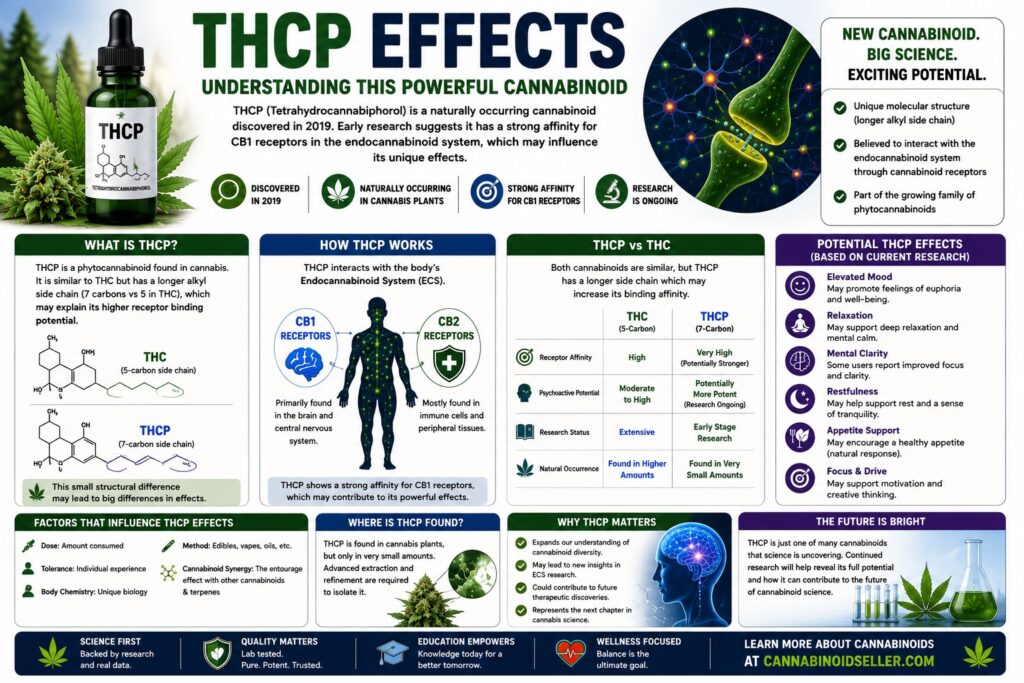
THCP effects have become one of the most discussed topics in cannabinoid research since the discovery of tetrahydrocannabiphorol (THCP). Researchers identified THCP in 2019 while studying the chemical composition of cannabis plants, and its unique molecular structure quickly attracted scientific interest.
Unlike many well-known cannabinoids, THCP contains a longer alkyl side chain, a structural feature that researchers believe influences how it interacts with cannabinoid receptors. This discovery expanded scientific understanding of cannabinoid diversity and highlighted how even small structural differences can affect receptor affinity.
As research continues across the United States and around the world, scientists are working to better understand THCP effects, its interaction with the endocannabinoid system, and its place among both major and emerging cannabinoids.
What Is THCP?
THCP, short for tetrahydrocannabiphorol, is a naturally occurring phytocannabinoid found in cannabis plants.
Although it occurs in very small concentrations, THCP gained worldwide attention after researchers discovered that its molecular structure differs slightly from THC. This difference has made THCP an important subject in cannabinoid chemistry and receptor research.
Like other cannabinoids, THCP is produced naturally by the cannabis plant and belongs to the growing family of phytocannabinoids that scientists continue to investigate.
If you’re new to this cannabinoid, our guide explaining What Is THCP provides a complete introduction.
Why Researchers Are Interested in THCP Effects
Scientists study THCP because of its distinctive chemical structure.
The longer carbon side chain found in THCP may influence how the compound binds to cannabinoid receptors. This characteristic has made THCP one of the most interesting cannabinoids discovered in recent years.
Researchers continue examining receptor affinity, molecular behavior, and cannabinoid signaling to understand how THCP compares with other naturally occurring cannabinoids.
As laboratory techniques improve, THCP remains an important area of ongoing cannabis research.
THCP and the Endocannabinoid System
The endocannabinoid system (ECS) is a biological communication network that helps regulate signaling throughout the body.
It consists of cannabinoid receptors, naturally produced endocannabinoids, and enzymes responsible for synthesizing and breaking down these signaling molecules.
Researchers believe THCP, like other phytocannabinoids, interacts with this system through cannabinoid receptors.
To better understand the ECS, readers can explore our guide https://cannabinoidseller.com/ explaining What Is the Endocannabinoid System.
Cannabinoid Receptors and THCP
Cannabinoid receptors play a central role in understanding THCP effects.
Researchers have identified two primary cannabinoid receptors known as CB1 and CB2. These receptors are distributed throughout different parts of the body and are responsible for receiving cannabinoid signals.
Scientific studies suggest THCP demonstrates a strong affinity for CB1 receptors, making receptor biology one of the most important aspects of ongoing THCP research.
Readers interested in receptor science can learn more through our articles on cannabinoid receptors explained, CB1 vs CB2 receptors, and how cannabinoids interact with receptors.
THCP Compared With THC
THCP is often compared with THC because the two cannabinoids share similar chemical foundations.
However, researchers have identified structural differences that may influence receptor binding and molecular interactions.
Although both cannabinoids belong to the same cannabinoid family, scientists continue investigating how their unique molecular characteristics contribute to cannabinoid diversity.
Readers can learn more about THC in our article explaining What Is THC.
THCP Compared With Other Cannabinoids
Modern cannabinoid research extends beyond THC and THCP.
Scientists also study CBD, CBG, HHC, CBC, and numerous rare cannabinoids to better understand how slight variations in molecular structure influence receptor interactions.
Comparative research helps build a broader understanding of cannabis chemistry and cannabinoid signaling.
Readers can continue exploring through our articles on What Is CBD, CBG Cannabinoids, What Is HHC, and Rare Cannabinoids.
What Influences THCP Effects?
Researchers believe several factors may influence how cannabinoids interact with biological systems.
These include:
- Molecular structure
- Receptor affinity
- Individual biology
- Metabolism
- Bioavailability
- Method of administration
Because cannabinoid science continues evolving, researchers emphasize that understanding these variables requires ongoing investigation.
Every new study contributes to a more complete understanding of cannabinoid biology.
Why THCP Continues Expanding Cannabis Research
THCP represents one of the most significant cannabinoid discoveries of the past decade.
Its identification demonstrated that cannabis continues containing compounds scientists had not previously identified.
As analytical chemistry becomes increasingly advanced, researchers expect additional cannabinoids to be discovered, further expanding knowledge of cannabis biology and receptor signaling.
THCP serves as an excellent example of how cannabis science continues evolving.
Looking Toward the Future
Future studies involving THCP will likely focus on receptor biology, cannabinoid diversity, molecular signaling, and cannabinoid biosynthesis.
Researchers continue developing more advanced analytical tools capable of identifying cannabinoids that occur in extremely small concentrations.
These discoveries will improve understanding of cannabis chemistry and strengthen the scientific foundation of cannabinoid research.
To continue exploring cannabis science, visit our Complete Cannabinoid Guide and browse our trusted cannabinoid education library https://cannabinoidseller.com/, where you’ll find research-based articles covering cannabinoids, receptors, the endocannabinoid system, and emerging cannabis discoveries.
Conclusion
THCP effects continue attracting scientific attention because of this cannabinoid’s distinctive molecular structure and strong receptor affinity. Although research remains ongoing, THCP has already expanded scientific understanding of cannabinoid diversity and cannabis chemistry.
As researchers continue investigating newly discovered cannabinoids, THCP will remain an important focus within modern cannabis science and contribute to future discoveries involving receptor biology and the endocannabinoid system.
Frequently Asked Questions
What is THCP?
THCP (tetrahydrocannabiphorol) is a naturally occurring cannabinoid found in cannabis plants and discovered in 2019.
Why is THCP different from THC?
THCP has a longer alkyl side chain than THC, which researchers believe contributes to differences in receptor affinity.
How does THCP interact with the body?
Researchers believe THCP interacts with cannabinoid receptors within the endocannabinoid system, although studies are still ongoing.
Why are researchers studying THCP effects?
Scientists continue studying THCP because of its unique molecular structure and its potential to improve understanding of cannabinoid biology.
Is THCP a naturally occurring cannabinoid?
Yes. THCP occurs naturally in cannabis plants, although it is found in very small concentrations.
Where can I learn more about cannabinoids?
You can explore additional educational guides, cannabinoid research articles, and cannabis science resources through our trusted cannabinoid education library https://cannabinoidseller.com/.
