U-48800 Awareness Guide: Psychoactive Receptor Families Explained, Emerging Compound Categories, and US Public Health Education
U-48800 is a US public awareness topic in toxicology education, pharmacology, forensic science, medicinal chemistry, and public health monitoring. Readers seeking educational information about U-48800, psychoactive receptor families explained, emerging compound categories, and laboratory identification science can begin with Cannabinoidseller’s forensic toxicology education hub for broader scientific learning resources.
What Is U-48800?
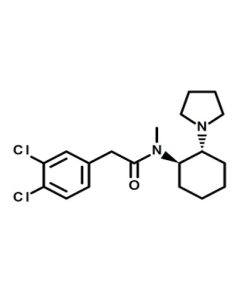
U-48800 is a synthetic opioid-related compound discussed in forensic toxicology, analytical chemistry, medicinal chemistry, pharmacology, and public health education. In the United States, U-48800 helps illustrate how scientists classify emerging psychoactive compounds, evaluate receptor interaction science, and understand laboratory toxicology monitoring systems.
Educational awareness improves public scientific literacy around compound classification and forensic science.
U-48800 Scientific Background
U-48800 is discussed in broader scientific education involving:
- forensic toxicology
- analytical chemistry
- medicinal chemistry
- pharmacology education
- laboratory science
- compound classification
- public health surveillance
Understanding scientific classification improves chemistry literacy and toxicology awareness.
Psychoactive Receptor Families Explained
Psychoactive receptor families explained is a foundational pharmacology education topic.
Scientists study psychoactive compounds partly through their biological target interactions.
Educational receptor family discussions commonly include:
Opioid Receptor Families
Pharmacology education often discusses:
- mu opioid receptors
- kappa opioid receptors
- delta opioid receptors
- receptor signaling science
These receptor families help explain pharmacological classification systems.
Cannabinoid Receptor Families
Scientific education may also cover:
- CB1 receptor systems
- CB2 receptor systems
- cannabinoid signaling pathways
Monoamine Receptor Systems
Educational pharmacology may include:
- dopamine receptor families
- serotonin receptor systems
- norepinephrine signaling frameworks
Understanding receptor families improves public pharmacology literacy.
Readers interested in science education can explore Cannabinoidseller’s pharmacology education center.
Emerging Compound Categories
Emerging compound categories helps readers understand how toxicology science organizes unfamiliar substances.
Scientists commonly classify compounds into broader educational categories.
Common Classification Groups
These may include:
- synthetic opioids
- synthetic cannabinoids
- cathinones
- phenethylamines
- tryptamines
- dissociatives
- benzodiazepine analogues
- experimental pharmacology compounds
Scientific organization improves toxicology interpretation.
Educational Comparison Content
Educational comparison content helps readers understand how scientific classification differs across chemical families.
Structural Classification
Scientists compare:
- molecular frameworks
- functional groups
- scaffold relationships
- analogue families
Pharmacological Classification
Researchers compare:
- receptor interaction profiles
- biological response models
- toxicodynamic principles
- comparative pharmacology frameworks
Analytical Classification
Laboratories classify compounds using:
- chromatographic signatures
- fragmentation patterns
- analytical reference standards
- confirmatory workflows
This strengthens public scientific literacy.
Analytical Chemistry Education
Analytical chemistry remains central to awareness content involving U-48800.
Chromatography Explained
Educational workflows commonly include:
- gas chromatography (GC)
- liquid chromatography (LC)
- confirmatory analytical separation
- purification science concepts
Mass Spectrometry Explained
Mass spectrometry helps identify compounds through:
- molecular fingerprinting
- fragmentation comparison
- confirmatory identification
- structural interpretation
Analytical Reference Standards
Reference standards support:
- identity confirmation
- reproducibility
- method validation
- scientific quality assurance
These systems remain foundational in forensic toxicology.
Forensic Toxicology Education
Forensic toxicology helps explain how unfamiliar compounds are scientifically identified.
Laboratories commonly rely on:
- preliminary toxicology screening
- chromatography analysis
- mass spectrometry
- analytical comparison
- confirmatory documentation
These systems support forensic science literacy.
Public Health Monitoring in the United States
US awareness education often explains why emerging compounds are monitored.
Trend Surveillance
Scientific systems monitor evolving toxicology and analytical findings.
Public Safety Education
Educational awareness improves understanding of monitoring systems.
Scientific Literacy
Readers gain clearer understanding of forensic science and public health surveillance.
Relevant External Educational Resources
- National Institute on Drug Abuse (NIDA)
- American Chemical Society
- National Library of Medicine / PubMed
Frequently Asked Questions
What is U-48800?
U-48800 is a synthetic opioid-related compound discussed in toxicology and forensic science education.
What are psychoactive receptor families?
They are biological receptor systems used in pharmacology education to explain compound interactions.
How are emerging compounds categorized?
Scientists classify them by chemistry, pharmacology, and analytical toxicology frameworks.
How do forensic labs identify compounds like U-48800?
Labs commonly use chromatography, mass spectrometry, analytical reference standards, and confirmatory workflows.
Why is public health monitoring important?
Monitoring supports scientific awareness, toxicology education, and public health literacy.


Reviews
There are no reviews yet.