
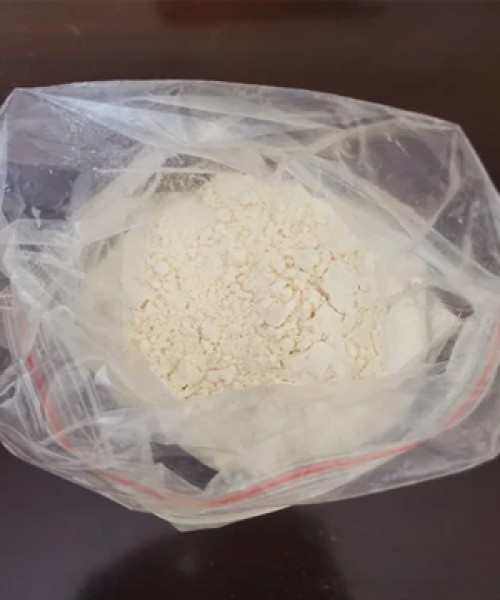
FLUALPRAZOLAM: DESIGNER BENZODIAZEPINE PHARMACOLOGY, XANAX CLASSIFICATION, CONTROLLED-SUBSTANCE STATUS AND SAFETY
What Is Flualprazolam?
Flualprazolam is a synthetic designer benzodiazepine and novel psychoactive substance structurally related to alprazolam, the active ingredient in Xanax.
The two compounds are not identical.
Flualprazolam differs structurally from alprazolam through fluorine substitution. Scientific research describes it as a potent designer benzodiazepine associated with effects including sedation, memory impairment, loss of consciousness and disinhibition.
It has no approved medical indication in the United States.
Flualprazolam became particularly important to toxicologists because it appeared in counterfeit tablets and intoxication cases, sometimes involving products represented as alprazolam.
For additional educational material about emerging psychoactive substances and their pharmacology, visit cannabinoidseller.com.
Quick Facts
| Feature | Flualprazolam |
|---|---|
| Drug family | Designer benzodiazepine |
| Structural family | Triazolobenzodiazepine |
| CNS category | Depressant |
| Closely related to | Alprazolam |
| Same chemical as Xanax | No |
| FDA-approved medicine | No |
| Established U.S. medical use | No |
| Important receptor system | GABA-A |
| U.S. federal status | Schedule I |
| Permanent Schedule I effective | April 1, 2026 |
| Documented in counterfeit tablets | Yes |
Flualprazolam Versus Alprazolam
Flualprazolam and alprazolam are structurally related triazolobenzodiazepines.
However:
FLUALPRAZOLAM ≠ ALPRAZOLAM
and
FLUALPRAZOLAM ≠ XANAX
Xanax is a brand name for the FDA-approved medication alprazolam.
Flualprazolam is an unapproved designer benzodiazepine.
A 2026 metabolism study continued to describe flualprazolam as a new psychoactive benzodiazepine structurally related to alprazolam.
This distinction is particularly important when discussing counterfeit tablets.
How Flualprazolam Works
Benzodiazepine-type substances exert their characteristic effects primarily through the GABA-A receptor system.
GABA is the central nervous system’s major inhibitory neurotransmitter.
Benzodiazepines bind to an allosteric site on susceptible GABA-A receptors and enhance GABA-mediated inhibitory signaling.
The result can include:
- sedation
- reduced anxiety
- muscle relaxation
- impaired coordination
- reduced alertness
- memory impairment
Designer benzodiazepines such as flualprazolam are consequently classified as central nervous system depressants.
What Is Xanax?
Xanax is a brand name for alprazolam.
Alprazolam is an FDA-approved prescription benzodiazepine.
Current U.S. labeling indicates Xanax for:
- acute treatment of generalized anxiety disorder in adults
- treatment of panic disorder, with or without agoraphobia, in adults
Current prescribing information is available through DailyMed’s Xanax information.
Xanax Drug Classification
The Xanax drug classification can be described in several ways.
Pharmacological classification
Xanax is a benzodiazepine.
Functional classification
It is a central nervous system depressant with anxiolytic and sedative properties.
Chemical subgroup
Alprazolam is a triazolobenzodiazepine.
Federal legal classification
Alprazolam is a Schedule IV controlled substance in the United States. Current 2026 DailyMed labeling identifies alprazolam as DEA Schedule CIV.
These classifications describe different characteristics of the same medicine.
Classification of Xanax
When someone searches for the classification of Xanax, the most concise answer is:
Xanax = alprazolam = benzodiazepine = CNS depressant = Schedule IV controlled prescription medication in the United States.
That classification should not be transferred to flualprazolam.
Flualprazolam is currently Schedule I federally.
What Class Is Xanax?
Xanax belongs to the benzodiazepine class.
Benzodiazepines include medications such as:
- alprazolam
- clonazepam
- diazepam
- lorazepam
- temazepam
- midazolam
These compounds share important GABA-A receptor pharmacology but differ substantially in duration, metabolism and approved medical uses.
What Class of Drug Is Xanax?
The answer depends on what type of classification is being requested.
| Classification system | Xanax/alprazolam |
|---|---|
| Drug family | Benzodiazepine |
| Structural subgroup | Triazolobenzodiazepine |
| CNS effect | Depressant |
| Therapeutic category | Anxiolytic |
| U.S. federal schedule | Schedule IV |
| Prescription required | Yes |
This illustrates why one drug can legitimately have several classifications simultaneously.
Is Xanax a Controlled Medication?
Yes.
Xanax is a controlled prescription medication in the United States.
The active ingredient, alprazolam, is federally classified as Schedule IV.
Controlled status does not mean a medication lacks legitimate medical uses.
Rather, controlled-substance laws establish additional rules surrounding prescribing, dispensing, possession and distribution.
Xanax Controlled Substance Status
Alprazolam’s Schedule IV classification reflects its recognized medical uses alongside risks involving:
- abuse
- misuse
- dependence
- withdrawal
Current alprazolam labeling contains a boxed warning addressing abuse, misuse, addiction, physical dependence and withdrawal.
Thus, Xanax is both:
an approved prescription medication
and
a federally controlled substance.
These statements are not contradictory.
Xanax Is Schedule IV
In the United States:
Xanax/alprazolam = Schedule IV.
Flualprazolam has a different classification:
Flualprazolam = Schedule I.
The distinction matters.
Schedule IV alprazolam has accepted medical indications and FDA-approved formulations.
Flualprazolam does not.
Why Is Xanax a Controlled Substance?
Xanax is controlled because benzodiazepines can be associated with abuse, misuse and physical dependence.
Repeated exposure can produce physiological adaptation.
Stopping alprazolam abruptly after significant dependence can cause potentially dangerous withdrawal.
Current labeling warns that withdrawal reactions can become life-threatening and that risks increase with longer treatment duration and greater exposure.
This is why benzodiazepine therapy should be medically supervised.
Xanax Symptoms and Effects
The phrase Xanax symptoms can mean therapeutic effects, side effects, intoxication or withdrawal.
Possible benzodiazepine effects can include:
- drowsiness
- sedation
- dizziness
- impaired coordination
- slowed reaction time
- memory difficulties
Effects vary among individuals.
More serious CNS depression becomes particularly concerning when benzodiazepines are combined with opioids, alcohol or other sedatives.
Xanax and Opioids
The alprazolam prescribing information carries a boxed warning regarding concomitant opioid use.
Combining benzodiazepines and opioids can result in:
- profound sedation
- respiratory depression
- coma
- death
The same general concern applies to designer benzodiazepines.
Designer compounds can introduce additional uncertainty because their clinical pharmacology is usually much less extensively characterized.
Is Xanax a Narcotic?
The terminology requires clarification.
In modern pharmacology, narcotic is commonly associated with opioids, particularly in medical contexts.
Xanax is not an opioid.
It is a benzodiazepine.
Therefore:
Xanax is a benzodiazepine CNS depressant, not an opioid narcotic.
Older legal or informal uses of the word “narcotic” can be broader, which is why precise pharmacological terminology is preferable.
How to Take a Xanax Safely
Xanax should be taken only according to the directions on the individual’s prescription and current medication guide.
There is no universal Xanax regimen appropriate for everyone.
A person’s prescribed use can depend on:
- diagnosis
- age
- liver function
- other medications
- previous treatment
- individual response
Do not increase the amount, change frequency or combine it with other sedatives based on internet instructions.
Current official instructions are available through DailyMed’s Xanax medication information.
Why a “10 mg of Xanax” Search Needs Caution
A search for 10 mg of Xanax should not be interpreted as a safe-dose recommendation.
Alprazolam is a potent prescription CNS depressant, and safe prescribing depends on the diagnosis and individual patient.
Importantly, an illicit tablet’s claimed milligram amount cannot establish what it actually contains.
Counterfeit tablets represented as Xanax have been documented containing designer benzodiazepines instead of pharmaceutical alprazolam.
Therefore, a printed number, tablet shape or seller’s claim cannot verify drug identity or dose.
Synthetic Xanax
The phrase synthetic Xanax is imprecise.
Pharmaceutical alprazolam itself is a synthetically manufactured medication.
Thus, “synthetic” does not distinguish genuine Xanax from counterfeit products.
When people use the phrase online, they may actually mean:
- counterfeit Xanax
- designer benzodiazepines
- illicitly manufactured tablets
- alprazolam analogues
These categories should not be treated as interchangeable.
Designer Xanax
Designer Xanax is also an informal rather than scientific classification.
It is sometimes used for designer benzodiazepines structurally related to alprazolam.
Examples discussed in scientific literature include:
- flualprazolam
- flubromazolam
- bromazolam
However, these substances are distinct chemicals.
Calling flualprazolam “designer Xanax” can therefore obscure an important fact:
it is not alprazolam.
Designer Benzodiazepines
Designer benzodiazepines are benzodiazepine-related compounds that have appeared in novel psychoactive substance markets.
Examples documented in scientific literature include:
- flualprazolam
- clonazolam
- diclazepam
- bromazolam
- flubromazolam
- flubromazepam
- pyrazolam
- deschloroetizolam
A systematic review found that metabolism data remain limited for many designer benzodiazepines, creating challenges for forensic identification and interpretation.
Why Designer Benzodiazepines Are Different From Prescription Xanax
| Feature | Xanax / alprazolam | Flualprazolam |
|---|---|---|
| Drug family | Benzodiazepine | Designer benzodiazepine |
| Structural subgroup | Triazolobenzodiazepine | Triazolobenzodiazepine |
| FDA approved | Yes | No |
| Established U.S. medical use | Yes | No |
| Pharmaceutical formulations | Regulated | No approved formulation |
| Current federal schedule | IV | I |
| Clinical prescribing information | Extensive | No approved prescribing label |
Structural similarity therefore does not establish therapeutic equivalence.
Flualprazolam Metabolism
Scientific research has investigated flualprazolam metabolism using human liver systems and clinical toxicology specimens.
A major analytical study identified seven tentative metabolites.
Researchers found several enzymes involved in biotransformation, including CYP3A4 and UGT1A4.
Hydroxylated and glucuronidated metabolites were particularly important for toxicological detection.
A newer 2026 study also found substantial similarities between alprazolam and flualprazolam metabolic profiles while confirming that they remain separate compounds.
Flualprazolam Effects Reported in Toxicology
Published research has associated flualprazolam exposure with:
- sedation
- loss of consciousness
- memory loss
- disinhibition
- psychomotor impairment
An outbreak involving adolescents who believed they had obtained alprazolam resulted in sedation, slurred speech, confusion and mild respiratory depression after exposure to counterfeit products containing flualprazolam.
These cases demonstrate why counterfeit tablets cannot be reliably identified by appearance.
Counterfeit Xanax
Counterfeit tablets are particularly concerning because the consumer may believe a product contains pharmaceutical alprazolam when it contains another drug.
A published case report involving chronic use of illicit “Xanax bars” found flualprazolam rather than pharmaceutical alprazolam during broad-spectrum toxicological testing.
Counterfeit tablets may also involve more than one psychoactive substance.
This creates unpredictable toxicity.
Xanax Blotter
The term Xanax blotter generally refers to material represented as containing alprazolam or a benzodiazepine on absorbent paper.
It is not a standard FDA-approved Xanax formulation.
Official Xanax is supplied through regulated pharmaceutical formulations.
A blotter product represented as Xanax therefore should not be assumed to contain:
- alprazolam
- a predictable concentration
- only one active compound
Appearance cannot confirm its chemical identity.
Laboratory analysis is required for definitive identification.
Tablet Appearance Cannot Identify Xanax
Color, shape, scoring or an imprint may help identify a legitimate medication when compared with authoritative pharmaceutical records.
They cannot reliably authenticate an illicit tablet.
Counterfeit products can imitate legitimate tablet designs.
This makes chemical testing fundamentally different from visual identification.
A tablet that looks like Xanax may not contain alprazolam at all.
Current U.S. Legal Status of Flualprazolam
Flualprazolam’s federal status became permanent in 2026.
DEA initially temporarily controlled flualprazolam along with several other designer benzodiazepines.
In its 2026 final rule, DEA permanently placed:
- flualprazolam
- clonazolam
- diclazepam
- etizolam
- flubromazolam
into Schedule I of the Controlled Substances Act.
Therefore, as of September 2026:
Flualprazolam = Schedule I federally in the United States.
Alprazolam/Xanax = Schedule IV federally in the United States.
That legal distinction is essential.
Schedule I Flualprazolam Does Not Change Xanax’s Classification
Flualprazolam’s Schedule I status does not make pharmaceutical Xanax Schedule I.
They are different controlled substances.
The distinction can be summarized simply:
| Substance | Current U.S. federal classification |
|---|---|
| Alprazolam / Xanax | Schedule IV |
| Flualprazolam | Schedule I |
The substances also differ in regulatory approval and established medical use.
Benzodiazepine Dependence
Repeated benzodiazepine exposure can cause physical dependence.
Dependence means the nervous system has adapted to the presence of the substance.
If substantial dependence has developed, sudden discontinuation can produce withdrawal.
Possible symptoms include:
- anxiety
- insomnia
- agitation
- tremor
- perceptual disturbances
Severe withdrawal can involve seizures.
This is why prescribed alprazolam should not be abruptly discontinued after sustained use without appropriate medical guidance. Current labeling specifically warns against abrupt discontinuation or overly rapid reduction after continued use.
Flualprazolam and Withdrawal
Designer benzodiazepines can also produce dependence.
A published clinical case involving chronic illicit “Xanax bar” use later identified as flualprazolam described a withdrawal seizure after use stopped.
Evidence for managing dependence on individual designer benzodiazepines remains much thinner than the evidence available for approved medications.
Medical assessment is therefore important when significant dependence is suspected.
Flualprazolam and Opioids
Combining benzodiazepine-type CNS depressants with opioids can substantially increase overdose danger.
A postmortem series involving flualprazolam found polysubstance exposure was common, particularly concurrent opioid involvement.
Potential consequences of mixed depressant exposure include:
- extreme sedation
- respiratory depression
- unconsciousness
- coma
- death
Alcohol and other sedatives can add further CNS-depressant effects.
Emergency Warning Signs
Seek emergency medical assistance after suspected benzodiazepine or mixed-drug exposure when someone has:
- severe difficulty staying awake
- inability to wake
- slow or irregular breathing
- severe confusion
- loss of consciousness
- seizures
If an opioid might also be involved and the person is unresponsive or not breathing normally, contact emergency services and administer naloxone according to its approved instructions if available.
Naloxone reverses opioid effects.
It does not directly reverse flualprazolam or Xanax.
Frequently Asked Questions
1. What is flualprazolam?
Flualprazolam is an unapproved designer triazolobenzodiazepine structurally related to alprazolam. Scientific literature associates it with CNS-depressant effects including sedation and memory impairment.
2. Is flualprazolam the same as Xanax?
No. Xanax contains alprazolam. Flualprazolam is a separate designer benzodiazepine and has no FDA-approved medical indication.
3. What drug class is Xanax?
Xanax is a benzodiazepine and CNS depressant. More specifically, alprazolam belongs to the triazolobenzodiazepine subgroup.
4. Is Xanax a controlled medication?
Yes. Alprazolam/Xanax is a Schedule IV controlled substance in the United States.
5. Is flualprazolam controlled?
Yes. As of September 2026, flualprazolam is permanently classified as a Schedule I controlled substance under U.S. federal law.
6. Can a Xanax-looking tablet contain flualprazolam?
Yes. Published intoxication investigations have documented counterfeit tablets represented as alprazolam that instead involved flualprazolam. Visual appearance therefore cannot reliably establish chemical identity.
Educational Resources
For additional educational material about emerging psychoactive compounds and pharmacology, visit cannabinoidseller.com.
PubMed — Flualprazolam Metabolism and Toxicology
Researchers characterized flualprazolam metabolism and discussed sedation, memory loss, loss of consciousness and other toxicological concerns.
Read the PubMed flualprazolam study
DailyMed — Official Xanax Prescribing Information
Current labeling explains alprazolam’s approved indications, warnings, controlled-substance status and medication guidance.
Read the DailyMed Xanax information
Federal Register — Flualprazolam Schedule I
DEA’s 2026 final rule permanently placed flualprazolam and four other designer benzodiazepines into Schedule I.
Read the federal scheduling rule
For further research-oriented educational content, visit cannabinoidseller.com and additional resources through cannabinoidseller.com.
| Quantity | 10grams, 50grams, 100grams, 500grams, 1kg, 5kg, 10kg |
|---|
Be the first to review “FLUALPRAZOLAM”
Related products
sedative
sedative
sedative

sedative

sedative
sedative

sedative

Reviews
There are no reviews yet.