
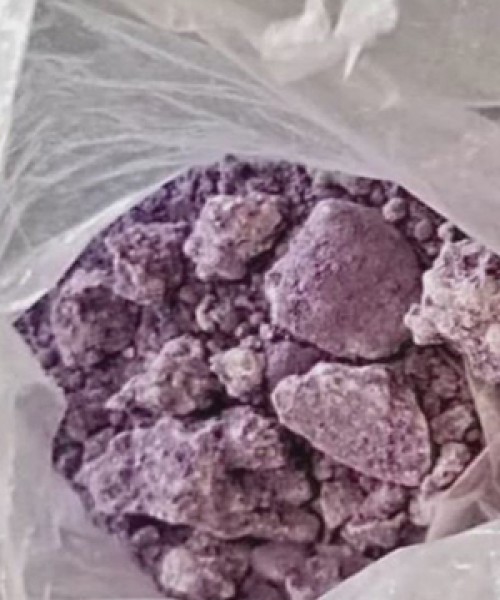
BRORPHINE
$169.00 – $727.00Price range: $169.00 through $727.00
Brorphine: Synthetic Opioid Pharmacology, Overdose Reversal, Street Names and Addiction
What Is Brorphine?
Brorphine is a potent non-fentanyl synthetic opioid that emerged in the novel psychoactive substance market around 2019. Chemically, it has a piperidine benzimidazolone scaffold and differs structurally from fentanyl and the 2-benzylbenzimidazole opioids commonly called nitazenes.
Brorphine acts primarily as a powerful μ-opioid receptor (MOR) agonist. Research associates it with opioid-like effects, respiratory depression, abuse potential, intoxications, and deaths. A 2026 scientific review reports that forensic laboratories have identified brorphine since 2019, often alongside substances such as fentanyl or benzodiazepines.
The U.S. Drug Enforcement Administration lists brorphine as a Schedule I controlled substance.
Brorphine has no established role as a routine prescription opioid medication in the United States. Its scientific relevance lies primarily in pharmacology, toxicology, forensic detection, and public-health surveillance.
For broader educational exploration of psychoactive and emerging compounds, readers can visit cannabinoidseller.com.
Why Is Brorphine a Synthetic Opioid?
A synthetic opioid is a laboratory-created substance capable of interacting with opioid receptors.
Synthetic opioids do not all share the same molecular structure.
Fentanyl, methadone, nitazenes, and brorphine illustrate how chemically different molecules can produce opioid effects through overlapping biological targets.
Brorphine stands out because researchers classify it among the newer non-fentanyl synthetic opioids. Reviews of this category also discuss nitazenes, U-series compounds, AH-7921 and MT-45.
This distinction matters because calling every emerging synthetic opioid “fentanyl” is chemically inaccurate.
How Does Brorphine Work?
Research indicates that brorphine is primarily a potent μ-opioid receptor agonist. Studies have also detected weaker partial activity at kappa-opioid receptors.
Mu-opioid receptors participate in:
- pain processing
- reward
- sedation
- gastrointestinal function
- physical dependence
- respiratory control
Activating these receptors can produce analgesic and sedative effects.
Excessive activation can also suppress the brain’s respiratory drive.
That respiratory effect represents one of the central dangers of potent opioids.
Brorphine and Respiratory Depression
Respiratory depression means breathing becomes inadequate to maintain normal oxygen and carbon-dioxide balance.
During severe opioid intoxication, breathing may become progressively slower, shallower or irregular before stopping completely.
Laboratory research involving brorphine and structurally related compounds has found significant respiratory-depressant effects.
Without intervention, severe respiratory depression can lead to:
- hypoxia
- brain injury
- cardiac arrest
- coma
- death
This explains why recognizing opioid overdose quickly is more important than identifying the exact opioid before seeking help.
Opioid Intoxication Symptoms
Possible opioid intoxication symptoms include:
- unusual drowsiness
- difficulty remaining awake
- slowed responses
- impaired coordination
- confusion
- constricted pupils
- slowed breathing
- reduced consciousness
More severe intoxication can progress to complete unresponsiveness and respiratory failure.
Other substances can complicate this clinical picture, particularly when an opioid occurs with alcohol, benzodiazepines, or additional sedating drugs.
What Does an Opioid Overdose Look Like?
People searching what does an opioid overdose look like should know several critical warning signs.
These include:
- inability to wake the person
- extremely slow breathing
- irregular or absent breathing
- unusual choking, snoring or gurgling in an unresponsive person
- limpness
- very small pupils
- pale, gray or bluish lips or skin
- loss of consciousness
An unresponsive person who is breathing abnormally after possible drug exposure requires immediate emergency medical assistance.
Waiting to identify whether brorphine, fentanyl, heroin, or another opioid caused the poisoning can waste critical time.
Understanding an Opiate OD
The phrase opiate OD is commonly used online to describe an opioid overdose.
Technically, opiate traditionally refers to drugs derived directly or indirectly from opium, while opioid is the broader term encompassing natural, semisynthetic and synthetic substances acting at opioid receptors.
Brorphine is synthetic.
Therefore, synthetic opioid overdose is the more chemically accurate description when brorphine is involved.
The emergency principles remain the same: abnormal breathing and unresponsiveness require immediate action.
What Is Opioid Reversal?
Opioid reversal means counteracting opioid receptor activation responsible for potentially fatal respiratory depression.
The best-known opioid reversal medication is naloxone.
Naloxone is an opioid receptor antagonist. Instead of activating opioid receptors, it occupies them and blocks or displaces opioid agonists.
This can rapidly restore breathing when an opioid is responsible for respiratory depression.
Opioid Reversal Medication and Brorphine
Naloxone remains highly relevant when brorphine or another synthetic opioid is suspected.
However, emerging opioids can complicate overdose management. Laboratory studies of some brorphine-related compounds have shown substantial respiratory effects, and researchers continue investigating their responsiveness to opioid antagonists.
During suspected opioid overdose:
- Contact emergency medical services immediately.
- Administer an available approved opioid-reversal medication according to its instructions.
- Follow emergency-dispatch instructions for rescue breathing or CPR when appropriate.
- Give additional reversal medication according to product directions if the person does not respond or symptoms return.
- Stay with the person until professional medical help arrives.
A person who wakes after naloxone still needs medical evaluation because respiratory depression can return.
Reversal Agent for Opioids
Naloxone is the best-known reversal agent for opioids used in community overdose response.
Other approved opioid antagonists for emergency reversal also exist.
The important concept is receptor antagonism.
An opioid agonist activates opioid receptors.
An antagonist blocks them.
This pharmacological competition allows overdose-reversal medication to temporarily counter dangerous opioid effects.
Naloxone does not directly reverse poisoning caused solely by alcohol, benzodiazepines, stimulants, or other non-opioid substances.
Medication for Opioid Overdose
A medication for opioid overdose cannot replace emergency medical assistance.
Potent opioids can last longer in the body than an antagonist remains effective.
Polysubstance exposure can also complicate recovery.
For example, early U.S. forensic research found brorphine in cases where fentanyl and the benzodiazepine flualprazolam were also detected.
Someone may therefore improve after opioid reversal while remaining dangerously intoxicated from another substance.
Opioid Use Disorder Symptoms
Opioid use disorder symptoms involve more than experiencing intoxication.
Possible signs include:
- strong cravings
- inability to control opioid use
- repeated unsuccessful attempts to reduce use
- spending substantial time obtaining or recovering from opioids
- continuing despite physical or psychological harm
- neglecting important responsibilities
- hazardous use
- withdrawal
- tolerance
Clinicians evaluate the overall behavioral pattern when diagnosing opioid use disorder.
Tolerance or physical dependence alone does not automatically establish addiction.
Symptoms of Opioid Addiction
The phrase symptoms of opioid addiction generally overlaps with opioid use disorder.
Addiction can affect brain systems responsible for motivation, reinforcement, reward and behavioral control.
Someone may continue using an opioid despite recognizing serious consequences.
Modern medical terminology generally favors opioid use disorder because it describes the clinical condition more precisely and reduces unnecessary stigma.
Importantly, opioid use disorder is treatable.
Brorphine and Abuse Potential
Experimental evidence supports concern about brorphine’s abuse potential.
A recent review concluded that brorphine shows strong MOR activity alongside antinociceptive effects, respiratory depression and abuse potential.
That does not mean every person exposed to an opioid automatically develops addiction.
Risk depends on numerous factors, including frequency and pattern of exposure, pharmacology, individual vulnerability, environment and other substance use.
Brorphine’s lack of an established therapeutic role makes its appearance in unregulated markets particularly concerning.
What Is an Opioid Vape?
The supporting keyword opioid vape refers to reports or discussions involving opioids in products intended for aerosol inhalation.
This represents a particularly unpredictable form of unregulated exposure.
A product’s appearance as a vape does not reveal:
- chemical identity
- opioid concentration
- contaminants
- actual amount delivered
- presence of multiple psychoactive substances
An unidentified vape product cannot be assumed to contain only nicotine or cannabinoids because of its packaging or appearance.
Forensic testing is required to establish chemical composition.
Street Name for Opioids
The phrase street name for opioids can be misleading because opioids do not share one universal street name.
Slang differs according to:
- substance
- location
- time period
- local market
- formulation
Furthermore, an informal name does not prove chemical identity.
The same slang term can describe different products, while a product carrying one name may contain several substances.
This makes street terminology particularly unreliable in today’s synthetic-drug environment.
Opium Street Names vs. Opioid Street Names
They are not necessarily interchangeable.
Opium is a plant-derived material containing naturally occurring alkaloids.
Opioid is a much broader pharmacological category.
It includes:
- naturally occurring opiates
- semisynthetic opioids
- fully synthetic opioids
- medications used in opioid treatment
- emerging synthetic opioids
Brorphine belongs to the synthetic category and should not be described chemically as opium.
Opioids List of Drugs
An educational opioids list of drugs can be organized by broad category:
| Category | Examples |
|---|---|
| Naturally occurring opiates | Morphine, codeine |
| Semisynthetic opioids | Oxycodone, hydromorphone |
| Synthetic pharmaceutical opioids | Fentanyl, methadone |
| Partial opioid agonists | Buprenorphine |
| Novel synthetic opioids | Brorphine and various nitazenes |
| Opioid antagonists | Naloxone, naltrexone |
This table describes pharmacological categories rather than relative potency.
Brorphine does not become medically equivalent to fentanyl or methadone simply because all belong broadly within opioid pharmacology.
Synthetic Opioids Names
Common synthetic opioids names can include both approved medicines and emerging substances.
Examples from established medicine include fentanyl and methadone.
Novel synthetic opioid research includes substances such as brorphine and numerous nitazenes.
Scientific literature also discusses structurally related brorphine analogues including orphine, fluorphine, chlorphine and iodorphine. Research published in 2024 found that these analogues interact with MOR and that several produced significant respiratory effects in experimental models.
This emerging diversity demonstrates why “synthetic opioid” should never be interpreted as one specific chemical.
Synthetic Opioids List: Why Classification Matters
A synthetic opioids list can quickly become outdated as forensic laboratories identify new compounds.
A 2026 review notes the emergence of additional “orphine-type” substances related to brorphine whose pharmacological and toxicological properties remain incompletely characterized.
Public-health agencies therefore rely on surveillance rather than static lists alone.
An emerging compound may circulate before routine laboratory panels include it.
Brorphine vs. Fentanyl
Brorphine and fentanyl both activate mu-opioid receptors, but they are chemically different.
| Feature | Brorphine | Fentanyl |
|---|---|---|
| Category | Synthetic opioid | Synthetic opioid |
| Structural family | Piperidine benzimidazolone | Phenylpiperidine |
| Major target | μ-opioid receptor | μ-opioid receptor |
| Routine approved medical role | No | Yes |
| Respiratory-depression risk | Yes | Yes |
| Forensic relevance | Novel/emerging opioid | Major established illicit-market opioid |
Early U.S. toxicology investigations frequently detected brorphine alongside fentanyl rather than as an isolated finding.
Brorphine vs. Nitazenes
Brorphine is sometimes discussed alongside nitazenes because both belong to the modern wave of non-fentanyl synthetic opioids.
Chemically, however, they are distinct.
Nitazenes generally belong to the 2-benzylbenzimidazole family.
Brorphine has a piperidine benzimidazolone scaffold.
Both categories can contain potent MOR agonists, but researchers should not use the terms interchangeably.
For broader educational exploration of emerging compound classifications, readers can visit cannabinoidseller.com.
Opioid Synthesis: What Does It Mean?
Opioid synthesis refers broadly to creating opioid compounds through chemical processes.
In legitimate pharmaceutical and academic research, medicinal chemists study synthesis to understand structure-activity relationships—how molecular changes influence receptor activity, metabolism and toxicity.
For example, researchers have compared brorphine with related compounds such as orphine, fluorphine, chlorphine and iodorphine to determine how structural changes affect MOR activity and respiratory effects.
Public-health education does not require procedural manufacturing instructions. The important scientific lesson is that small molecular changes can produce meaningful differences in pharmacology and harm.
How Forensic Laboratories Detect Brorphine
Emerging synthetic opioids present a challenge because routine screening does not necessarily detect every new compound.
Forensic researchers have used techniques such as liquid chromatography coupled with mass spectrometry to identify and quantify brorphine.
Researchers have also studied its metabolism.
A 2021 investigation identified multiple metabolites in biological specimens and confirmed potent MOR agonism.
Another U.S. forensic study confirmed brorphine in 20 cases and identified metabolic pathways including N-dealkylation and hydroxylation.
These analytical methods help laboratories distinguish brorphine from chemically unrelated opioids.
Real-World Brorphine Data
Brorphine became particularly relevant in the United States around 2020.
A forensic series examining novel synthetic opioids in postmortem investigations from 2020–2021 found brorphine in 91 of 384 casework blood samples containing at least one of eight monitored novel synthetic opioids.
Earlier research found brorphine frequently co-occurring with fentanyl and other drugs.
A historical review concluded that brorphine and isotonitazene each contributed to hundreds of deaths and adverse events during their periods of greatest prevalence.
These findings illustrate how rapidly the unregulated opioid market can change.
Why Accurate Brorphine Education Matters
Brorphine demonstrates several important lessons about modern synthetic opioids.
First, fentanyl is not the only potent synthetic opioid.
Second, novel compounds can emerge rapidly and disappear just as quickly.
Third, routine toxicology tests may initially miss newly emerging substances.
Fourth, street names and appearance cannot establish chemical identity.
Finally, the fundamental emergency associated with strong opioid agonists remains respiratory depression.
Public education should therefore emphasize recognition of opioid overdose, rapid access to emergency services, availability of approved opioid-reversal medication, and evidence-based treatment for opioid use disorder.
For further educational exploration of psychoactive compounds and receptor terminology, readers can visit cannabinoidseller.com.
Frequently Asked Questions
1. What is Brorphine?
Brorphine is a potent non-fentanyl synthetic opioid with a piperidine benzimidazolone structure. It primarily acts as a μ-opioid receptor agonist and has been associated with respiratory depression, intoxication and fatal overdoses.
2. Is Brorphine the same as fentanyl?
No. Both are synthetic opioids and activate mu-opioid receptors, but they have different chemical structures. Brorphine also lacks fentanyl’s established pharmaceutical role.
3. What does an opioid overdose look like?
Major warning signs include inability to wake, extremely slow or absent breathing, abnormal gurgling or choking sounds, limpness and pale, gray or bluish skin or lips. Suspected overdose requires immediate emergency medical attention.
4. What medication reverses an opioid overdose?
Naloxone is a widely used opioid antagonist for emergency overdose reversal. A person who responds still needs emergency medical assessment because opioid effects can return.
5. What are symptoms of opioid addiction?
Possible symptoms include cravings, loss of control over opioid use, unsuccessful attempts to stop, hazardous use, neglect of responsibilities and continued use despite serious consequences.
6. Does Brorphine have a reliable street name?
Street terminology cannot reliably identify brorphine or any other synthetic opioid. Modern unregulated products can contain different or multiple substances, so chemical identity requires analytical testing.
Educational Resources
For further educational exploration of emerging compounds, visit cannabinoidseller.com.
Authoritative scientific resources include PubMed – Brorphine and Its Analogues: Pharmacology, Toxicology, and Biomonitoring, PubMed – Brorphine Forensic Toxicology Investigation, and DEA – Drugs of Abuse Resource Guide.
Additional cannabinoid and emerging-compound educational material is available through cannabinoidseller.com and cannabinoidseller.com educational resources.
| Quantity | 5grams, 10grams, 50grams, 100grams, 500grams, 1kg, 5kg, 10kg |
|---|
Be the first to review “BRORPHINE” Cancel reply
Related products
Opioids
New
sedative
Opioids
New
New
Opioids

Reviews
There are no reviews yet.