Uncategorized
Stimulants and Uppers: Drug Types, Effects, Risks and Stimulant vs Depressant Differences
Aug
What Are Stimulants and Uppers?
Stimulants, sometimes informally called uppers, are substances that increase activity in parts of the central nervous system. Depending on the drug, dose and individual, stimulants can increase alertness, attention, wakefulness, heart rate and blood pressure.
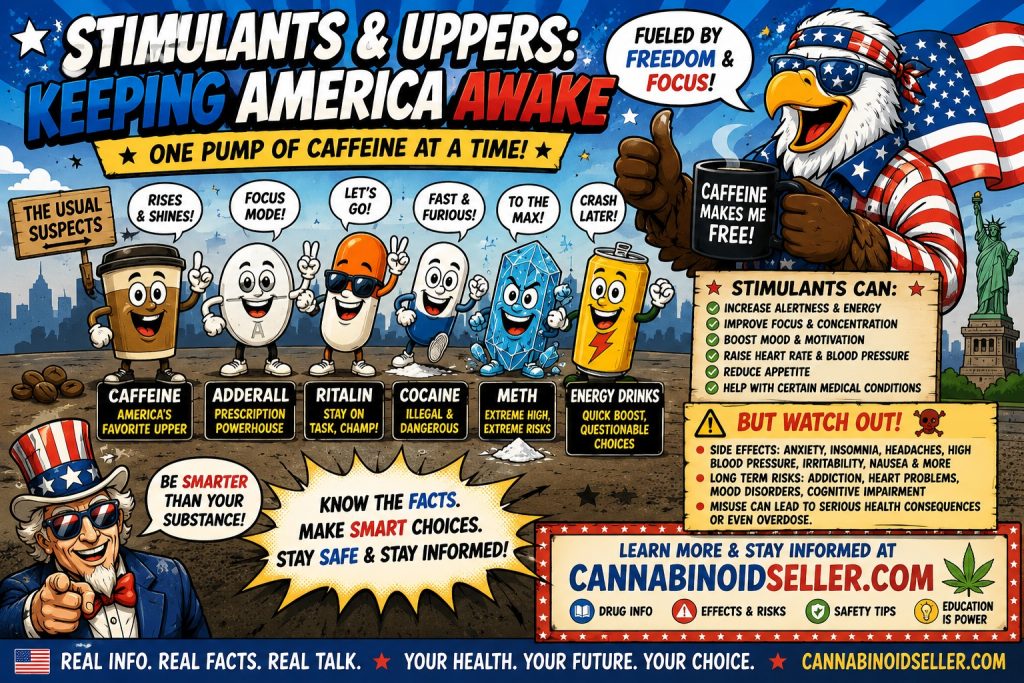
The term covers a surprisingly broad range of substances. Caffeine is a stimulant. Several FDA-approved medications for attention-deficit/hyperactivity disorder (ADHD) are stimulants. Cocaine and methamphetamine are also powerful stimulants, although their legal status, medical roles and risks differ substantially.
For this reason, describing something simply as an “upper” does not provide enough information to determine its safety.
Stimulants can have legitimate medical applications, but nonmedical use of potent stimulants can contribute to cardiovascular emergencies, psychiatric complications, dependence and stimulant use disorder.
For broader educational exploration of psychoactive compounds and research-chemical terminology, visit cannabinoidseller.com.
What Drugs Are Considered Stimulants?
A drug is generally considered a stimulant when an important part of its pharmacological activity increases central nervous system activity.
Common categories include:
| Category | Examples | General context |
|---|---|---|
| Prescription amphetamines | Amphetamine/dextroamphetamine, lisdexamfetamine | ADHD and selected medical uses |
| Methylphenidates | Methylphenidate, dexmethylphenidate | ADHD |
| Illicit/controlled stimulants | Cocaine, illicit methamphetamine | High misuse risk |
| Common consumer stimulants | Caffeine | Coffee, tea and other products |
| Nicotine | Nicotine | Psychoactive stimulant with strong dependence potential |
| Novel stimulants | Various research chemicals | Often limited human safety evidence |
The pharmacology within these categories differs considerably.
List of Stimulants
A basic list of stimulants can include:
- caffeine
- nicotine
- amphetamine
- dextroamphetamine
- lisdexamfetamine
- methylphenidate
- dexmethylphenidate
- methamphetamine
- cocaine
This list combines medications, common consumer substances and controlled drugs only for educational classification.
It does not imply that these substances have equivalent risks.
For example, a cup of coffee and illicit methamphetamine both involve stimulant pharmacology, but their potency, mechanisms, dosing context and health risks differ dramatically.
What Are Six Examples of Stimulants?
Six straightforward examples are:
- Caffeine
- Nicotine
- Amphetamine
- Methylphenidate
- Cocaine
- Methamphetamine
Some have legitimate medical applications, while others have little or no routine medical role in the context in which they are commonly encountered.
Why Are Stimulants Called Uppers?
“Upper” is informal terminology.
Stimulants earned this nickname because they can increase wakefulness, energy, attention and physiological activity.
The opposite informal term is downer, which usually refers to a central nervous system depressant.
However, “upper” and “downer” are not precise pharmacological classifications.
A substance can have complicated effects that cannot be summarized accurately with one slang term.
How Do Psychostimulants Work?
Different psychostimulants work through different molecular mechanisms.
Many important stimulants influence the neurotransmitters:
- dopamine
- norepinephrine
- sometimes serotonin
Amphetamine can increase monoamine signaling partly by promoting neurotransmitter release and altering transporter activity.
Methylphenidate primarily inhibits dopamine and norepinephrine transporters.
Cocaine inhibits dopamine, norepinephrine and serotonin reuptake.
Caffeine works differently. It primarily antagonizes adenosine receptors, reducing adenosine’s sleep-promoting signaling.
Therefore, stimulants can produce overlapping effects without sharing one mechanism.
How Do Stimulants Affect the Body?
Stimulants can influence both the brain and cardiovascular system.
Possible physiological effects include:
- increased alertness
- increased wakefulness
- elevated heart rate
- increased blood pressure
- reduced appetite
- dilated pupils
- increased body temperature
- difficulty sleeping
The exact response depends heavily on the substance.
A therapeutic stimulant taken according to a prescription should not be assumed to produce the same risk profile as an unknown illicit stimulant.
Which Is a Physiological Effect of Stimulants?
A classic physiological effect of stimulants is an increase in heart rate.
Many stimulants can also increase blood pressure.
These effects occur because stimulants can enhance sympathetic nervous system activity or influence neurotransmitter systems involved in cardiovascular regulation.
Excessive stimulation can place considerable strain on the cardiovascular system.
Short-Term Effects of Stimulants
Possible short-term effects of stimulants include:
- increased alertness
- greater wakefulness
- reduced fatigue
- decreased appetite
- elevated heart rate
- increased blood pressure
- insomnia
- anxiety
- restlessness
- sweating
At higher or toxic exposures, some stimulants can cause:
- severe agitation
- panic
- dangerously high body temperature
- abnormal heart rhythm
- chest pain
- seizures
- paranoia
- hallucinations
The specific toxicity profile varies by compound.
Side Effects of Stimulants
The side effects of stimulants depend on the individual drug and medical context.
Prescription stimulant side effects can include:
- appetite reduction
- sleep problems
- headache
- increased heart rate
- increased blood pressure
- anxiety or nervousness
FDA requires prescription stimulants to carry warnings concerning misuse, abuse, addiction and overdose.
FDA Prescription Stimulant Safety Information
People prescribed stimulants should follow the individualized instructions provided by their clinician rather than altering the dose themselves.
Prescription Stimulants
Prescription stimulants have legitimate medical applications.
Common examples include medications containing:
- amphetamine/dextroamphetamine
- dextroamphetamine
- lisdexamfetamine
- methylphenidate
- dexmethylphenidate
They are widely associated with ADHD treatment.
Some stimulants also have other approved indications.
FDA notes that prescription stimulants can provide substantial benefits when appropriately prescribed but also carry risks of misuse, addiction and overdose.
Prescription status therefore does not mean risk-free.
Prescription Stimulants vs. Illicit Stimulants
The distinction matters.
A prescription medication comes with:
- standardized manufacturing
- known active ingredients
- controlled strength
- approved labeling
- professional prescribing
- pharmacy oversight
An illicit product may have uncertain:
- identity
- concentration
- contaminants
- adulterants
This uncertainty substantially complicates risk assessment.
Effects of Stimulants on the Brain
Stimulants frequently influence neural pathways involved in:
- attention
- motivation
- reward
- movement
- wakefulness
Dopamine plays a particularly important role in reward and reinforcement.
Rapid or intense increases in reward signaling can contribute to repeated use and addiction.
Prescription stimulants can also influence these neurotransmitters, but formulation, dose and medical supervision significantly affect how they are used and experienced.
Can Stimulants Produce Euphoria?
Some stimulants can produce euphoria, particularly when they rapidly increase dopamine signaling.
This contributes to the misuse potential of substances such as cocaine, methamphetamine and prescription stimulants used outside medical directions.
However, euphoria is not the intended therapeutic endpoint of ADHD stimulant treatment.
A person experiencing unusually intense psychoactive effects from a prescription medication should discuss them with the prescribing clinician.
Stimulant Addiction
Repeated exposure to certain stimulants can contribute to stimulant use disorder.
Possible warning signs include:
- intense cravings
- difficulty controlling use
- escalating use
- spending substantial time obtaining or using stimulants
- continued use despite health problems
- work or relationship problems
- unsuccessful attempts to stop
Addiction is more complicated than physical dependence alone.
It involves behavioral, neurological and environmental factors.
Stimulant Abuse and Misuse
The term stimulant misuse is often more precise than “stimulant abuse.”
Examples include taking a prescription stimulant:
- without a prescription
- differently from prescribed
- specifically to become intoxicated
- in combination with other drugs in unsafe circumstances
Sharing prescription stimulants is also unsafe.
FDA specifically advises patients not to share prescription stimulants with anyone.
Long-Term Effects of Stimulants
The long-term effects of stimulant drugs vary according to the drug, exposure pattern and individual.
Chronic high-risk stimulant exposure can contribute to:
- cardiovascular problems
- persistent sleep disturbance
- appetite and nutritional problems
- anxiety
- mood disturbances
- stimulant use disorder
- cognitive difficulties
- psychiatric symptoms
Chronic methamphetamine exposure, in particular, has been associated with significant neurological, psychiatric and cardiovascular consequences.
National Institute on Drug Abuse – Stimulants
Stimulants and Psychosis
Heavy exposure to powerful stimulants can sometimes produce psychotic symptoms.
These can include:
- paranoia
- hallucinations
- delusional thinking
- severe agitation
Methamphetamine and other potent stimulants are particularly relevant to stimulant-induced psychosis research.
Symptoms can sometimes persist beyond the period of acute intoxication.
Anyone experiencing severe agitation, hallucinations, paranoia or dangerous behavior after stimulant exposure requires medical assessment.
Cardiovascular Dangers of Stimulant Drugs
The dangers of stimulant drugs include potentially serious cardiovascular complications.
Excessive sympathetic stimulation can contribute to:
- severe hypertension
- abnormal heart rhythms
- chest pain
- myocardial infarction
- stroke
Risk varies greatly among substances and individuals.
Pre-existing cardiovascular disease and combinations with other stimulants can further complicate risk.
Stimulants and Body Temperature
Powerful stimulant intoxication can increase body temperature.
Severe hyperthermia is medically dangerous because excessive temperature can damage organs.
Agitation and prolonged physical activity can make the problem worse.
Extreme overheating, confusion, seizures or loss of consciousness after stimulant exposure should be treated as an emergency.
Strongest Stimulant: Why There Is No Simple Answer
The phrase strongest stimulant sounds straightforward but is scientifically ambiguous.
“Strongest” could mean:
- greatest receptor affinity
- greatest dopamine effect
- greatest subjective stimulation
- highest potency by mass
- longest duration
- greatest cardiovascular effect
- highest overdose risk
Those measurements are not interchangeable.
Methamphetamine and cocaine are both powerful stimulants, but their pharmacokinetics and mechanisms differ.
Novel research chemicals complicate comparisons further because human data may be sparse.
A responsible comparison therefore requires specifying the particular pharmacological endpoint.
Common Stimulants in Everyday Life
The world’s most familiar stimulant is caffeine.
It occurs naturally in:
- coffee
- tea
- cacao
- guarana
Caffeine differs substantially from amphetamine-type stimulants because its principal mechanism involves blocking adenosine receptors.
This illustrates why a broad category can contain substances with very different molecular actions.
Stimulant vs. Depressant
A stimulant vs. depressant comparison describes their broad effects on central nervous system activity.
| Feature | Stimulants | Depressants |
|---|---|---|
| General CNS effect | Increase selected activity | Reduce selected activity |
| Alertness | Often increases | Often decreases |
| Heart rate | Often increases | May decrease depending on drug |
| Wakefulness | Often increases | Often causes sedation |
| Examples | Amphetamine, cocaine, caffeine | Benzodiazepines, alcohol, some sedatives |
| Major toxicity concern | Cardiovascular/CNS overstimulation | CNS and respiratory depression |
These categories are useful but simplified.
Drugs can have complex effects that do not fit perfectly into one column.
What Is the Difference Between a Stimulant and a Depressant?
The main difference concerns how they influence nervous-system activity.
A stimulant generally increases activity in selected neural pathways.
A depressant generally reduces central nervous system activity.
This does not mean depressants necessarily cause depression as a psychiatric disorder.
The word “depressant” describes physiological CNS suppression.
Similarly, “stimulant” does not simply mean something that makes a person feel happy or energetic.
Opposite of a Stimulant
People commonly describe a depressant as the opposite of a stimulant.
Examples of CNS depressants include:
- benzodiazepines
- barbiturates
- certain sedative-hypnotics
- alcohol
Opioids are often discussed alongside CNS depressants because they can cause sedation and respiratory depression, although pharmacologically they form their own major receptor-based drug class.
Stimulant vs. Depressant Drugs: Why Mixing Them Is Not Balancing
A dangerous misconception suggests that taking an “upper” and a “downer” causes the substances to cancel each other out.
They do not.
Someone may feel less sedated while a depressant continues suppressing important physiological processes.
Similarly, stimulant effects can continue stressing the cardiovascular system.
Mixed exposure can therefore make toxicity more complicated rather than safer.
Antidepressant vs. Stimulant
Antidepressants and stimulants are not the same drug class.
Antidepressants include several categories, such as:
- selective serotonin reuptake inhibitors (SSRIs)
- serotonin-norepinephrine reuptake inhibitors (SNRIs)
- tricyclic antidepressants
- monoamine oxidase inhibitors
- atypical antidepressants
Some antidepressants influence norepinephrine and dopamine, but that does not automatically make them conventional psychostimulants.
For example, bupropion influences dopamine and norepinephrine signaling yet is pharmacologically and clinically classified primarily as an antidepressant.
Stimulants vs. ADHD Medication
Many—but not all—ADHD medications are stimulants.
Common stimulant ADHD treatments include amphetamine- and methylphenidate-based formulations.
Non-stimulant ADHD medications also exist.
These include medications such as:
- atomoxetine
- guanfacine extended release
- clonidine extended release
- viloxazine extended release
This distinction matters because “ADHD medication” and “stimulant” are overlapping categories, not synonyms.
Research Chemical Stimulants
Novel psychoactive substances can also have stimulant properties.
Researchers may identify new compounds that affect:
- dopamine transporters
- norepinephrine transporters
- serotonin transporters
- monoamine release
These substances can appear before comprehensive human safety information exists.
A compound being described as a research chemical does not mean scientists have established a safe human exposure level.
It often means the opposite: important pharmacological and toxicological questions remain unanswered.
For broader educational exploration of emerging compounds, visit cannabinoidseller.com.
Stimulant Overdose
Severe stimulant toxicity can become a medical emergency.
Possible warning signs include:
- severe agitation
- very high body temperature
- chest pain
- abnormal heart rhythm
- severe hypertension
- seizures
- hallucinations
- extreme confusion
- loss of consciousness
Unlike opioid overdose, there is no naloxone-like universal antagonist that reverses every stimulant.
Emergency treatment focuses on controlling dangerous symptoms and supporting vital functions.
Anyone experiencing severe symptoms after suspected stimulant exposure requires immediate medical assistance.
Facts About Stimulant Drugs
Several useful facts about stimulant drugs help correct common misconceptions.
First, not every stimulant is illegal. Caffeine and several prescription ADHD medications are stimulants.
Second, prescription status does not eliminate addiction or overdose risk.
Third, stimulants do not all work through the same molecular mechanism.
Fourth, stimulant and depressant combinations do not simply neutralize one another.
Fifth, stimulant toxicity can involve both psychiatric and cardiovascular emergencies.
Finally, the term “research chemical” provides no assurance that a novel stimulant has undergone adequate human safety testing.
Why Accurate Stimulant Education Matters
The phrase stimulants uppers covers everything from everyday caffeine to powerful controlled substances.
That enormous range makes careful terminology essential.
A stimulant can be a legitimate medication, a widely consumed substance or an unregulated novel psychoactive compound.
Risk depends on the actual chemical, formulation, exposure, medical context and other substances involved.
Public education should therefore focus on pharmacology and evidence rather than treating every “upper” as interchangeable.
Readers interested in additional educational material about psychoactive compounds and emerging research chemicals can explore cannabinoidseller.com.
Frequently Asked Questions
1. What drugs are considered stimulants?
Examples include caffeine, nicotine, amphetamine, methylphenidate, cocaine and methamphetamine. They belong to the broad stimulant category but differ substantially in mechanism, medical use and risk.
2. What are the short-term effects of stimulants?
Possible effects include increased alertness, wakefulness, heart rate and blood pressure, along with reduced appetite and difficulty sleeping. Excessive exposure can cause agitation, hyperthermia, seizures or cardiovascular complications.
3. What are the long-term effects of stimulant drugs?
Long-term high-risk use can contribute to cardiovascular problems, sleep disruption, mood or psychiatric symptoms and stimulant use disorder. Effects vary according to the particular substance and pattern of exposure.
4. What is the difference between a stimulant and a depressant?
Stimulants generally increase activity in selected central nervous system pathways, while depressants generally reduce CNS activity. Combining them does not safely cancel their effects.
5. Can prescription stimulants cause addiction?
Yes. Prescription stimulants can be clinically beneficial when appropriately used, but FDA warns that they also carry risks of misuse, abuse, addiction and overdose.
6. What is the strongest stimulant?
There is no scientifically meaningful single answer without defining “strongest.” Potency, dopamine activity, duration, cardiovascular effects and toxicity represent different measurements and can produce different rankings.
Educational Resources
For broader educational exploration of psychoactive and emerging compounds, visit cannabinoidseller.com.
Authoritative information is available through National Institute on Drug Abuse – Stimulants, FDA – Prescription Stimulant Safety, and PubMed – Stimulant Pharmacology Research.
Additional educational exploration is available through cannabinoidseller.com and cannabinoidseller.com research resources.
