
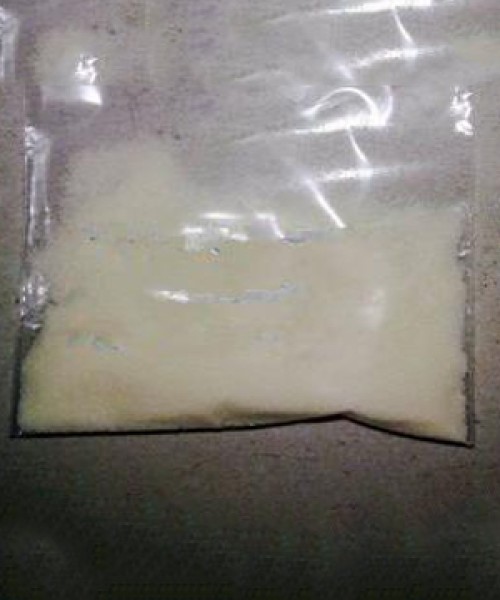


MDA-19 Research Chemical: Structure, Pharmacology, Safety and Comparison With Adderall
What Is the MDA-19 Research Chemical?
The MDA-19 research chemical, also known in scientific and forensic literature as BZO-HEXOXIZID, is an experimental cannabinoid receptor ligand that has attracted attention in medicinal chemistry, pharmacology, toxicology, and forensic science.
MDA-19 was originally investigated as part of scientific research into cannabinoid receptor 2 (CB2) ligands. Researchers were particularly interested in whether compounds targeting CB2 receptors could have potential applications in areas such as neuropathic pain.
This scientific history is important because the description research chemical does not mean that a substance has been demonstrated to be safe or effective for human consumption. Experimental substances may have major gaps in information concerning their toxicity, metabolism, interactions, long-term effects, and overall human safety.
MDA-19 also should not be confused with Adderall, amphetamine, MDA, or MDMA. Although these terms may appear together in searches concerning psychoactive compounds and chemical structures, they represent substantially different chemical and pharmacological categories.
Readers interested in broader educational information concerning cannabinoids and related compounds can explore Cannabinoid Seller for additional informational resources.
MDA-19 Chemical Structure and Scientific Background
MDA-19 emerged from medicinal chemistry involving N-alkyl isatin acylhydrazone derivatives.
Early researchers investigated novel molecules designed to interact with cannabinoid receptors, particularly CB2. MDA-19 emerged as an important compound during structure-activity relationship investigations of this chemical family.
The original medicinal-chemistry investigation is indexed by PubMed.
This scientific origin distinguishes MDA-19 from traditional cannabinoids as well as stimulant compounds such as amphetamine.
Chemical structure matters because even relatively small structural modifications can significantly change how a substance interacts with biological targets. Changes to molecular architecture can influence receptor affinity, intrinsic activity, metabolism, duration, and toxicity.
Consequently, substances should never be considered pharmacologically equivalent merely because they are discussed within the broad categories of research chemicals, cannabinoids, or psychoactive compounds.
How Does MDA-19 Work?
Understanding the proposed mechanism of the MDA-19 research chemical requires understanding two important components of cannabinoid signaling: CB1 and CB2 receptors.
CB1 receptors are extensively expressed throughout the central nervous system and contribute to many of the characteristic psychoactive effects associated with cannabinoid receptor activation.
CB2 receptors have a different distribution and are particularly associated with immune and inflammatory processes, although modern cannabinoid pharmacology is considerably more complicated than simply describing CB1 as a brain receptor and CB2 as an immune receptor.
Early pharmacological investigations found that MDA-19 displayed greater binding affinity for human CB2 receptors than human CB1 receptors.
Researchers also observed important differences between human and animal cannabinoid receptor systems.
This illustrates one of the most important principles in research-chemical science: laboratory and animal findings cannot automatically be translated into predictions about human effects or safety.
Additional scientific investigations have subsequently examined MDA-19/BZO-HEXOXIZID alongside other cannabinoid receptor agonists.
A more recent pharmacological investigation reported partial efficacy for MDA-19 in experimental systems and highlighted the need for additional toxicological information. That research is available through PubMed.
Is MDA-19 a Synthetic Cannabinoid?
MDA-19 is generally discussed scientifically as a synthetic cannabinoid receptor ligand.
However, the term synthetic cannabinoid covers a very broad collection of chemically different substances.
Individual synthetic cannabinoid receptor ligands may differ substantially in their:
- CB1 receptor affinity
- CB2 receptor affinity
- receptor efficacy
- molecular structure
- metabolism
- active metabolites
- duration of biological activity
- toxicity
- interactions with other substances
For this reason, it would be scientifically inaccurate to assume that MDA-19 behaves exactly like THC or another synthetic cannabinoid simply because these compounds interact with components of the cannabinoid system.
Readers researching cannabinoid terminology and the broader scientific landscape surrounding these compounds can explore additional educational material through Cannabinoid Seller.
MDA-19 and BZO-HEXOXIZID
Another important name associated with MDA-19 is BZO-HEXOXIZID.
The compound eventually became relevant outside its original medicinal-chemistry context when forensic scientists began identifying it in seized materials.
Published forensic research has documented BZO-HEXOXIZID in multiple seized samples. Some samples reportedly contained the compound alone, whereas others contained additional substances.
This illustrates an important public-health concern involving unregulated research chemicals.
A product name, package, appearance, or online description cannot reliably establish its chemical identity, concentration, or purity.
Forensic identification of MDA-19 also does not establish that it is a safe recreational substance or an approved medication. It simply demonstrates that a compound originally investigated in laboratory research has subsequently appeared in materials examined by forensic scientists.
MDA-19 vs. Adderall
Searches involving MDA-19 and other research chemicals sometimes overlap with terms such as Adderall molecule, Adderall chemical structure, Adderall chemical formula, and Adderall molecular structure.
It is important to understand that MDA-19 and Adderall are not chemically or pharmacologically equivalent.
| Feature | MDA-19 | Adderall |
|---|---|---|
| General category | Experimental cannabinoid ligand | Prescription CNS stimulant |
| Scientific identifier | BZO-HEXOXIZID | Mixed amphetamine salts |
| Major pharmacological area | Cannabinoid receptors | Monoamine neurotransmission |
| Amphetamine-based | No | Yes |
| Established prescription medication | No | Yes |
| Human clinical information | Limited | Extensive prescribing information |
Search-engine associations between chemical terms should therefore never be interpreted as evidence that the substances themselves are closely related.
Understanding the Adderall Molecule
Technically, describing an Adderall molecule can be misleading.
Adderall is the trade name of a pharmaceutical formulation rather than the scientific name of one individual molecule.
The medication contains mixed amphetamine salts providing forms of dextroamphetamine and levoamphetamine.
The active ingredients include:
- dextroamphetamine saccharate
- amphetamine aspartate
- dextroamphetamine sulfate
- amphetamine sulfate
Consequently, someone searching for an Adderall chemical formula should distinguish between the complete pharmaceutical formulation and the molecular formula of amphetamine itself.
Official U.S. prescribing and composition information can be reviewed through DailyMed.
Adderall Chemical Structure vs. MDA-19 Structure
The Adderall chemical structure is fundamentally different from the molecular architecture associated with MDA-19.
Amphetamine belongs to the substituted phenethylamine family.
At a simplified structural level, amphetamine contains an aromatic phenyl ring attached to an amine-containing side chain with an alpha-methyl substitution.
MDA-19 belongs to a different chemical family and was developed within research involving cannabinoid receptor pharmacology.
Consequently, an Adderall molecular structure diagram should never be presented as though it represents MDA-19.
These structural differences matter because molecular architecture influences how compounds interact with receptors, neurotransmitter transporters, enzymes, and other biological targets.
Chemical Structure of Amphetamine
The chemical structure of amphetamine is substantially different from MDA-19.
Amphetamine is a substituted phenethylamine and exists as stereoisomers.
Two particularly important forms are dextroamphetamine (d-amphetamine) and levoamphetamine (l-amphetamine).
Stereochemistry is more than a technical chemistry detail. Different stereoisomers can exhibit different pharmacological characteristics.
Prescription mixed amphetamine salts contain both forms in defined proportions rather than representing one undifferentiated “Adderall molecule.”
Understanding this distinction provides a more scientifically accurate explanation of the Adderall structure.
Adderall MOA: Understanding Its Mechanism of Action
The search term Adderall MOA refers to Adderall’s mechanism of action.
Amphetamines are central nervous system stimulants whose pharmacological effects involve monoamine neurotransmission.
According to official prescribing information, amphetamines influence neurotransmitters including dopamine and norepinephrine. Their pharmacological actions include blocking neuronal reuptake and increasing the release of these monoamines into the extraneuronal space.
Readers can examine the official pharmaceutical information through DailyMed.
This pharmacological mechanism is fundamentally different from MDA-19’s investigated cannabinoid-receptor activity.
Therefore, similarities in search terminology should not be interpreted as similarities in mechanism of action.
How Is Adderall Made?
The search query “how is Adderall made” requires an important distinction between legitimate pharmaceutical manufacturing and chemical synthesis.
Authentic Adderall is manufactured within regulated pharmaceutical production systems.
Modern pharmaceutical manufacturing involves controls such as:
- verified pharmaceutical ingredients
- validated manufacturing procedures
- analytical testing
- dosage-uniformity requirements
- contamination controls
- stability testing
- quality assurance
- regulatory oversight
These safeguards distinguish legitimate prescription medication from unregulated materials that may be represented as pharmaceutical products.
An educational explanation of Adderall chemistry does not require instructions for synthesizing amphetamine. Detailed synthesis instructions could introduce serious safety and legal concerns and are unnecessary for understanding the medication’s legitimate pharmaceutical composition.
The important educational point is that approved prescription medicines are produced under pharmaceutical manufacturing and regulatory standards.
Is MDA-19 the Same as MDA or MDMA?
No.
Despite the letters MDA appearing in the name MDA-19, the compound should not be confused with MDA (3,4-methylenedioxyamphetamine) or MDMA.
These substances have different molecular structures and pharmacological characteristics.
Research-chemical abbreviations can therefore create confusion. Similar names do not necessarily mean that compounds belong to the same chemical family or produce similar biological effects.
Accurate scientific identification should rely on established chemical names and analytical evidence rather than abbreviations or informal product terminology.
What Is Known About MDA-19 Safety?
The human safety profile of MDA-19 remains insufficiently characterized compared with established prescription medicines.
Published research surrounding the substance has primarily involved areas such as:
- medicinal chemistry
- cannabinoid receptor pharmacology
- laboratory biological activity
- analytical identification
- forensic detection
- toxicological investigation
These forms of research are not equivalent to extensive controlled clinical trials demonstrating safety and therapeutic effectiveness in humans.
Important uncertainties may remain regarding acute toxicity, cardiovascular effects, neurological effects, metabolism, drug interactions, active metabolites, and the consequences of repeated exposure.
The absence of extensive reports of adverse effects should also never be interpreted as evidence of safety when systematic human research is limited.
This becomes particularly important when substances appear in unregulated markets because chemical identity, concentration, contamination, and purity may be uncertain.
For broader informational reading concerning cannabinoids and research terminology, readers can explore Cannabinoid Seller.
Why MDA-19 Matters in Research-Chemical Education
MDA-19 provides an informative example of how a chemical can move through different scientific contexts.
The compound originated in medicinal-chemistry investigations involving cannabinoid receptors. It subsequently became relevant to pharmacologists studying receptor activity and eventually to forensic scientists investigating emerging substances.
None of these developments independently establishes MDA-19 as safe for human consumption.
Three principles are particularly important when discussing the MDA-19 research chemical:
Research does not equal regulatory approval. A chemical appearing in scientific literature does not automatically mean that it has been approved as a medication.
Similar names do not establish similar pharmacology. MDA-19, MDA, MDMA, amphetamine, and Adderall should not be treated as interchangeable substances.
Limited evidence should not be mistaken for evidence of safety. Experimental substances can have important toxicological uncertainties precisely because extensive human research has not been performed.
These distinctions help make research-chemical education scientifically responsible while allowing readers to understand why compounds such as MDA-19 continue to receive scientific attention.
Frequently Asked Questions
1. What is MDA-19?
MDA-19, also known as BZO-HEXOXIZID, is an experimental cannabinoid receptor ligand originally investigated during medicinal-chemistry research involving CB2 receptor agonists.
2. Is MDA-19 the same as Adderall?
No. Adderall is a prescription central nervous system stimulant containing mixed amphetamine salts. MDA-19 is an experimental cannabinoid receptor ligand with different chemistry and pharmacology.
3. Does MDA-19 affect CB1 and CB2 receptors?
Research has demonstrated activity involving cannabinoid receptors. Early investigations reported greater affinity for human CB2 than human CB1 receptors, although experimental findings can vary according to the receptor system and model studied.
4. What is the Adderall mechanism of action?
The amphetamine components of Adderall influence monoamine neurotransmission, particularly dopamine and norepinephrine signaling. This mechanism differs fundamentally from the cannabinoid-receptor pharmacology investigated for MDA-19.
5. Is MDA-19 an FDA-approved medication?
MDA-19 should not be considered an FDA-approved medicine simply because it appears in medicinal-chemistry and pharmacological research. Experimental investigation and regulatory approval are separate processes.
6. Is MDA-19 safe?
There is not the extensive controlled human clinical evidence necessary to establish a comprehensive safety profile comparable with approved medicines. Significant uncertainties concerning toxicity and other human effects remain.
Where to Explore Further
For broader cannabinoid and research-chemical educational reading, explore Cannabinoid Seller.
Additional cannabinoid-related educational material can be explored through Cannabinoid Seller.
Readers researching terminology and cannabinoid science can also use Cannabinoid Seller as a starting point for further educational exploration.
| Quantity | 10grams, 50grams, 100grams, 500grams, 1kg |
|---|
Be the first to review “MDA-19”
Related products
cannabinoids
cannabinoids
cannabinoids
cannabinoids
cannabinoids

cannabinoids
cannabinoids

cannabinoids

Reviews
There are no reviews yet.