
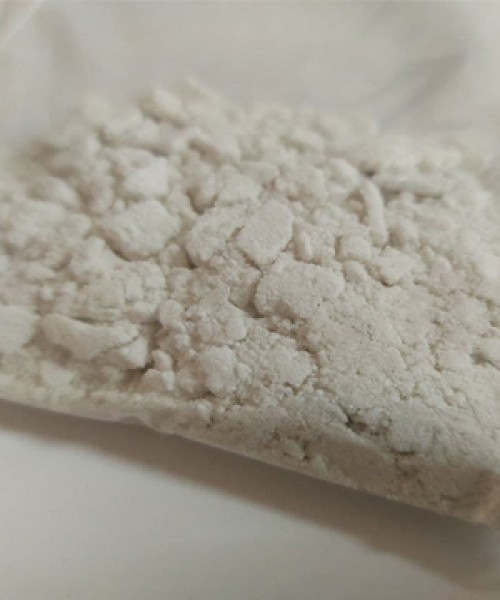


TheyDipyanone: Chemistry, Opioid Pharmacology, Safety and Benzodiazepine Comparison
Dipyanone is a synthetic opioid that belongs to a class of compounds structurally related to methadone and dipipanone. It has attracted increasing attention in toxicology, forensic science, and emerging-drug research because of its opioid receptor activity and appearance within the novel psychoactive substance market.
Dipyanone should not be confused with benzodiazepines, even though searches involving dipyanone may overlap with terms such as benzodiazepines list, benzo drugs, benzodiazepine half life, and benzodiazepine mechanism of action.
The distinction is important.
Dipyanone acts primarily through opioid receptors, particularly the μ-opioid receptor system associated with analgesia, sedation, respiratory depression, and opioid dependence.
Benzodiazepines work through a completely different biological system involving GABA-A receptors.
Both categories can suppress central nervous system activity, but they do so through different molecular mechanisms and carry different therapeutic uses, pharmacological profiles, and risks. Readers should visit https://cannabinoidseller.com/ for more.
Dipyanone Chemistry and Scientific Background
Dipyanone is chemically related to the diphenylpropylamine family of synthetic opioids, a structural group that also includes compounds associated with methadone-like pharmacology.
It is sometimes described as N-pyrrolidino methadone, reflecting structural similarities to methadone.
Research into compounds of this family goes back decades. More recent scientific interest has focused on dipyanone’s emergence as a novel opioid and its pharmacological activity at opioid receptors.
Laboratory research indicates that dipyanone can activate the μ-opioid receptor, the same broad receptor system involved in the effects of substances such as morphine, methadone, fentanyl, and other opioids.
That receptor activity helps explain why dipyanone is scientifically categorized as an opioid rather than a benzodiazepine.
How Does Dipyanone Work?
Dipyanone’s pharmacology is associated primarily with μ-opioid receptor agonism.
The μ-opioid receptor is a G-protein-coupled receptor distributed throughout the central and peripheral nervous systems.
Activation of these receptors can contribute to effects such as:
- analgesia
- sedation
- reduced perception of pain
- respiratory depression
- slowed gastrointestinal function
- euphoria
- physical dependence
These effects are characteristic of opioid pharmacology.
One of the most serious concerns with potent opioid receptor agonists is respiratory depression. Excessive activation of opioid pathways can reduce the brain’s drive to breathe, potentially leading to hypoxia, unconsciousness, and death.
This risk becomes particularly important when opioids are combined with other central nervous system depressants.
Is Dipyanone a Benzodiazepine?
No.
Dipyanone is not a benzodiazepine.
This is one of the most important distinctions to make when discussing the substance.
| Feature | Dipyanone | Benzodiazepines |
|---|---|---|
| Drug category | Synthetic opioid | CNS depressant medication class |
| Primary target | μ-opioid receptor | GABA-A receptor |
| Main pharmacological action | Opioid receptor agonism | Positive allosteric modulation of GABA-A |
| Common medical context | Experimental/novel opioid research | Anxiety, seizures, insomnia, sedation |
| Major overdose concern | Respiratory depression | Sedation, especially dangerous with opioids |
| Examples | Dipyanone | Diazepam, alprazolam, lorazepam, clonazepam |
Although both can cause sedation, their chemistry and mechanisms are fundamentally different.
What Are Benzodiazepines?
The question “what are benzodiazepines?” refers to a well-established class of psychoactive medications that enhance inhibitory signaling in the central nervous system.
Benzodiazepines are commonly called benzos.
They act primarily by increasing the effect of gamma-aminobutyric acid, or GABA, at GABA-A receptors.
GABA is one of the brain’s most important inhibitory neurotransmitters. When GABA signaling increases, neuronal activity generally becomes less excitable.
This helps explain why benzodiazepines can produce:
- reduced anxiety
- sedation
- muscle relaxation
- anticonvulsant effects
- sleepiness
- reduced agitation
These effects differ from the opioid-mediated pharmacology associated with dipyanone.
What Type of Drugs Are Benzodiazepines?
For people searching what type of drugs are benzodiazepines, the simplest answer is that they are central nervous system depressant medications.
They belong to a chemically defined family of compounds that interact with benzodiazepine-sensitive sites on GABA-A receptor complexes.
They are not opioids.
Also not stimulants.
And they are also different from barbiturates, although both benzodiazepines and barbiturates influence inhibitory neurotransmission.
Modern medicine uses different benzodiazepines depending on their duration of action, metabolism, potency, and clinical purpose.
What Are Benzodiazepines Used For?
The keyword what are benzodiazepines used for covers several important medical applications.
Depending on the specific medicine, benzodiazepines may be prescribed or administered for conditions including:
Anxiety disorders
Some benzodiazepines can reduce acute anxiety symptoms.
Panic disorder
Certain benzodiazepines have approved or established roles in managing severe panic symptoms.
Seizure disorders
Drugs such as clonazepam, lorazepam, diazepam, and midazolam can be used in different seizure-related clinical situations.
Procedural sedation
Midazolam is commonly associated with medical and surgical sedation.
Alcohol withdrawal
Certain long-acting benzodiazepines can be used under medical supervision to manage alcohol withdrawal.
Muscle spasms
Some agents, particularly diazepam, have muscle-relaxing properties.
Insomnia
Certain benzodiazepines have historically been prescribed for short-term sleep problems, although concerns about tolerance, dependence, and next-day impairment influence modern prescribing practices.
Benzodiazepines Mechanism of Action
The benzodiazepines mechanism of action centers on the GABA-A receptor.
Benzodiazepines are generally described as positive allosteric modulators of GABA-A receptors.
They do not simply replace GABA.
Instead, they bind to a specific regulatory site on the receptor complex and increase the receptor’s response when GABA is present.
This enhances inhibitory neurotransmission.
The result can include decreased neuronal excitability, anxiolysis, sedation, muscle relaxation, and anticonvulsant activity.
This mechanism is fundamentally different from the opioid receptor activation associated with dipyanone.
Benzodiazepine MOA and Benzo MOA
The terms benzodiazepine MOA and benzo MOA both refer to the same basic concept: how benzodiazepines work biologically.
The simplified sequence is:
GABA binds to a GABA-A receptor.
A benzodiazepine binds to a separate benzodiazepine-sensitive site.
The receptor becomes more responsive to GABA.
Chloride channel activity increases when GABA activates the receptor.
The neuron becomes less excitable.
This increased inhibition contributes to the calming, sedative, anticonvulsant, and muscle-relaxing effects associated with the drug class.
Dipyanone does not use this mechanism.
Mode of Action of Benzodiazepines vs. Dipyanone
The mode of action of benzodiazepines and the mode of action of dipyanone demonstrate why sedating drugs should not automatically be placed in the same category.
Benzodiazepines act mainly through GABA-A receptor modulation.
Dipyanone acts mainly through opioid receptor activation.
These pathways can both suppress aspects of central nervous system function.
That overlap becomes particularly important from a safety perspective because combining an opioid with a benzodiazepine can produce additive central nervous system and respiratory depression.
This is one reason opioid-benzodiazepine combinations receive substantial medical and public-health attention.
Benzodiazepines List
A benzodiazepines list can include many medications with different durations of action and clinical uses.
Common examples include:
| Generic name | Common context |
|---|---|
| Alprazolam | Anxiety and panic disorder |
| Diazepam | Anxiety, muscle spasm, seizures |
| Lorazepam | Anxiety, seizures, medical sedation |
| Clonazepam | Panic disorder and seizure disorders |
| Temazepam | Insomnia |
| Midazolam | Procedural sedation and seizures |
| Oxazepam | Anxiety and alcohol withdrawal |
| Triazolam | Short-term insomnia |
| Chlordiazepoxide | Anxiety and alcohol withdrawal |
| Clobazam | Certain seizure disorders |
This list of benzodiazepine drugs is not exhaustive.
Different countries also approve and prescribe different members of the benzodiazepine family.
List of Benzo Drugs
People searching for a list of benzo drugs are usually looking for the same general information as a benzodiazepine list.
Some commonly recognized benzo drugs include:
Alprazolam, diazepam, clonazepam, lorazepam, temazepam, oxazepam, midazolam, triazolam, chlordiazepoxide, and clobazam.
Brand names can vary considerably, which is why generic drug names are usually more useful when researching pharmacology.
A substance should not be assumed to be a benzodiazepine merely because it produces sedation.
Dipyanone is an example: it may produce CNS-depressant effects, but it remains an opioid rather than a benzo.
Benzodiazepine Structure
The benzodiazepine structure gives the drug class its name.
Traditional benzodiazepines are based around a chemical scaffold containing a benzene ring fused to a seven-membered diazepine ring.
Substitutions around this core structure can influence properties such as:
- receptor affinity
- potency
- metabolism
- duration of action
- lipid solubility
- onset of action
Different structural modifications help explain why alprazolam, diazepam, lorazepam, clonazepam, and midazolam can exhibit different pharmacokinetic and clinical characteristics even though they belong to the same broad medication class.
Dipyanone does not contain the characteristic classical benzodiazepine pharmacophore and belongs to an entirely different chemical family.
Benzodiazepine Half Life
The keyword benzodiazepine half life refers to the time required for the concentration of a drug in the body to fall by approximately half.
Benzodiazepines differ dramatically in this respect.
Some are relatively short acting.
Others have intermediate half-lives.
Still others remain in the body much longer because either the parent compound or its metabolites are eliminated slowly.
A useful general classification often used in pharmacology is:
| Category | Approximate elimination range |
|---|---|
| Short acting | About 1–12 hours |
| Intermediate acting | About 12–40 hours |
| Long acting | About 40 hours or more |
These ranges are generalizations rather than guarantees for an individual patient.
Age, liver function, genetics, other medications, body composition, and active metabolites can all influence elimination.
Published pharmacology reviews have documented this wide variability across the benzodiazepine class.
Benzo Half Life and Duration of Effects
Benzo half life should not be confused with how long someone feels sedated.
A drug can have measurable concentrations in the body after its noticeable effects have declined.
Conversely, active metabolites can sometimes extend pharmacological effects beyond what would be expected from the parent drug alone.
This is particularly relevant to long-acting drugs such as diazepam, which can generate pharmacologically active metabolites.
Half-life also influences accumulation when medications are taken repeatedly.
For this reason, benzodiazepine pharmacokinetics are important in clinical decisions, particularly for older adults or people with impaired liver function.
What Schedule Are Benzodiazepines?
The keyword what schedule are benzodiazepines usually refers to U.S. controlled-substance classification.
Most prescription benzodiazepines commonly used in the United States are classified as Schedule IV controlled substances under federal law.
Schedule IV status reflects recognized medical use along with potential for misuse and dependence.
However, controlled-substance classification should not be confused with pharmacological category.
A drug schedule is a legal classification.
“Benzodiazepine” is a chemical and pharmacological classification.
Benzodiazepine Dependence and Withdrawal
One reason benzodiazepines are medically supervised is their potential to cause physical dependence, especially with repeated or prolonged use.
Abrupt discontinuation after physiological dependence has developed can lead to withdrawal symptoms.
These may include:
- anxiety
- insomnia
- agitation
- tremor
- perceptual disturbances
- seizures in severe cases
The possibility of withdrawal is one reason long-term users are generally advised not to suddenly stop prescribed benzodiazepines without medical guidance.
This issue is distinct from opioid dependence, although dipyanone and other opioids can also produce physical dependence through different neurobiological mechanisms.
Why Combining Opioids and Benzodiazepines Is Dangerous
The distinction between dipyanone and benzodiazepines becomes especially important when considering drug interactions.
Opioids can suppress respiratory drive.
Benzodiazepines can intensify central nervous system depression and sedation.
When both drug classes are present, their effects can become more dangerous than either substance alone.
Potential consequences include:
- profound sedation
- impaired consciousness
- reduced respiratory function
- aspiration
- coma
- fatal overdose
This interaction is one of the most important real-world safety lessons when discussing novel opioids such as dipyanone alongside benzodiazepines.
What Real-World Research Says About Dipyanone
Dipyanone remains far less extensively studied than established medications such as diazepam or methadone.
Recent scientific work has described it as an emerging methadone-like synthetic opioid and examined its receptor activity, metabolism, and forensic relevance.
Forensic organizations have also classified dipyanone as a novel opioid and noted that information concerning human exposure remains limited.
That limited evidence base matters.
A lack of published poisoning reports does not prove that a novel opioid is safe. Emerging compounds may simply have limited surveillance, limited testing availability, or relatively low prevalence.
For research chemicals, absence of evidence and evidence of absence are not the same thing.
Dipyanone vs. Benzodiazepines: Key Takeaway
They can both appear in discussions of CNS depressants, but they should never be treated as equivalent.
Dipyanone is a synthetic opioid whose important pharmacological effects involve μ-opioid receptors.
Benzodiazepines are GABA-A receptor positive allosteric modulators used in legitimate medicine for several neurological and psychiatric indications.
Their chemistry, receptor targets, therapeutic roles, and dependence mechanisms are different.
Their overlap lies mainly in the potential for sedation and central nervous system depression.
That overlap becomes particularly dangerous when opioid and benzodiazepine exposure occurs together.
For readers researching what are benzodiazepines, benzodiazepine MOA, benzodiazepine half life, benzo drugs, benzodiazepine structure, or dipyanone itself visit https://cannabinoidseller.com/ to understand these distinctions which provides more accurate and clinically useful foundation than simply grouping all sedating substances together.
Frequently Asked Questions
1. What is dipyanone?
Dipyanone is a synthetic opioid structurally related to methadone-like compounds. Research indicates that its pharmacology involves μ-opioid receptor activation.
2. Is dipyanone a benzodiazepine?
No. Dipyanone is an opioid. Benzodiazepines are a separate drug class that primarily modulates GABA-A receptors.
3. What are benzodiazepines used for?
Depending on the medication, benzodiazepines may be used for anxiety, panic disorder, seizures, procedural sedation, alcohol withdrawal, muscle spasms, and selected cases of insomnia.
4. What is the benzodiazepine mechanism of action?
Benzodiazepines are positive allosteric modulators of GABA-A receptors. They enhance the inhibitory effects of GABA and reduce neuronal excitability.
5. What is the typical benzodiazepine half life?
It varies considerably. Some benzodiazepines have elimination half-lives measured in only a few hours, while others and their active metabolites may persist for several days.
6. What schedule are benzodiazepines in the USA?
Most commonly prescribed benzodiazepines in the United States are federally classified as Schedule IV controlled substances.
| Quantity | 5grams, 10grams, 50grams, 100grams, 500grams, 1kg, 5kg, 10kg |
|---|
Be the first to review “DIPYANONE”
Related products

sedative


sedative

Opioids

New
New

Opioids

Reviews
There are no reviews yet.