


A-D2PV (α-D2PV): Synthetic Cathinone Pharmacology, Effects and Synthetic Cannabinoid Differences
What Is A-D2PV?
A-D2PV, more commonly written α-D2PV (alpha-D2PV) in scientific literature, is a synthetic cathinone and new psychoactive substance with stimulant properties.
Its chemical name is 1,2-diphenyl-2-(pyrrolidin-1-yl)ethanone.
α-D2PV belongs to a group of pyrrolidine-containing synthetic cathinones and is structurally related to compounds such as α-PVP. Unlike many conventional cathinones, however, α-D2PV contains a phenyl group at its alpha-carbon position.
The distinction is important because A-D2PV is not a synthetic cannabinoid, synthetic marijuana, synthetic THC or synthetic CBD.
Recent pharmacological research identifies α-D2PV primarily as a potent inhibitor of dopamine and norepinephrine uptake, with relatively little activity at the serotonin transporter.
For additional educational exploration of emerging psychoactive substances, visit cannabinoidseller.com.
A-D2PV Quick Facts
| Feature | A-D2PV / α-D2PV |
|---|---|
| Scientific name | α-D2PV |
| Chemical name | 1,2-diphenyl-2-(pyrrolidin-1-yl)ethanone |
| General family | Synthetic cathinone |
| Pyrrolidine-containing | Yes |
| CNS stimulant | Yes |
| Dopamine transporter activity | Significant |
| Norepinephrine transporter activity | Significant |
| Serotonin transporter activity | Relatively limited in recent research |
| Synthetic cannabinoid | No |
| Synthetic THC | No |
| Synthetic CBD | No |
| Established prescription medicine | No |
This classification immediately separates A-D2PV from most of the synthetic cannabinoid terminology surrounding products commonly called Spice or synthetic marijuana.
A-D2PV Pharmacology
The strongest recent experimental evidence concerns the dopamine transporter (DAT) and norepinephrine transporter (NET).
A 2025 Neuropharmacology study indexed by PubMed investigated α-D2PV using transporter assays, molecular modeling and animal behavioral experiments.
Researchers found that α-D2PV was a potent inhibitor of dopamine and norepinephrine uptake while producing minimal activity at the serotonin transporter.
The same investigation found increased extracellular dopamine within the nucleus accumbens in experimental animals.
That brain region plays an important role in reward and reinforcement.
These findings provide a pharmacological explanation for the compound’s stimulant and abuse potential.
Dopamine and A-D2PV
Dopamine contributes to:
- motivation
- movement
- attention
- reinforcement
- reward processing
Normally, DAT helps clear dopamine from extracellular spaces.
Blocking dopamine uptake can increase extracellular dopamine signaling.
Research on α-D2PV found increased dopamine in the nucleus accumbens along with behavioral evidence of reinforcing effects.
The findings do not establish a safe human exposure.
Instead, they raise concern about compulsive use and stimulant use disorder.
Norepinephrine and A-D2PV
Norepinephrine is closely associated with:
- alertness
- sympathetic nervous-system activation
- cardiovascular regulation
- attention
- wakefulness
α-D2PV’s inhibition of norepinephrine uptake helps explain why cardiovascular stimulation is an important toxicological concern.
Excessive catecholamine signaling can contribute to symptoms such as rapid heartbeat, elevated blood pressure, anxiety and agitation.
A-D2PV and Abuse Potential
The 2025 experimental study provides particularly important evidence about abuse liability.
Researchers observed:
- increased locomotor activity
- increased extracellular dopamine
- conditioned rewarding effects
- self-administration in experimental animals
Self-administration studies are commonly used in preclinical addiction research because animals repeatedly performing an action to receive a drug can indicate reinforcing properties.
Researchers concluded that α-D2PV showed significant abuse potential.
Animal evidence cannot perfectly predict individual human behavior, but these results provide considerably stronger evidence than anecdotal internet reports.
A-D2PV vs. α-PVP
α-D2PV has structural similarities to α-PVP, another pyrrolidine-containing synthetic cathinone.
The compounds are not identical.
A major structural difference is the phenyl group incorporated into α-D2PV’s alpha-carbon substitution.
Recent molecular-docking research found similarities between how α-D2PV and α-PVP could interact with DAT.
Both compounds belong to the broader pyrrolidine cathinone family, which contains substances known for strong stimulant activity.
Structural similarity does not mean their potency, pharmacokinetics or toxicology can be treated as identical.
A-D2PV in Forensic Chemistry
α-D2PV has moved beyond being merely a theoretical research compound.
A 2024 peer-reviewed crystallographic investigation analyzed material confiscated during a law-enforcement investigation. The forensic identification study is available through PubMed Central.
Researchers identified α-D2PV using analytical techniques and confirmed its molecular structure through single-crystal X-ray diffraction.
Interestingly, the seized material also contained myo-inositol as a diluent.
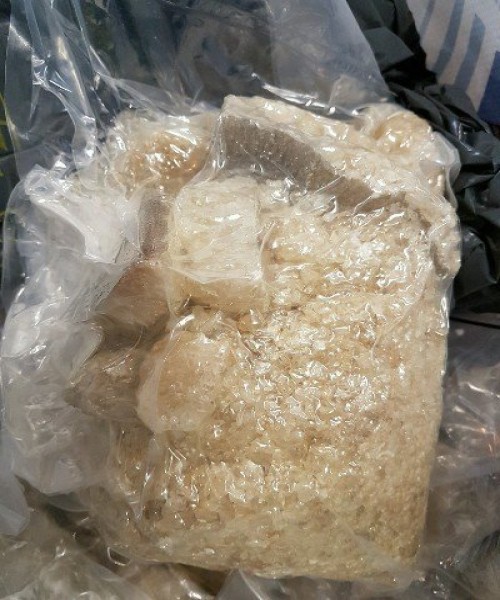
This case demonstrates an important problem surrounding unregulated psychoactive products: appearance alone cannot establish chemical identity or composition.
Laboratory analysis is necessary.
A-D2PV Is Not a Synthetic Cannabinoid
The distinction deserves emphasis.
A-D2PV is a synthetic cathinone stimulant.
Synthetic cannabinoids represent a completely different and extremely diverse collection of chemicals that primarily produce their characteristic effects through cannabinoid receptors.
These receptors include:
CB1 receptors — highly expressed within the central nervous system.
CB2 receptors — particularly associated with immune and peripheral tissues, although their biology is more complicated than this simple distinction suggests.
Many synthetic cannabinoids strongly activate CB1 receptors.
A-D2PV’s defining pharmacological activity instead centers on monoamine transporters, especially DAT and NET.
Synthetic Cannabinoids Explained
Synthetic cannabinoids are laboratory-created chemicals capable of interacting with cannabinoid receptors.
They are not simply laboratory-made cannabis.
Numerous unrelated chemical structures fall into this category.
Some were originally created for legitimate laboratory research into cannabinoid receptors.
Others subsequently appeared in unregulated psychoactive products.
Products have historically been marketed using names such as:
- Spice
- K2
- synthetic marijuana
- synthetic weed
Those names can be misleading because the chemicals may differ substantially from THC.
For background information on synthetic cannabinoids, see the National Institute on Drug Abuse overview of synthetic cannabinoids.
Synthetic Weed vs. Weed
Natural cannabis and synthetic cannabinoid products should not be treated as interchangeable.
| Feature | Cannabis | Synthetic cannabinoid products |
|---|---|---|
| Source | Cannabis plant | Laboratory-created compounds applied to a carrier or otherwise formulated |
| Major intoxicant | Δ9-THC | Varies widely |
| CB1 activity | THC is a partial agonist | Some compounds can be highly efficacious agonists |
| Composition | Numerous plant constituents | Highly variable |
| Predictability | Still variable | Often substantially more unpredictable |
| Same product class | Cannabis | Heterogeneous NPS products |
The nickname “synthetic weed” can therefore create a false impression that these products are simply artificial THC.
Effects of Synthetic Cannabinoids
Synthetic cannabinoids can produce effects involving:
- altered perception
- confusion
- anxiety
- agitation
- impaired coordination
- changes in heart rate
- nausea
- vomiting
Serious poisoning has also been associated with:
- psychosis
- seizures
- severe agitation
- cardiovascular complications
- loss of consciousness
- kidney injury in some outbreaks
The exact risk depends heavily on the particular compound.
“Synthetic cannabinoid” describes a large drug family rather than one substance.
The Centers for Disease Control and Prevention synthetic cannabinoid guidance provides additional information about reported health effects and poisoning risks.
Synthetic Marijuana Side Effects
Potential synthetic marijuana side effects can differ considerably from those associated with cannabis.
Possible adverse effects include:
- extreme anxiety
- panic
- paranoia
- hallucinations
- confusion
- vomiting
- rapid heartbeat
- hypertension
- agitation
Severe reactions require medical evaluation.
A major challenge is that users may not know which synthetic cannabinoid is actually present.
Synthetic Weed Side Effects
Synthetic weed products can vary between packages and even within the same package.
This variability means two visually identical products may produce very different effects.
Possible symptoms include:
- dizziness
- confusion
- agitation
- abnormal behavior
- nausea
- cardiovascular symptoms
- impaired consciousness
Some newer synthetic cannabinoids have high efficacy at CB1 receptors, increasing the potential for severe toxicity.
Synthetic Spice Side Effects
“Spice” is a marketing or street term rather than a precise chemical identity.
Products sold under this name have contained many different synthetic cannabinoids over time.
Reported adverse reactions can include:
- severe anxiety
- hallucinations
- psychosis
- vomiting
- tachycardia
- seizures
- unconsciousness
Therefore, predicting effects from the word “Spice” alone is impossible.
Synthetic Pot Symptoms
Someone experiencing synthetic cannabinoid poisoning may display:
- severe confusion
- unusual agitation
- panic
- hallucinations
- vomiting
- rapid heartbeat
- reduced responsiveness
Seizures, severe chest symptoms, profound confusion or unconsciousness require emergency medical assistance.
Unknown products can also contain non-cannabinoid substances, making clinical presentation less predictable.
In the United States, Poison Control can be reached at poison.org or by calling 1-800-222-1222.
Side Effects of Synthetic THC
The phrase synthetic THC requires clarification.
Some pharmaceutical or laboratory compounds are chemically related to THC.
Many substances marketed as “synthetic marijuana,” however, are not synthetic copies of THC.
Instead, they may belong to entirely different chemical families that activate CB1 receptors.
Their potency and intrinsic activity can differ significantly from Δ9-THC.
Consequently, “synthetic THC side effects” should not be used as a universal description for every synthetic cannabinoid.
Synthetic CBD
Synthetic CBD has a different meaning.
Cannabidiol can be produced through chemical synthesis, and chemically synthesized CBD can theoretically be the same molecule as plant-derived cannabidiol when manufactured and purified appropriately.
That is fundamentally different from unregulated “synthetic cannabinoid” products.
CBD itself is not responsible for the characteristic high produced by THC.
Likewise, A-D2PV has no pharmacological basis for being called synthetic CBD.
For information about cannabidiol and FDA-approved CBD medication, consult the FDA Epidiolex prescribing information.
What Does Synthetic Marijuana Look Like?
There is no reliable appearance.
Historically, some synthetic cannabinoid products have consisted of dried plant material sprayed or infused with psychoactive chemicals.
Other formulations have appeared as:
- powders
- liquids
- vaping preparations
- papers or other carriers
Visual appearance cannot identify the active compound.
Laboratory testing is required for reliable chemical identification.
Synthetic Weed Smell
There is also no scientifically reliable synthetic weed smell.
Plant material may contain fragrances, herbs, solvents or other additives.
The psychoactive synthetic cannabinoid itself may not produce a recognizable cannabis-like odor.
Smell therefore cannot determine:
- identity
- potency
- concentration
- purity
- safety
Trying to authenticate an unknown drug through odor is unreliable.
What Is the Strongest Synthetic Cannabinoid?
There is no useful or safe universal strongest synthetic cannabinoid ranking.
Researchers can compare compounds using measures such as:
- receptor affinity
- functional potency
- intrinsic efficacy
- active concentration
- toxicological outcomes
Those measurements are not interchangeable.
A compound ranking highly in one laboratory assay may not be the most dangerous under every real-world circumstance.
More importantly, potency rankings can create a misleading impression that choosing a “weaker” synthetic cannabinoid makes unregulated products predictable.
It does not.
Why Synthetic Cannabinoids Can Be More Unpredictable Than THC
Δ9-THC acts as a partial agonist at cannabinoid receptors.
Some synthetic cannabinoids can activate CB1 receptors with substantially greater efficacy.
That distinction can contribute to much stronger physiological disruption.
Additional uncertainty comes from:
- uneven application to carrier material
- inaccurate labeling
- changing chemical formulas
- active metabolites
- polysubstance contamination
- unknown concentrations
This combination makes unregulated synthetic cannabinoid exposure difficult to predict.
Long-Term Effects of Synthetic Marijuana
Research on long-term effects is complicated because the synthetic cannabinoid market continually changes.
Potential concerns associated with repeated exposure include:
- dependence
- withdrawal
- cognitive problems
- psychiatric symptoms
- recurrent anxiety
- sleep disturbance
Some individuals experience significant withdrawal after sustained use.
Long-term outcomes can differ according to the specific compound and exposure pattern.
The National Institute on Drug Abuse provides additional information about dependence, withdrawal and health risks associated with synthetic cannabinoids.
Synthetic Marijuana Addiction
Synthetic cannabinoids can produce problematic patterns of use and dependence.
Possible signs include:
- strong cravings
- difficulty reducing use
- repeated use despite harm
- increasing time devoted to the substance
- neglecting responsibilities
- withdrawal after stopping
Withdrawal symptoms reported with some synthetic cannabinoids include anxiety, irritability, sleep disturbance and physical discomfort.
Professional treatment can help when substance use becomes difficult to control.
The Substance Abuse and Mental Health Services Administration National Helpline provides confidential information about treatment and support services in the United States.
A-D2PV vs. Synthetic Cannabinoids
The distinction can be summarized simply:
| Characteristic | A-D2PV | Synthetic cannabinoids |
|---|---|---|
| Primary family | Synthetic cathinone | Cannabinoid receptor ligands |
| Main target | DAT/NET | Usually CB1/CB2 receptors |
| Main broad effect | Stimulant | Cannabinoid-like |
| Dopamine uptake inhibition | Important | Not defining mechanism |
| CB1 agonism | Not defining pharmacology | Often central |
| Same as synthetic weed | No | Often marketed that way |
This comparison prevents two unrelated NPS categories from being confused.
Synthetic Cathinone Toxicity
A-D2PV’s pharmacology places stimulant toxicity among the primary concerns.
Potential severe stimulant-type symptoms can include:
- extreme agitation
- tachycardia
- hypertension
- chest pain
- hyperthermia
- paranoia
- hallucinations
- seizures
The exact human toxicological profile of α-D2PV remains incompletely characterized.
Someone experiencing severe agitation, seizures, chest symptoms, extreme overheating or loss of consciousness after an unknown stimulant exposure needs urgent medical attention.
For emergency guidance related to suspected poisoning, contact Poison Control in the United States or your local emergency service.
Why Research-Chemical Labels Are Not Proof of Safety
A-D2PV illustrates the problems surrounding emerging psychoactive substances.
A label such as “research chemical” does not establish:
- pharmaceutical purity
- human safety
- accurate concentration
- regulatory approval
- legal status
- clinical efficacy
The 2024 forensic analysis of seized α-D2PV demonstrates that real-world samples can contain additional substances.
Recent pharmacological research also indicates meaningful reinforcing and abuse potential.
Those findings make laboratory evidence more valuable than anecdotal descriptions from unverified online sources.
For broader information about new psychoactive substances, consult the United Nations Office on Drugs and Crime early warning advisory.
Frequently Asked Questions
1. What is A-D2PV?
A-D2PV, usually written α-D2PV in scientific literature, is a pyrrolidine-containing synthetic cathinone stimulant. Recent research identifies potent dopamine and norepinephrine uptake inhibition as major pharmacological properties.
2. Is A-D2PV a synthetic cannabinoid?
No. A-D2PV is a synthetic cathinone. Synthetic cannabinoids primarily exert their characteristic effects through cannabinoid receptors such as CB1.
3. What are synthetic cannabinoid side effects?
Possible effects include anxiety, agitation, confusion, hallucinations, vomiting and cardiovascular changes. Severe poisoning can involve seizures, psychosis or loss of consciousness.
4. What does synthetic marijuana look like?
There is no reliable appearance. Products may involve treated plant material, liquids, powders or other carriers. Visual inspection cannot identify the active chemical.
5. What is the strongest synthetic cannabinoid?
There is no clinically useful universal ranking. Potency, receptor affinity, efficacy and real-world toxicity measure different properties, while unregulated product composition remains unpredictable.
6. Can synthetic marijuana be addictive?
Yes. Some synthetic cannabinoids can produce dependence, compulsive use and withdrawal. Persistent problematic use can warrant professional substance-use treatment.
Educational Resources
For further educational exploration of research chemicals, synthetic cathinones and cannabinoid pharmacology, visit cannabinoidseller.com.
**1. **PubMed — α-D2PV Pharmacology and Abuse Liability
A 2025 Neuropharmacology study found that α-D2PV potently inhibited dopamine and norepinephrine uptake, increased extracellular dopamine and showed reinforcing effects in animal experiments.
**2. **PubMed Central — Forensic Identification of α-D2PV
A 2024 structural-chemistry study characterized α-D2PV recovered from a law-enforcement seizure using analytical chemistry and X-ray crystallography.
**3. **UK Advisory Council on the Misuse of Drugs — Synthetic Cathinones
The UK government’s updated synthetic-cathinone harms assessment provides broader public-health context for emerging cathinone substances.
**4. **National Institute on Drug Abuse — Synthetic Cannabinoids
This resource explains synthetic cannabinoid terminology, health effects, dependence and risks associated with K2 and Spice products.
**5. **Centers for Disease Control and Prevention — Synthetic Cannabinoids
The CDC provides public-health information about synthetic cannabinoid exposure and potential poisoning symptoms.
Additional educational material on emerging psychoactive compounds can be explored through cannabinoidseller.com and the research resources available at cannabinoidseller.com.
| Quantity | 10grams, 50grams, 100grams, 500grams, 1kg, 5kg, 10kg |
|---|
Be the first to review “A-D2PV”
Related products
New

Stimulants

dissociative

cathinones
Stimulants
Psychedelic

Reviews
There are no reviews yet.