

2-A1MP (BK-MMDA): RESEARCH CHEMICAL IDENTITY, THC DEFINITION, MOLECULAR STRUCTURE AND CANNABIS CHEMISTRY EXPLAINED
What Is 2-A1MP (BK-MMDA)?
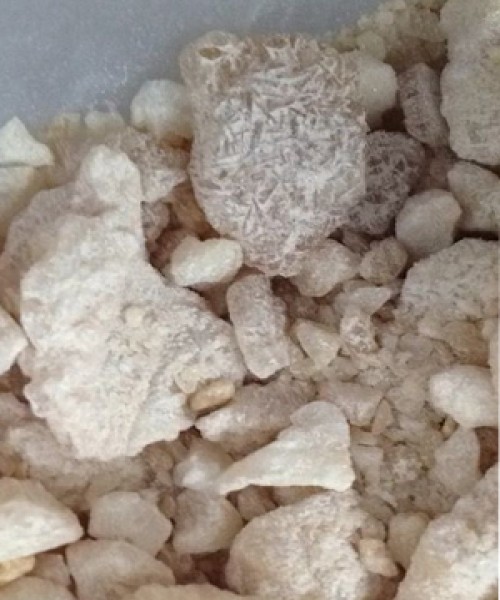
2-A1MP (BK-MMDA) is an obscure research-chemical designation that requires careful identification before a precise pharmacological profile is assigned.
The designation BK-MMDA suggests a beta-keto relationship to an MMDA-type chemical framework in research-chemical nomenclature. However, abbreviations and informal names circulating for obscure novel psychoactive substances are not sufficient evidence of molecular identity by themselves.
For 2-A1MP, researchers should establish the exact substance using information such as:
- systematic chemical name
- molecular structure
- CAS Registry Number
- molecular formula
- InChI
- InChIKey
- SMILES
- validated analytical data
This is particularly important because a small structural difference can substantially change the biological activity of a psychoactive molecule.
This article therefore does not assign unsupported human potency, duration or dosing characteristics to 2-A1MP.
The supporting keywords concern THC and cannabis chemistry, which represent a separate pharmacological family.
For additional educational research information, visit cannabinoidseller.com.
2-A1MP Is Not THC
Whatever the exact analytical identity represented by a sample labeled 2-A1MP or BK-MMDA, it should not be confused with delta-9-tetrahydrocannabinol simply because both appear in discussions of psychoactive chemistry.
THC is a phytocannabinoid naturally associated with cannabis.
Its chemical identity and cannabinoid-receptor pharmacology are extensively characterized.
A research-chemical designation such as BK-MMDA belongs to a different chemical discussion.
Consequently:
2-A1MP/BK-MMDA ≠ THC
and:
THC ≠ BK-MMDA.
What Does THC Mean?
The answer to what does THC mean is straightforward.
THC stands for tetrahydrocannabinol.
In most cannabis discussions, THC refers specifically to delta-9-tetrahydrocannabinol, commonly written:
- Δ9-THC
- delta-9-THC
- THC
Delta-9-THC is the principal cannabinoid responsible for the characteristic intoxicating effects of cannabis.
THC Full Name
The THC full name is:
tetrahydrocannabinol
More specifically, the best-known naturally occurring intoxicating form is:
delta-9-tetrahydrocannabinol
It can also be called dronabinol in pharmaceutical and regulatory contexts.
The term THC alone can technically encompass tetrahydrocannabinol isomers, which is why scientific writing often specifies delta-9-THC.
Define THC
A concise way to define THC is:
THC is a naturally occurring phytocannabinoid found in cannabis that interacts with cannabinoid receptors and is principally responsible for characteristic cannabis intoxication.
THC is not the cannabis plant itself.
It is one chemical constituent of the plant.
Cannabis contains many additional cannabinoids and other chemical compounds.
Tétrahydrocannabinol Définition
For the French-language search tétrahydrocannabinol définition:
Le tétrahydrocannabinol, généralement appelé THC, est un phytocannabinoïde présent dans le cannabis. Le delta-9-THC est principalement responsable des effets intoxicants caractéristiques du cannabis et agit notamment sur les récepteurs cannabinoïdes CB1.
THC is therefore a specific chemical molecule rather than another name for the entire cannabis plant.
What Does Tetrahydrocannabinol Mean?
The word tetrahydrocannabinol is the expanded chemical name behind the abbreviation THC.
In ordinary cannabis terminology, the term usually means delta-9-tetrahydrocannabinol.
Scientists specify the isomer when precision matters because several tetrahydrocannabinol structures exist.
Delta-8-THC, for example, is chemically distinct from delta-9-THC even though the two molecules are closely related.
Is THC a Cannabinoid?
Yes. THC is a cannabinoid.
More specifically, naturally occurring delta-9-THC is a phytocannabinoid.
“Phyto” indicates its plant origin.
Cannabinoids can be discussed in three broad groups:
Phytocannabinoids
Produced by plants, especially cannabis.
Examples include:
- THC
- CBD
- CBG
- CBC
- CBN
Endocannabinoids
Produced naturally within the human body.
Examples include:
- anandamide
- 2-arachidonoylglycerol (2-AG)
Synthetic cannabinoids
Laboratory-created compounds that interact with cannabinoid-related biological targets.
These categories should not be assumed to have identical pharmacology or toxicity.
THC Chemical Composition
The THC chemical composition can be represented by its molecular formula.
For delta-9-THC:
Molecular formula: C21H30O2
This means one molecule contains:
- 21 carbon atoms
- 30 hydrogen atoms
- 2 oxygen atoms
Its molecular weight is approximately 314.5 g/mol.
A molecular formula identifies elemental composition but does not fully describe molecular structure.
Tetrahydrocannabinol Molecule
The tetrahydrocannabinol molecule is an organic molecule with a complex three-dimensional structure.
Delta-9-THC contains:
- an aromatic region
- an oxygen-containing heterocyclic ring
- a hydrocarbon-rich pentyl side chain
- a hydroxyl group
- stereochemical features that influence biological activity
Its relatively lipophilic structure contributes to its interactions with biological membranes and cannabinoid receptors.
THC Structure
The THC structure matters because molecular shape influences receptor interactions.
PubChem gives the systematic IUPAC name of naturally occurring delta-9-THC as:
(6aR,10aR)-6,6,9-trimethyl-3-pentyl-6a,7,8,10a-tetrahydrobenzo[c]chromen-1-ol
That name describes the arrangement and stereochemistry of the molecule.
Two substances can have closely related molecular formulas yet behave differently because their structures differ.
THC and Stereochemistry
THC also illustrates the importance of stereochemistry.
Molecules with the same atomic connectivity can have different three-dimensional configurations.
Biological receptors themselves are three-dimensional proteins.
As a result, stereochemistry can influence how strongly a molecule interacts with its target.
This is one reason chemical identity cannot be reduced simply to counting carbon, hydrogen and oxygen atoms.
Weed Molecule: Is There One?
The phrase weed molecule can be misleading.
There is no single molecule called “weed.”
Cannabis is a plant containing a complex mixture of chemical constituents.
THC is one important cannabis molecule, but others include:
- CBD
- CBG
- CBC
- CBN
- terpenes
- flavonoids
- fatty acids
- pigments
- numerous other plant metabolites
Therefore:
weed ≠ THC alone.
Weed Chemical Formula
There is no single weed chemical formula.
Cannabis is biological plant material rather than one pure chemical compound.
Different cannabis constituents have their own formulas.
For example:
| Compound | Molecular formula |
|---|---|
| Delta-9-THC | C21H30O2 |
| CBD | C21H30O2 |
| THCA | C22H30O4 |
An interesting feature is that THC and CBD share the same molecular formula.
Yet they have different molecular structures and substantially different pharmacology.
This is a classic demonstration of why molecular formula alone does not define biological activity.
THC Versus CBD
THC and CBD are both phytocannabinoids.
However, they are not interchangeable.
THC
THC produces characteristic cannabis intoxication and has important activity at cannabinoid receptors, particularly CB1 receptors in the central nervous system.
CBD
CBD does not produce characteristic THC-like intoxication.
Its pharmacology is considerably more complex than simply acting as a weaker version of THC.
A purified CBD pharmaceutical also has established medical applications for certain seizure disorders.
THC and the Endocannabinoid System
THC exerts many of its effects through the endocannabinoid system.
Two important cannabinoid receptors are:
CB1
Highly relevant within the central nervous system.
CB2
More strongly associated with immune and peripheral biological processes, although its distribution is not limited exclusively to those tissues.
Delta-9-THC acts as a partial agonist at cannabinoid receptors.
Its CB1 activity contributes substantially to cannabis intoxication.
THC and the Brain
CB1 receptors occur in brain regions involved in functions including:
- memory
- coordination
- cognition
- reward
- movement
Consequently, acute THC exposure can affect:
- short-term memory
- attention
- coordination
- reaction time
- perception
Individual responses vary according to exposure, cannabinoid composition and personal susceptibility.
THC-A Meaning: Usually THCA
The keyword THC A meaning frequently refers to THCA, properly written as one abbreviation.
THCA means:
tetrahydrocannabinolic acid
THCA is a cannabinoid precursor found in cannabis.
It is chemically different from THC.
The distinction is important:
THCA Versus THC
THCA contains a carboxylic-acid group that THC lacks.
This gives THCA a different molecular formula and different properties.
THCA can undergo decarboxylation, producing THC.
Heat can promote this transformation.
At a high conceptual level:
THCA → decarboxylation → THC
This explains why raw plant cannabinoid composition can differ from the composition after processing involving heat.
THCA Molecular Formula
THCA has the molecular formula:
C22H30O4
Delta-9-THC has:
C21H30O2
The difference illustrates that THCA and THC are distinct molecules rather than two names for exactly the same chemical.
THC Is Not the Only Tetrahydrocannabinol
The cannabis chemistry landscape includes multiple THC-related molecules and isomers.
These can include:
- delta-9-THC
- delta-8-THC
- other tetrahydrocannabinol isomers
- THCA
- THC metabolites
These substances should not automatically be assumed to have identical potency, effects or legal treatment.
What Are THC Products?
The phrase what are THC products covers a broad range of cannabis-derived and pharmaceutical preparations.
Depending on jurisdiction, products containing THC can include:
- regulated medical cannabis preparations
- cannabis flower
- extracts
- oils
- capsules
- edible products
- certain pharmaceutical cannabinoid products
Their THC concentrations can differ substantially.
Product legality also varies by jurisdiction.
This article does not provide purchasing or sourcing instructions for intoxicating cannabis products.
Pharmaceutical THC
THC also has a pharmaceutical context.
Dronabinol is the established name associated with delta-9-THC in approved pharmaceutical preparations.
This illustrates an important distinction between:
- a chemically identified active pharmaceutical ingredient,
- regulated cannabis products,
- and unverified products represented as containing THC.
Regulatory controls and manufacturing standards differ.
THC Products Can Have Different Chemical Profiles
Two cannabis products labeled with similar THC concentrations may still differ chemically.
Other constituents can include varying concentrations of:
- CBD
- CBG
- CBC
- terpenes
- minor cannabinoids
The route of administration and formulation also influence pharmacokinetics.
Therefore, a percentage printed on a label does not completely characterize a cannabis product.
Cannabis Contains Hundreds of Chemical Constituents
Cannabis is chemically much more complicated than THC alone.
Research has identified hundreds of constituents spanning multiple chemical families.
Modern analytical technologies continue to characterize additional compounds and molecular features.
The major categories include:
- cannabinoids
- terpenes
- flavonoids
- phenolic compounds
- lipids
- pigments
- other metabolites
This is why the phrase “weed chemical formula” has no scientifically meaningful single answer.
Cannabinoids Versus Terpenes
Terpenes and Cannabinoids are different chemical classes.
Cannabinoids
Include compounds such as THC and CBD and are central to cannabinoid pharmacology.
Terpenes
Contribute substantially to cannabis aroma and occur widely throughout the plant kingdom.
Examples found in cannabis can include:
- myrcene
- limonene
- pinene
- linalool
- β-caryophyllene
Their presence does not automatically establish specific therapeutic effects.
THC Is Not a Synthetic Cathinone
THC should not be confused with synthetic cathinones or substituted amphetamines.
These families have fundamentally different structural and pharmacological characteristics.
THC primarily belongs to cannabinoid-receptor pharmacology.
Many synthetic cathinones primarily affect monoamine transporters.
Therefore, the THC supporting keywords in this article should not be interpreted as evidence that 2-A1MP/BK-MMDA is itself a cannabinoid.
Why Molecular Structure Matters
THC and CBD provide an excellent example of structure-function relationships.
Both have the molecular formula:
C21H30O2
Yet their structures differ.
Those structural differences contribute to markedly different pharmacological effects.
This principle applies throughout medicinal chemistry:
molecular formula → tells us which atoms are present
molecular structure → tells us how those atoms are arranged
three-dimensional configuration → further influences biological interactions
All three levels can matter.
Chemical Identification of Unknown Compounds
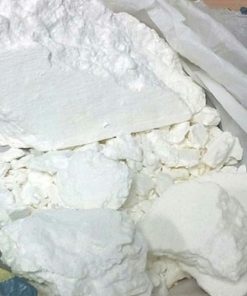
An unknown substance cannot reliably be identified as THC, BK-MMDA or another research chemical from:
- color
- smell
- taste
- crystal shape
- powder texture
- packaging
Professional analytical identification can involve:
- liquid chromatography
- gas chromatography
- mass spectrometry
- infrared spectroscopy
- nuclear magnetic resonance spectroscopy
Chemical identity should come from evidence rather than appearance.
Why 2-A1MP Requires More Evidence
The evidence available for THC is extensive.
Scientists can confidently describe:
- its formula
- molecular structure
- cannabinoid classification
- receptor pharmacology
- plant origin
The same level of confidence should not automatically be applied to an obscure designation such as 2-A1MP.
Without authoritative compound-specific evidence, claims about its:
- potency
- duration
- human dosage
- metabolism
- toxicity
- long-term effects
should remain appropriately limited.
Scientific uncertainty should be reported rather than filled with assumptions.
Research Chemical Does Not Mean Safe
A substance described as a research chemical is not automatically:
- medically approved
- safe
- legal
- pharmaceutical grade
- tested adequately in humans
- suitable for consumption
The term describes a research or market context rather than a medical safety standard.
For further educational material about research compounds, visit cannabinoidseller.com.
Frequently Asked Questions
1. What is 2-A1MP (BK-MMDA)?
2-A1MP has been presented as a designation associated with BK-MMDA, but the exact identity should be confirmed through authoritative structural or analytical information. Human pharmacological claims should not be inferred from the abbreviation alone.
2. What does THC mean?
THC stands for tetrahydrocannabinol. In most cannabis discussions, it refers specifically to delta-9-tetrahydrocannabinol, the principal phytocannabinoid responsible for characteristic cannabis intoxication.
3. What is the chemical formula of THC?
Delta-9-THC has the molecular formula C21H30O2 and a molecular weight of approximately 314.5 g/mol.
4. Is THC a cannabinoid?
Yes. Naturally occurring delta-9-THC is a phytocannabinoid found in cannabis. It interacts with cannabinoid receptors, including CB1 receptors in the central nervous system.
5. What does THCA mean?
THCA stands for tetrahydrocannabinolic acid. It is a cannabinoid precursor found in cannabis and can undergo decarboxylation to produce THC. THCA and THC are distinct molecules.
6. What is the chemical formula for weed?
There is no single chemical formula for weed because cannabis is plant material containing hundreds of chemical constituents. Individual molecules such as THC, CBD and THCA each have their own formulas.
Educational Resources
For additional research-oriented information about cannabinoids and chemical science, visit cannabinoidseller.com.
PubChem — Delta-9-Tetrahydrocannabinol
PubChem provides the molecular formula, systematic name, chemical structure and identifiers for delta-9-THC.
PubMed — THC and Cannabinoid Research
PubMed indexes peer-reviewed literature covering tetrahydrocannabinol, cannabinoid receptors, cannabis chemistry and pharmacology.
Explore THC research on PubMed
NIDA — Cannabis and Cannabinoids
NIDA provides evidence-based information about cannabis, THC and the effects of cannabinoids on the brain and body.
Explore NIDA cannabis information
For further educational research material, visit cannabinoidseller.com and its scientific resources.
| Quantity | 10grams, 50grams, 100grams, 500grams, 1kg, 5kg, 10kg |
|---|
Be the first to review “2-A1MP (BK-MMDA)”
Related products
New
New

New
cannabinoids

Reviews
There are no reviews yet.