
Uncategorized
Is Caffeine a Drug? How Caffeine Works, Side Effects, Toxicity and Long-Term Effects
Aug
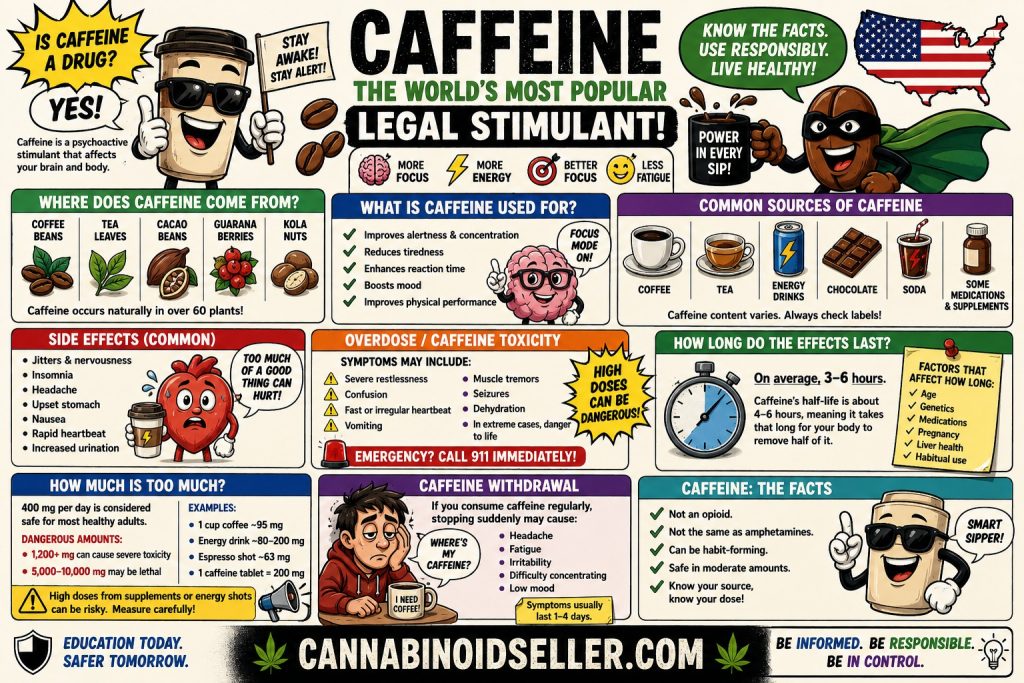
Is Caffeine a Drug?
Yes, caffeine is a drug. More specifically, scientists classify caffeine as a psychoactive central nervous system stimulant because it changes brain activity and can increase alertness and reduce perceived fatigue.
Unlike many controlled stimulants, caffeine is widely available in ordinary foods and beverages. Coffee, tea, chocolate, energy drinks, soft drinks, supplements and some medications can all contain it.
Its familiar place in everyday life sometimes causes people to forget that caffeine has genuine pharmacological activity.
Caffeine primarily produces its stimulant effects by blocking adenosine receptors. Adenosine normally contributes to sleepiness and the regulation of neural activity. Blocking these receptors reduces adenosine’s signaling and indirectly changes several other neurotransmitter systems.
Scientific reviews describe caffeine as the world’s most widely consumed psychoactive substance and identify antagonism of adenosine receptors as its principal mechanism at typical human exposures.
For broader educational exploration of stimulants and psychoactive compounds, visit cannabinoidseller.com.
What Is Caffeine?
Caffeine is a naturally occurring methylxanthine alkaloid.
Its chemical name is commonly represented as 1,3,7-trimethylxanthine.
Plants produce caffeine naturally, including:
- coffee plants
- tea plants
- cacao plants
- kola nuts
- guarana
- yerba mate
Manufacturers can also produce caffeine for use in beverages, supplements and medications.
Once consumed, caffeine is absorbed into the bloodstream and can cross the blood-brain barrier.
Is Caffeine a Psychoactive Drug?
Yes. Caffeine qualifies as a psychoactive drug because it affects the central nervous system and can alter alertness, attention, mood and perceived fatigue.
“Psychoactive” does not automatically mean illegal or highly intoxicating.
The term simply describes a substance capable of affecting brain function, mental state or behavior.
Caffeine provides a useful example of why the words “drug” and “illegal drug” are not interchangeable.
Is Caffeine Psychoactive?
Yes.
Caffeine’s ability to increase wakefulness and modify brain activity makes it psychoactive.
Research on caffeine pharmacology identifies adenosine-receptor antagonism as a central explanation for these effects.
Adenosine concentrations tend to increase during prolonged wakefulness. By interfering with adenosine signaling, caffeine can temporarily reduce feelings of tiredness.
It does not eliminate the biological need for sleep.
What Type of Drug Is Caffeine?
Caffeine belongs primarily to the stimulant category.
Chemically, it belongs to a family called methylxanthines.
A useful classification looks like this:
| Classification | Caffeine |
|---|---|
| Psychoactive? | Yes |
| CNS stimulant? | Yes |
| Methylxanthine? | Yes |
| Opioid? | No |
| Amphetamine? | No |
| Naturally occurring? | Yes |
| Also manufactured commercially? | Yes |
Although caffeine and amphetamine are both called stimulants, they do not work through identical mechanisms.
Is Caffeine a Stimulant?
Yes. Caffeine is a stimulant because it increases activity within parts of the central nervous system.
Typical effects can include greater:
- wakefulness
- alertness
- concentration
- perceived energy
Some people also experience reduced fatigue.
Increasing the amount does not necessarily improve these effects. Higher exposure can instead produce anxiety, tremor, nausea, insomnia or cardiovascular symptoms.
Is Coffee a Drug?
Coffee itself is better described as a beverage containing a psychoactive drug—caffeine.
The distinction matters.
Coffee contains hundreds of chemical compounds in addition to caffeine. Calling the entire beverage a single drug oversimplifies its chemistry.
Nevertheless, drinking ordinary caffeinated coffee exposes the body to pharmacologically active caffeine.
Is Coffee a Stimulant?
Caffeinated coffee has stimulant effects primarily because of its caffeine content.
Decaffeinated coffee contains much less caffeine and consequently produces substantially less caffeine-related stimulation.
The amount found in a cup of coffee can vary considerably according to:
- coffee species
- brewing method
- serving size
- roast
- preparation technique
A “cup of coffee” is therefore not a standardized unit of caffeine.
Where Does Caffeine Come From?
Caffeine occurs naturally in multiple plant species.
Common botanical sources include coffee beans, tea leaves, cacao beans, kola nuts, guarana berries and yerba mate.
Plants are believed to use caffeine partly as a chemical defense mechanism.
Commercial caffeine can also be isolated during food-processing operations or produced synthetically.
The caffeine molecule has the same basic pharmacological identity whether its source is botanical or manufactured.
Caffeine Origin
Humans have consumed caffeine-containing plants for centuries.
Coffee developed into a major beverage through traditions associated with northeastern Africa and the Arabian Peninsula before spreading internationally.
Tea has an extensive history in Asia.
Cacao consumption originated independently in the Americas.
Modern caffeine consumption therefore represents the convergence of several historically separate botanical traditions.
What Includes Caffeine?
Caffeine can appear in more products than coffee.
Common sources include:
- brewed coffee
- espresso
- black tea
- green tea
- some soft drinks
- energy drinks
- chocolate
- cocoa
- guarana products
- yerba mate
- certain headache medications
- some dietary supplements
Product labels are useful because caffeine concentration varies dramatically.
Energy shots and concentrated supplements deserve particular attention because a relatively small serving may contain substantial caffeine.
What Does Caffeinated Mean?
Caffeinated means that something contains caffeine.
A caffeinated beverage therefore contains a measurable amount of the stimulant.
The word does not indicate exactly how much is present.
Two products labeled caffeinated can have very different caffeine concentrations.
Define Caffeinated
A simple definition is:
Caffeinated: containing caffeine.
Examples include caffeinated coffee, caffeinated tea and caffeinated soft drinks.
“Decaffeinated” does not always mean absolutely zero caffeine. Decaffeination substantially reduces caffeine but can leave small residual quantities.
Different Types of Caffeine
Chemically, caffeine is still caffeine.
Marketing terminology sometimes makes it appear that there are numerous fundamentally different “types.”
Products may instead differ by source or formulation, such as:
- naturally occurring caffeine from coffee
- tea-derived caffeine
- guarana-derived caffeine
- synthetic caffeine
- caffeine anhydrous
Caffeine anhydrous is a concentrated, dehydrated form frequently used in supplements and pharmaceutical preparations.
Concentrated forms require particular caution because measuring errors can result in unexpectedly large exposure.
How Does Caffeine Work?
Caffeine’s principal mechanism involves adenosine receptors.
Adenosine normally binds to receptors including A1 and A2A receptors.
Caffeine can occupy these receptors without activating them in the same way, reducing adenosine’s normal effects.
The result indirectly influences neurotransmitter systems involving:
- dopamine
- norepinephrine
- acetylcholine
- glutamate
This mechanism differs considerably from amphetamine, which more directly affects monoamine transport and release.
Calling both substances stimulants therefore describes their broad effects rather than an identical mechanism.
50 mg of Caffeine
A 50 mg caffeine exposure represents a measurable but comparatively modest amount for many healthy adults.
Individual sensitivity varies substantially, however.
Someone with low caffeine tolerance may notice clear stimulation from an amount that produces relatively little subjective effect in a habitual coffee drinker.
Age, medications, pregnancy, cardiovascular health and metabolism can all influence response.
The number alone therefore cannot predict exactly how someone will feel.
80 mg Caffeine
80 mg of caffeine falls within the range found in some ordinary caffeinated beverages.
Again, the product matters.
Serving size and concentration should be considered together.
Drinking multiple products rapidly can cause total caffeine exposure to accumulate before the person realizes how much they have consumed.
How Long Do the Effects of Caffeine Last?
Caffeine effects commonly persist for several hours.
Its average half-life in healthy adults is often approximately four to six hours, although substantial individual variation occurs.
Half-life means the time required for the body to eliminate approximately half of the caffeine present.
For example, consuming caffeine late in the afternoon can leave a meaningful amount in the body at bedtime.
Factors capable of altering caffeine metabolism include:
- pregnancy
- smoking
- liver function
- medications
- genetics
- age
This explains why one person’s evening coffee may have little obvious effect while another person’s sleep is significantly disrupted.
Short-Term Effects of Caffeine
Moderate caffeine consumption can produce:
- increased alertness
- reduced fatigue
- greater wakefulness
- temporary improvements in attention
- increased urination in some circumstances
Unwanted effects can include:
- nervousness
- restlessness
- tremor
- insomnia
- stomach discomfort
- nausea
- rapid heartbeat
- headache
Sensitivity is highly individual.
Cafe Side Effects
People searching for cafe side effects are generally asking about coffee or caffeine side effects.
Coffee can cause caffeine-related effects such as jitteriness, insomnia, anxiety, gastrointestinal discomfort and palpitations.
Other components of coffee may also influence digestion.
Someone experiencing symptoms from coffee should therefore consider both the caffeine exposure and the beverage itself.
Caffeine Negative Effects
The major caffeine negative effects generally become more noticeable as exposure increases.
Potential problems include:
- disrupted sleep
- anxiety
- jitteriness
- headaches
- nausea
- gastrointestinal discomfort
- palpitations
- increased heart rate
- tremor
Regular consumption can also produce physical dependence.
Abruptly stopping habitual caffeine intake may cause withdrawal symptoms.
Caffeine Withdrawal
Common caffeine withdrawal symptoms can include:
- headache
- fatigue
- reduced alertness
- difficulty concentrating
- irritability
- depressed mood
- flu-like feelings in some individuals
Withdrawal provides another demonstration that caffeine is pharmacologically active.
Symptoms generally resolve with time, although their intensity varies.
Dependence on caffeine should not automatically be equated with severe substance use disorders involving more hazardous drugs.
Long-Term Effects of Caffeine
The long-term effects of caffeine depend on consumption patterns and individual susceptibility.
Moderate caffeine intake is tolerated by many adults.
Potential problems associated with chronic excessive intake can include:
- persistent sleep disturbance
- anxiety
- dependence
- recurring withdrawal headaches
- palpitations
- worsening of certain gastrointestinal symptoms
The broader health effects of coffee cannot be reduced to caffeine alone because coffee contains numerous other biologically active compounds.
Excessive Caffeine
Excessive caffeine means consuming enough caffeine to cause unwanted or potentially dangerous effects.
The threshold is not identical for everyone.
Factors affecting susceptibility include:
- body size
- habitual caffeine intake
- medications
- cardiovascular conditions
- pregnancy
- genetics
- liver function
- concurrent stimulant use
Concentrated caffeine products can make accidental excessive consumption easier than ordinary beverages.
Can Too Much Caffeine Cause Nausea?
Yes.
Too much caffeine can cause nausea.
Gastrointestinal symptoms are common manifestations of excessive caffeine exposure.
Other symptoms may occur at the same time, including:
- vomiting
- abdominal discomfort
- tremor
- restlessness
- rapid heartbeat
- anxiety
Severe symptoms require medical evaluation.
Symptoms of Caffeine Toxicity
Caffeine toxicity can range from unpleasant overstimulation to a serious medical emergency.
Possible symptoms include:
- severe restlessness
- agitation
- tremor
- nausea
- repeated vomiting
- rapid heartbeat
- abnormal heart rhythms
- confusion
- pronounced anxiety
- seizures
Severe poisoning can produce dangerous cardiovascular and neurological complications.
Symptoms of Overdosing on Caffeine
Possible symptoms of overdosing on caffeine overlap with caffeine toxicity.
Warning signs can include extreme agitation, persistent vomiting, marked tachycardia, irregular heartbeat, confusion or seizures.
Someone with severe symptoms after a large or uncertain caffeine exposure needs urgent medical assessment.
Trying to counteract severe caffeine toxicity at home with another substance is not appropriate.
OD on Caffeine Symptoms
The search phrase OD on caffeine symptoms refers to overdose or severe caffeine poisoning.
Symptoms can involve multiple organ systems.
| System | Possible toxicity signs |
|---|---|
| Cardiovascular | Rapid or irregular heartbeat |
| Neurological | Tremor, agitation, seizures |
| Gastrointestinal | Nausea, repeated vomiting |
| Psychological | Anxiety, confusion |
| General | Restlessness, weakness |
Severe poisoning requires professional medical care.
Overdose Caffeine Side Effects
A caffeine overdose is not simply an exaggerated version of feeling awake.
At sufficiently high exposure, toxicity can become medically dangerous.
Potential complications include:
- cardiac arrhythmias
- severe electrolyte disturbances
- seizures
- extreme agitation
- cardiovascular instability
Concentrated caffeine powders and liquids can pose particular risks because small measurement errors can translate into large differences in exposure.
What Is a Dangerous Amount of Caffeine?
There is no single amount that guarantees toxicity in every person.
For most healthy adults, the FDA cites 400 mg per day as an amount not generally associated with negative effects. That is a population-level reference, not a target or guarantee of safety for every individual.
Sensitivity varies considerably.
Pregnancy, certain medical conditions, medications and stimulant combinations may justify lower limits.
More importantly, consuming large amounts rapidly or using highly concentrated caffeine can produce serious poisoning.
A person should seek urgent medical help for severe symptoms rather than trying to determine whether a numerical threshold has technically been crossed.
Why a “Lethal Caffeine Dose” Is a Poor Safety Guide
Searching for one universal lethal quantity can create false reassurance.
Toxicity depends on more than a number.
Important variables include:
- individual sensitivity
- speed of consumption
- product concentration
- medications
- underlying health
- other stimulants
- electrolyte abnormalities
Symptoms should guide emergency action.
Seizures, severe confusion, persistent vomiting, chest symptoms or a markedly abnormal heartbeat after substantial caffeine exposure warrant urgent medical evaluation.
Caffeine and Other Stimulants
Combining caffeine with other stimulants can increase overall physiological stimulation.
Potential effects may include:
- increased heart rate
- increased blood pressure
- anxiety
- tremor
- insomnia
- palpitations
Caffeine should not be assumed to be harmless merely because it is legal and familiar.
People taking prescription stimulants should follow their clinician’s guidance regarding caffeine consumption.
Caffeine Statistics
Caffeine is one of the most commonly consumed psychoactive substances worldwide.
Coffee and tea account for a substantial portion of global exposure, while energy drinks and supplements have expanded the range of available caffeine sources.
Consumption patterns vary by:
- country
- age
- culture
- beverage preferences
- occupation
One particularly important modern trend is the availability of concentrated caffeine products.
Unlike ordinary coffee, highly concentrated powders or liquids can make accidental excessive exposure easier.
Caffeine vs. Amphetamine
Both caffeine and amphetamine are stimulants, but they work differently.
| Feature | Caffeine | Amphetamine |
|---|---|---|
| Primary mechanism | Adenosine receptor antagonism | Monoamine release/transporter effects |
| Common source | Coffee, tea and other products | Prescription medication |
| Psychoactive | Yes | Yes |
| CNS stimulant | Yes | Yes |
| Controlled substance in U.S. | No | Certain amphetamines are controlled |
| Same pharmacology | No | No |
The comparison illustrates why the word “stimulant” describes a broad drug category.
Is Caffeine Addictive?
Regular caffeine use can produce physical dependence and withdrawal.
Whether everyday caffeine use should casually be called “addiction” requires more nuance.
Caffeine use disorder has been investigated scientifically, but the pattern and public-health consequences differ substantially from severe stimulant use disorders involving drugs such as methamphetamine or cocaine.
Headache and fatigue after abruptly stopping regular caffeine consumption are common examples of dependence-related effects.
Coffee, Caffeine and Sleep
Sleep disruption is one of caffeine’s most practically important effects.
Because caffeine remains in the body for hours, afternoon or evening consumption can interfere with nighttime sleep.
Reduced sleep can then increase fatigue the following day.
Some people respond by consuming additional caffeine, creating a cycle of:
caffeine → delayed sleep → fatigue → more caffeine.
Adjusting timing may therefore matter as much as total daily consumption for some individuals.
Why Caffeine Affects People Differently
Two people can consume the same amount and have very different experiences.
Genetic differences influence caffeine metabolism.
Habitual use also creates tolerance to some effects.
Additional variables include:
- age
- pregnancy
- medications
- smoking status
- sleep deprivation
- anxiety sensitivity
- cardiovascular health
This variation explains why population recommendations cannot perfectly predict an individual’s response.
Frequently Asked Questions
1. Is caffeine really a drug?
Yes. Caffeine is a psychoactive central nervous system stimulant. It changes brain activity primarily by blocking adenosine receptors and can alter wakefulness and alertness.
2. Is coffee considered a drug?
Coffee is a beverage rather than a single drug, but ordinary caffeinated coffee contains caffeine, which is a psychoactive stimulant.
3. How long do caffeine effects last?
Effects can persist for several hours. Caffeine’s average half-life in healthy adults is commonly around four to six hours, although metabolism varies considerably among individuals.
4. Can too much caffeine cause nausea?
Yes. Excessive caffeine can cause nausea, vomiting, anxiety, tremor, restlessness and rapid heartbeat. Severe toxicity can cause arrhythmias, confusion or seizures.
5. Is 400 mg of caffeine safe for everyone?
No. The FDA cites 400 mg per day as an amount not generally associated with negative effects for most healthy adults, but individual sensitivity varies and some people should consume considerably less.
6. What are the symptoms of caffeine toxicity?
Symptoms can include severe agitation, tremor, nausea, repeated vomiting, rapid or irregular heartbeat, confusion and seizures. Severe symptoms require urgent medical evaluation.
Educational Resources
For broader educational exploration of stimulants, psychoactive substances and pharmacology, visit cannabinoidseller.com.
High-quality caffeine information is also available through the U.S. Food and Drug Administration, which provides consumer guidance about caffeine consumption and concentrated caffeine products, and PubMed, where peer-reviewed research covers caffeine pharmacology, adenosine receptors, sleep and toxicity.
Additional educational material on drug classifications and stimulant pharmacology can be explored through cannabinoidseller.com and the research resources available at cannabinoidseller.com.
