
Uncategorized
Cannabinoid Laws in the United States: Understanding Federal and State Regulations
Jul
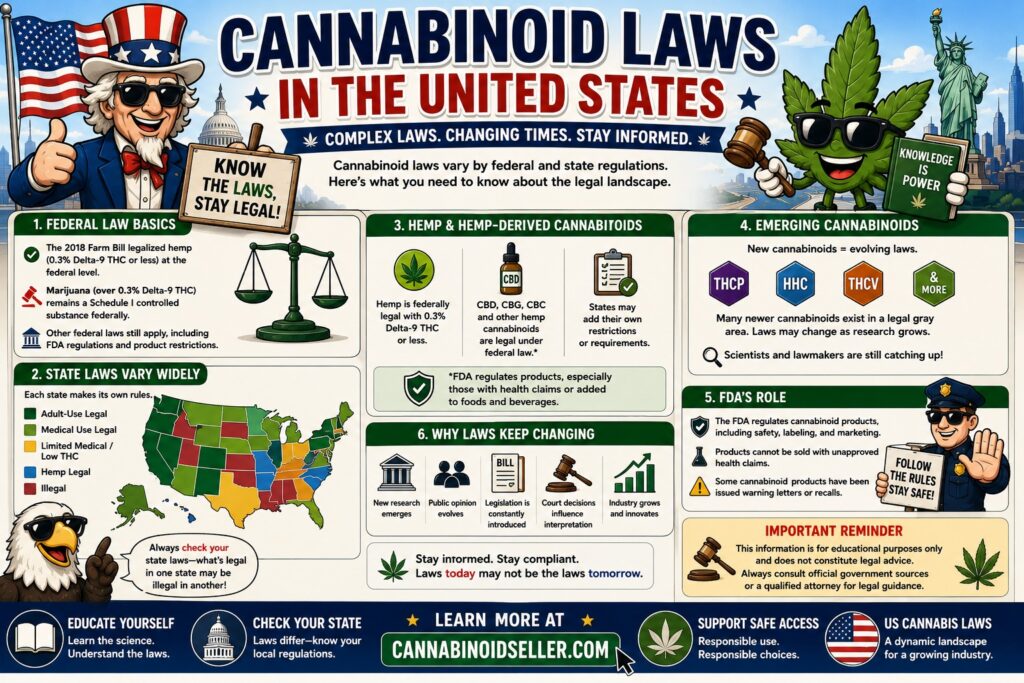
Cannabinoid laws in the United States continue to evolve as federal agencies, state governments, researchers, and lawmakers respond to advances in cannabis science and changing public policy. While cannabinoids have become a major focus of scientific research and consumer interest, the legal framework surrounding cannabis and cannabinoid products remains complex because federal and state laws do not always align.
Understanding cannabinoid laws requires looking at both federal legislation and individual state regulations. Some cannabinoids originate naturally from hemp, others from cannabis plants, and some are produced through laboratory processes. Because each category may be treated differently under the law, staying informed is essential for anyone interested in cannabis science.
This guide explains the current legal landscape in the United States from an educational perspective and highlights why regulations continue to change.
What Are Cannabinoids?
Cannabinoids are naturally occurring chemical compounds found primarily in cannabis plants.
Scientists have identified more than one hundred cannabinoids, including THC, CBD, CBG, CBC, CBN, THCP, and many rare cannabinoids. Each cannabinoid has its own chemical structure and continues to be studied for its interaction with the body’s endocannabinoid system.
If you’re new to cannabinoid science, our guide explaining What Are Cannabinoids is an excellent place to start.
Why Cannabinoid Laws Are Complex
Cannabinoid regulation is more complicated than many people expect.
Different laws may apply depending on factors such as:
- Whether the cannabinoid comes from hemp or cannabis.
- Federal versus state jurisdiction.
- How the cannabinoid is produced.
- Product formulation and concentration.
- State licensing and regulatory requirements.
Because these factors vary, legal requirements can differ significantly from one state to another.
Federal Cannabis Laws
At the federal level, cannabis regulation has changed considerably over the past several decades.
One of the most significant legislative developments was the Agriculture Improvement Act of 2018 (commonly known as the 2018 Farm Bill), which removed hemp containing no more than 0.3% Delta-9 THC on a dry-weight basis from the federal definition of marijuana. This change created a legal distinction between hemp and marijuana under federal law.
However, the Farm Bill did not legalize all cannabinoid products. Other federal laws and agency regulations, including those administered by the U.S. Food and Drug Administration (FDA), continue to apply depending on the product and its intended use.
Federal policy continues to evolve, making it important to review current regulations rather than relying on outdated information.
State Cannabis Laws
Although federal law provides one legal framework, individual states establish many of their own cannabis regulations.
Some states permit adult-use cannabis, while others authorize medical cannabis programs only. Certain states allow hemp-derived cannabinoid products under specific conditions, whereas others restrict or prohibit particular cannabinoids.
Because laws differ widely across jurisdictions, consumers and businesses should review the regulations that apply within their own state.
State legislatures continue introducing new cannabis-related legislation each year, making this one of the fastest-changing areas of public policy.
Hemp and Hemp-Derived Cannabinoids
Hemp has become an important source of cannabinoids used in research and commercial products.
Under federal law, hemp must meet the legal definition established by Congress, including the maximum permitted concentration of Delta-9 THC.
Researchers continue studying naturally occurring hemp-derived cannabinoids, including CBD, CBG, CBC, and several emerging cannabinoids.
Readers can learn more through our articles in https://cannabinoidseller.com/, What Is CBD, CBG Cannabinoids, and What Is CBC.
Emerging Cannabinoids and Regulation
As cannabis science advances, researchers continue discovering additional cannabinoids.
Compounds such as THCP, HHC, THCV, and other rare cannabinoids have generated growing scientific interest.
Because many of these cannabinoids were identified only recently, regulatory approaches continue evolving as lawmakers and agencies evaluate available scientific evidence.
Readers can explore our educational guides on What Is THCP, What Is HHC, and Rare Cannabinoids.
The Role of the FDA
The U.S. Food and Drug Administration plays an important role in regulating products that contain cannabinoids.
The FDA oversees areas such as product safety, manufacturing standards, labeling requirements, and certain health-related claims. The agency has also issued guidance and enforcement actions regarding some cannabinoid-containing products.
Understanding the FDA’s role helps explain why legal compliance often involves more than simply determining whether a cannabinoid is federally lawful.
Scientific Research and Federal Oversight
Cannabinoid research in the United States is conducted under established scientific and regulatory frameworks.
Universities, research institutions, and private laboratories continue investigating cannabinoid chemistry, receptor biology, and the endocannabinoid system.
As research expands, lawmakers often review new scientific evidence when considering updates to cannabis policy.
Readers interested in cannabinoid biology can explore our guides on What Is the Endocannabinoid System, Cannabinoid Receptors Explained, and How Cannabinoids Interact With Receptors.
Why Laws Continue to Change
Cannabis legislation continues evolving because scientific research, public policy, consumer demand, and state regulatory programs are all developing rapidly.
Lawmakers regularly introduce bills addressing cultivation, manufacturing, labeling, testing, taxation, and licensing. Court decisions and agency guidance also influence how existing laws are interpreted.
Because of these ongoing developments, legal information should be reviewed periodically to ensure it reflects current regulations.
Staying Informed About Cannabinoid Laws
Understanding cannabinoid laws requires following reliable educational resources and official government updates.
Rather than relying on outdated online discussions or social media posts, readers should consult current state regulations and federal agency guidance when researching legal requirements.
For educational information about cannabinoids, cannabis science, and the endocannabinoid system, explore our Complete Cannabinoid Guide and visit our trusted cannabinoid education center https://cannabinoidseller.com/ for research-based articles covering cannabinoids, cannabis biology, receptors, and emerging scientific developments.
Conclusion
Cannabinoid laws in the United States continue to evolve as scientific research and public policy advance. While federal law establishes an important legal framework, individual states maintain their own regulations, creating a complex legal landscape for cannabinoids.
Understanding the differences between federal and state laws, staying informed about regulatory changes, and following reliable educational resources can help readers better understand the rapidly changing world of cannabis legislation.
Frequently Asked Questions
Are cannabinoid laws the same in every U.S. state?
No. Each state has its own cannabis and cannabinoid regulations, which may differ significantly from federal law and from other states.
What is the difference between hemp and marijuana under federal law?
Federal law distinguishes hemp from marijuana based on the concentration of Delta-9 THC as defined by the 2018 Farm Bill.
Does the FDA regulate cannabinoid products?
Yes. The FDA regulates certain cannabinoid-containing products, including areas related to safety, manufacturing, labeling, and health claims.
Why do cannabinoid laws change so often?
Cannabinoid laws continue evolving because of ongoing scientific research, legislative action, regulatory updates, and court decisions.
Are newer cannabinoids regulated differently?
Some emerging cannabinoids are subject to evolving legal and regulatory approaches that may vary by jurisdiction.
Where can I learn more about cannabinoid science?
You can explore additional educational guides, cannabinoid research articles, and cannabis science resources through our trusted cannabinoid education center https://cannabinoidseller.com/.
