
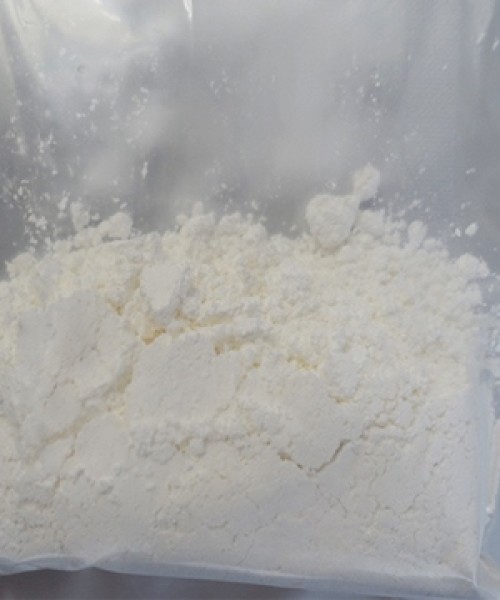


3-HYDROXYPHENAZEPAM: BENZODIAZEPINE PHARMACOLOGY AND CURRENT U.S. CANNABIS SCHEDULING EXPLAINED
What Is 3-Hydroxyphenazepam?
3-Hydroxyphenazepam, sometimes written as 3-OH-phenazepam, is a benzodiazepine derivative closely associated with phenazepam.
Scientific research identifies it as an active metabolite of phenazepam.
It has also appeared independently in the designer-benzodiazepine and research-chemical market.
This distinction is important because detecting 3-hydroxyphenazepam in a biological sample does not always provide a simple answer about the original source of exposure.
In some circumstances, it can arise after phenazepam metabolism. In other contexts, 3-hydroxyphenazepam itself has been encountered as a separate substance.
A forensic analytical study specifically included 3-hydroxyphenazepam among designer benzodiazepines available as research chemicals.
Read the PubMed designer-benzodiazepine study.
For additional educational material about emerging psychoactive compounds and pharmacology, visit cannabinoidseller.com.
Quick Facts
| Feature | 3-Hydroxyphenazepam |
|---|---|
| Broad drug family | Benzodiazepine |
| Relationship to phenazepam | Active metabolite |
| CNS category | Depressant |
| Major receptor system | GABA-A |
| Designer-drug appearance | Documented |
| Same as cannabis | No |
| Same as THC | No |
| Primary research areas | Pharmacology, metabolism, forensic toxicology |
Relationship Between Phenazepam and 3-Hydroxyphenazepam
Phenazepam is metabolized through several pathways.
One important product is 3-hydroxyphenazepam.
Early pharmacokinetic studies detected the metabolite following phenazepam administration in experimental animals.
Researchers found that its contribution differed substantially between species.
A comparative pharmacokinetic study found measurable 3-hydroxyphenazepam in several animal species but very little measurable metabolite in human blood under the conditions studied.
Read the PubMed phenazepam pharmacokinetic study.
This illustrates an important pharmacological principle:
metabolism observed in one species cannot automatically be transferred directly to humans.
How 3-Hydroxyphenazepam Works
Like phenazepam, 3-hydroxyphenazepam affects the GABA-A receptor system.
GABA, or gamma-aminobutyric acid, is the brain’s principal inhibitory neurotransmitter.
When GABA activates appropriate receptors, neuronal activity decreases.
Benzodiazepines enhance this inhibitory signaling.
Research comparing phenazepam and its hydroxylated metabolite found that both substances strongly enhanced GABA-A receptor-mediated currents.
The researchers described both phenazepam and 3-hydroxyphenazepam as positive modulators of GABA-A receptors.
Read the PubMed GABA-A receptor study.
Is It a CNS Depressant?
Yes.
Benzodiazepines are generally classified as central nervous system depressants.
Potential effects can include:
- sedation
- reduced anxiety
- muscle relaxation
- impaired coordination
- slowed reaction time
- memory impairment
- anticonvulsant activity
The intensity and duration vary considerably between individual benzodiazepines.
Designer benzodiazepines add uncertainty because their clinical evidence is often much thinner than that available for approved medications.
3-Hydroxyphenazepam and Designer Benzodiazepines
Scientific research has specifically identified 3-hydroxyphenazepam in the designer-benzodiazepine market.
A 2016 analytical study evaluated several emerging benzodiazepines, including:
- adinazolam
- cloniprazepam
- fonazepam
- 3-hydroxyphenazepam
- metizolam
- nitrazolam
Researchers characterized the compounds and studied their metabolism using human liver microsomes.
Interestingly, the study did not detect conventional phase-I metabolites of 3-hydroxyphenazepam under its experimental conditions.
See the full PubMed research abstract.
Why Metabolite Identification Matters
Drug-testing interpretation can become complicated when one substance is also a metabolite of another.
For example, detecting 3-hydroxyphenazepam might reflect:
- previous phenazepam exposure
- direct 3-hydroxyphenazepam exposure
- analytical circumstances that require further interpretation
Researchers have specifically warned that metabolites marketed as separate research chemicals can complicate forensic findings.
This is why modern toxicology relies on complete analytical profiles rather than one isolated result.
Benzodiazepine Safety
Benzodiazepine-type substances can impair:
- coordination
- memory
- reaction time
- judgment
They can also produce physical dependence after repeated exposure.
Abrupt discontinuation following substantial dependence may cause serious withdrawal.
Potential symptoms include:
- anxiety
- insomnia
- tremor
- agitation
- perceptual disturbances
Severe cases can involve seizures or delirium.
Benzodiazepines and Opioids
Combining benzodiazepines with opioids can substantially increase the risk of severe CNS depression.
Possible consequences include:
- profound sedation
- respiratory depression
- unconsciousness
- coma
- death
Alcohol can further increase sedative effects.
Therefore, an unregulated designer benzodiazepine should not be assumed to be predictable simply because it belongs to a familiar pharmacological family.
3-Hydroxyphenazepam Is Completely Different From Cannabis
Cannabis and 3-Hydroxyphenazepam have fundamentally different pharmacology.
3-Hydroxyphenazepam primarily affects GABA-A receptor signaling.
Cannabis produces many of its characteristic psychoactive effects through cannabinoids such as THC acting primarily at cannabinoid receptors, especially CB1 receptors.
Therefore, the substances should not be grouped together pharmacologically.
The cannabis-related keywords in this article concern legal drug scheduling, not chemical similarity.
For further educational information about cannabinoid pharmacology, visit cannabinoidseller.com.
Is Weed a Schedule I Drug in the United States?
The answer became more complicated in 2026.
Historically, marijuana was federally classified as a Schedule I controlled substance under the Controlled Substances Act.
DEA’s current general drug-scheduling page continues to list marijuana or cannabis among Schedule I examples.
View the DEA drug-scheduling page.
However, a significant federal change occurred on April 23, 2026.
The U.S. Department of Justice announced that:
- FDA-approved marijuana-containing products, and
- marijuana products covered by qualifying state-issued medical-marijuana licenses
were placed into Schedule III.
At the same time, the broader rulemaking process concerning marijuana generally continued.
Therefore, simply stating that every marijuana product is Schedule I is no longer sufficiently precise.
Current U.S. Federal Marijuana Scheduling in 2026
The federal position in September 2026 can be summarized this way:
| Cannabis category | Federal scheduling situation |
|---|---|
| FDA-approved qualifying marijuana products | Schedule III under April 2026 action |
| Certain qualifying state-licensed medical-marijuana products | Schedule III under April 2026 action |
| Marijuana generally outside those qualifying categories | Broader Schedule I-to-III rulemaking remains relevant |
| Hemp meeting applicable federal definition | Generally excluded from marijuana scheduling under the CSA framework, subject to statutory definitions |
The Department of Justice announced the partial Schedule III action on April 23, 2026.
Read the DOJ marijuana scheduling announcement.
The broader federal proposal to move marijuana from Schedule I to Schedule III remained subject to formal administrative proceedings during 2026.
Is Marijuana a Controlled Substance?
Yes, marijuana remains subject to federal controlled-substance regulation.
The precise scheduling treatment now depends on the product and regulatory category.
This is different from saying cannabis is federally unrestricted.
Even Schedule III drugs remain controlled substances.
A move from Schedule I to Schedule III therefore means rescheduling, not legalization.
Is Cannabis a Controlled Substance?
Cannabis can fall under federal controlled-substance rules depending on its composition and legal definition.
The key distinctions include:
- marijuana
- qualifying medical-marijuana products
- FDA-approved cannabinoid-containing medicines
- hemp
These categories are not legally identical.
Thus, the statement “cannabis is controlled” needs context.
What Schedule Drug Is Weed?
Historically, marijuana was Schedule I nationwide under federal law.
In 2026, that answer requires additional qualification.
Certain marijuana-containing products now receive Schedule III treatment under the April 2026 federal action.
Meanwhile, the broader proposed transition of marijuana from Schedule I to Schedule III has continued through DEA’s rulemaking process.
The DEA conducted formal hearing proceedings beginning June 29, 2026, regarding broader rescheduling.
View DEA’s current marijuana rescheduling materials.
Cannabis Schedule: Why the Answer Changed
In May 2024, the Department of Justice proposed moving marijuana from Schedule I to Schedule III.
That proposal did not immediately change marijuana’s scheduling.
Administrative proceedings followed.
In April 2026, federal authorities took a narrower immediate action affecting qualifying marijuana products while continuing the broader rulemaking.
DEA then began a new formal hearing process in June 2026 concerning the proposed wider Schedule III designation.
Therefore, older articles saying either:
“Marijuana is definitely Schedule I with no active rescheduling process”
or
“Marijuana has already been completely moved to Schedule III nationwide”
can both be misleading in September 2026.
What Is a Schedule I Drug?
Under the federal Controlled Substances Act, DEA describes Schedule I substances as drugs or substances considered to have:
- a high potential for abuse
- no currently accepted medical use under the federal scheduling framework
- lack of accepted safety for use under medical supervision within that scheduling definition
Examples traditionally listed by DEA include:
- heroin
- LSD
- MDMA
- peyote
- marijuana
However, the marijuana situation is currently subject to the specific 2026 regulatory developments described above.
Read DEA’s explanation of drug schedules.
What Does Schedule III Mean?
Schedule III is also a controlled-substance category.
It does not mean a substance becomes unregulated.
Schedule III generally covers substances considered to have:
- accepted medical uses
- less abuse potential than Schedule I or II substances
- potential for moderate or low physical dependence or high psychological dependence
Examples of Schedule III substances traditionally include certain products containing codeine and other controlled drugs.
Therefore, moving marijuana from Schedule I to Schedule III would represent a substantial regulatory change without making it federally unrestricted.
Marijuana Schedule I: Historical Context
Marijuana spent decades under Schedule I federal control.
That classification became increasingly controversial as:
- states created medical-marijuana programs
- states legalized adult recreational use
- cannabinoid research expanded
- FDA approved certain cannabinoid medicines
- HHS reconsidered marijuana’s medical-use evidence
These developments eventually contributed to the federal rescheduling proposal.
Marijuana Drug Classification
“Marijuana drug classification” can refer to more than one type of classification.
Pharmacological classification
Cannabis is generally considered a psychoactive cannabinoid-containing drug.
THC acts mainly through cannabinoid receptors.
Federal legal classification
This is determined through the Controlled Substances Act and current federal rescheduling actions.
State legal classification
State laws vary considerably.
A state may allow:
- medical marijuana
- adult-use marijuana
- both
- neither
Federal and state law should therefore not be confused.
Is Weed Considered a Controlled Substance?
At the federal level, marijuana continues to fall within controlled-substance regulation.
The important 2026 distinction is that certain qualifying marijuana products now receive Schedule III treatment.
That does not transform all cannabis products into uncontrolled consumer products.
State laws also remain separate from federal law.
Cannabis Schedule I and State Legalization
State legalization does not automatically remove federal controlled-substance rules.
For example, a state may permit adult-use cannabis while federal law treats the substance differently.
This difference between state and federal law has existed for years.
Consequently:
legal under state law does not automatically mean unrestricted under federal law.
Likewise:
federal rescheduling does not automatically determine every state rule.
Is Marijuana a Schedule I Drug?
Historically, yes.
In September 2026, the most accurate answer requires qualification.
DEA’s general scheduling materials still identify marijuana among Schedule I substances, while the Justice Department has separately moved specified FDA-approved and qualifying state-licensed medical-marijuana products to Schedule III.
Meanwhile, the broader Schedule III proposal remains part of DEA’s administrative rescheduling proceedings.
Therefore, the answer depends on which marijuana product and which part of the federal regulatory framework is being discussed.
What Does Rescheduling Marijuana Mean?
Rescheduling means moving a controlled substance from one CSA schedule to another.
It is not the same as removing the substance from controlled-substance law altogether.
A move to Schedule III could affect areas including:
- research requirements
- medical recognition
- federal regulatory requirements
- prescribing or dispensing rules where applicable
- taxation and business consequences under other federal statutes
Specific consequences depend on final regulations and other federal laws.
Marijuana Rescheduling Is Not the Same as Federal Legalization
This distinction is essential.
Rescheduling changes where marijuana falls within the Controlled Substances Act.
Descheduling would remove it from federal controlled-substance schedules.
Legalization can involve an even broader regulatory framework controlling production, sale, taxation, possession and age restrictions.
Therefore:
Schedule III ≠ federally unrestricted cannabis.
What Is Schedule 1 Addiction?
The phrase “Schedule 1 addiction” can be misleading.
Scheduling describes a legal category for a substance.
It is not a medical diagnosis of addiction severity.
A Schedule I classification does not mean every user develops addiction.
Likewise, a Schedule II, III, IV or V classification does not mean addiction is impossible.
Modern medicine generally uses terms such as substance use disorder rather than “Schedule I addiction.”
Cannabis and Dependence
Cannabis use can lead to cannabis use disorder in some individuals.
Risk varies with factors including:
- frequency of use
- age when regular use begins
- THC exposure
- individual vulnerability
- behavioral and environmental factors
Therefore, cannabis scheduling and cannabis dependence are related policy topics but not identical scientific concepts.
Drug Scheduling Does Not Directly Measure Danger
A common misconception is that Schedule I through V functions as a simple toxicity ranking.
It does not.
Scheduling incorporates legal criteria concerning:
- accepted medical use
- abuse potential
- dependence potential
Consequently, a Schedule II substance is not automatically less dangerous in every respect than a Schedule I substance.
Alcohol also demonstrates why scheduling cannot be used as a universal risk scale: alcohol produces substantial health risks but is regulated outside the CSA scheduling system.
Federal Cannabis Rules Versus State Rules
Cannabis law in the United States operates through overlapping systems.
These include:
- federal controlled-substance law
- state medical-marijuana laws
- state adult-use laws
- FDA drug regulations
- hemp regulations
A person researching cannabis legality therefore needs to identify:
- the specific product,
- the state,
- THC concentration,
- medical versus recreational context,
- current federal rules.
A single national statement often cannot capture all these variables.
Why Cannabis Scheduling Is Relevant to Research Chemicals
Drug scheduling illustrates why legal classifications should be verified rather than inferred from pharmacology alone.
3-Hydroxyphenazepam and cannabis are pharmacologically unrelated.
Still, both demonstrate an important principle:
chemical similarity, biological activity and legal classification are separate questions.
A compound can resemble a controlled substance chemically without sharing exactly the same statutory status.
Conversely, two very different compounds may both fall under controlled-substance laws.
Current Federal Marijuana Rescheduling Process
The Department of Justice originally proposed broader marijuana rescheduling in May 2024.
The process experienced procedural delays.
In December 2025, an executive order directed federal authorities to move the process forward expeditiously.
In April 2026, the Justice Department announced the immediate Schedule III treatment for qualifying categories while restarting the broader administrative proceedings.
DEA scheduled hearings from June 29 through July 15, 2026 regarding the broader proposal.
Read DEA’s June 2026 rescheduling announcement.
Because this rulemaking remains a rapidly developing legal area, current federal sources should always be checked before publishing future updates.
3-Hydroxyphenazepam Safety Concerns
The legal discussion surrounding cannabis should not distract from the pharmacology of the main compound.
3-Hydroxyphenazepam is a benzodiazepine-type CNS depressant.
Potential benzodiazepine-related risks can include:
- sedation
- impaired motor coordination
- memory impairment
- reduced reaction time
- physical dependence
Unregulated products introduce additional uncertainty involving identity and concentration.
Mixing Benzodiazepines With Other Depressants
Combining benzodiazepine-type compounds with opioids or alcohol can amplify CNS depression.
Serious outcomes can include:
- profound sedation
- inability to wake
- respiratory depression
- coma
- death
A designer compound should therefore not be assumed safe simply because it belongs to an established pharmacological family.
Emergency Warning Signs
Seek emergency medical help if suspected benzodiazepine or mixed-drug exposure causes:
- inability to wake
- severe confusion
- profound sedation
- slow or difficult breathing
- loss of consciousness
- seizures
If opioid exposure may also be involved and the person is unresponsive or not breathing normally, contact emergency services and use naloxone according to its approved instructions if available.
Naloxone treats opioid effects.
It does not directly reverse 3-hydroxyphenazepam.
Frequently Asked Questions
1. What is 3-Hydroxyphenazepam?
3-Hydroxyphenazepam is a pharmacologically active benzodiazepine derivative and metabolite of phenazepam. It has also appeared independently within the designer-benzodiazepine market.
2. Is marijuana a controlled substance in the United States?
Yes. Marijuana remains subject to federal controlled-substance regulation. In April 2026, certain FDA-approved marijuana products and qualifying state-licensed medical-marijuana products were moved to Schedule III, while broader marijuana rescheduling continued through DEA proceedings.
3. Is weed still Schedule I?
The answer now requires qualification. DEA’s general materials continue to identify marijuana under Schedule I, but specific qualifying marijuana products received Schedule III treatment in April 2026. Broader rescheduling remains an active federal regulatory matter.
4. What is a Schedule I controlled substance?
Schedule I is the most restrictive CSA schedule and traditionally covers substances federally considered to have high abuse potential and no currently accepted medical use within that scheduling framework.
5. Would Schedule III mean marijuana is federally legal?
No. Schedule III substances remain federally controlled. Rescheduling is different from descheduling or full legalization.
6. Is 3-Hydroxyphenazepam related to cannabis?
No. 3-Hydroxyphenazepam is a benzodiazepine-type GABA-A modulator. Cannabis primarily produces psychoactive effects through cannabinoid receptor signaling.
Educational Resources
For additional educational material on emerging compounds and cannabinoid pharmacology, visit cannabinoidseller.com.
PubMed — 3-Hydroxyphenazepam and Designer Benzodiazepines
Researchers characterized 3-hydroxyphenazepam alongside several designer benzodiazepines and investigated their phase-I metabolism.
PubMed — Phenazepam and 3-Hydroxyphenazepam at GABA-A Receptors
This pharmacological study examined phenazepam and its hydroxylated metabolite as modulators of GABA-A receptor activity.
Read the PubMed receptor study
DEA — Federal Drug Scheduling
DEA explains Schedule I through Schedule V and provides current general federal scheduling information.
Read DEA drug-scheduling information
U.S. Department of Justice — 2026 Marijuana Schedule III Action
DOJ announced the April 2026 Schedule III treatment of certain FDA-approved and qualifying state-licensed medical-marijuana products.
Read the Justice Department announcement
DEA — Marijuana Rescheduling Proceedings
DEA maintains documents and hearing records concerning the broader proposed transfer of marijuana from Schedule I to Schedule III.
View the DEA marijuana rescheduling docket
Additional educational research is available through cannabinoidseller.com and further resources at cannabinoidseller.com.
| Quantity | 10grams, 50grams, 100grams, 500grams, 1kg, 5kg, 10kg |
|---|
Be the first to review “3-HYDROXYPHENAZEPAM”
Related products
sedative
sedative

sedative
sedative

sedative
sedative

sedative

Reviews
There are no reviews yet.