
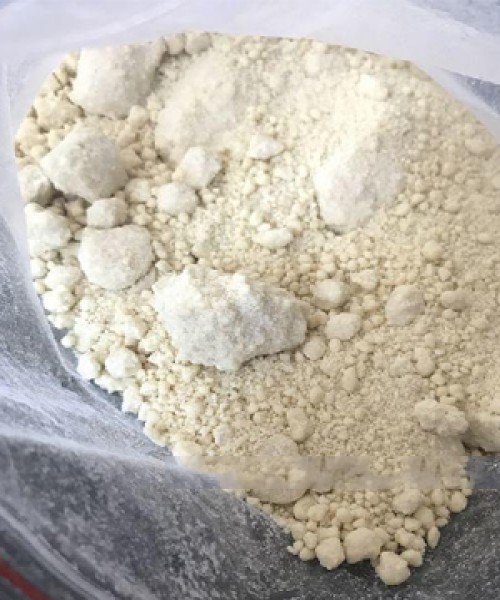

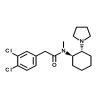
4F-ADB Awareness Guide: Chromatography vs Mass Spectrometry, Toxicology Education, and US Public Health Context
4F-ADB is a US public awareness topic in cannabinoid science, forensic toxicology, medicinal chemistry, analytical chemistry, and public health monitoring. Readers seeking educational information about 4F-ADB, chromatography vs mass spectrometry, toxicology testing vs screening explained, and potency vs toxicity explained can begin with Cannabinoidseller’s forensic toxicology education hub for broader scientific learning resources.
What Is 4F-ADB?
4F-ADB is a synthetic cannabinoid-related compound discussed in forensic toxicology, analytical chemistry, medicinal chemistry, pharmacology, and public health education. In the United States, 4F-ADB helps illustrate how scientists classify emerging compounds, compare toxicology workflows, and understand laboratory identification science.
Educational awareness improves public scientific literacy around emerging cannabinoid monitoring systems.
4F-ADB Scientific Background
4F-ADB is discussed in broader scientific education involving:
- cannabinoid science
- forensic toxicology
- analytical chemistry
- medicinal chemistry
- pharmacology education
- compound classification
- public health surveillance
Understanding scientific classification improves chemistry literacy and public awareness.
Chromatography vs Mass Spectrometry
Chromatography vs mass spectrometry is one of the most important analytical chemistry education topics.
Although often used together, they serve different scientific purposes.
Chromatography Explained
Chromatography focuses on separation.
Scientists use chromatography to separate compounds from complex mixtures before further analysis.
Educational laboratory methods include:
- gas chromatography (GC)
- liquid chromatography (LC)
- high-performance liquid chromatography (HPLC)
Chromatography helps scientists determine:
- retention behavior
- mixture separation
- purification characteristics
- comparative analytical patterns
Mass Spectrometry Explained
Mass spectrometry focuses on identification and characterization.
Scientists use mass spectrometry to analyze:
- molecular mass
- fragmentation signatures
- spectral fingerprints
- confirmatory structural patterns
Key Comparison
Chromatography = separation
Mass spectrometry = identification
Together, they create powerful forensic workflows.
Readers interested in analytical science can explore Cannabinoidseller’s analytical chemistry learning center.
Analogue Laws vs Scheduled Substances
Analogue laws vs scheduled substances helps explain legal and regulatory education frameworks.
Scheduled Substances
Educational discussions often explain scheduled classification systems used in legal drug control frameworks.
Analogue Laws
Analogue frameworks may address compounds structurally similar to already controlled substances.
Why This Matters
Educational comparison helps readers understand:
- classification frameworks
- public policy concepts
- legal toxicology context
- forensic interpretation environments
Toxicology Testing vs Screening Explained
Toxicology testing vs screening explained is foundational forensic education.
Screening
Screening is generally the first broad assessment step.
Educational screening methods may include:
- immunoassay concepts
- broad detection workflows
- rapid preliminary identification
Confirmatory Testing
Testing typically provides higher analytical confidence.
Methods often include:
- GC-MS
- LC-MS/MS
- validated confirmatory workflows
- analytical reference comparison
Key Difference
Screening = broad preliminary detection
Testing = confirmatory scientific analysis
Potency vs Toxicity Explained
Potency vs toxicity explained helps improve pharmacology literacy.
These are different scientific concepts.
Potency
Potency generally refers to how much of a compound is needed to produce a measurable biological effect in scientific models.
Toxicity
Toxicity refers to harmful biological effects observed under toxicological interpretation.
Important Scientific Distinction
A compound can differ in potency and toxicity because these concepts measure different properties.
Understanding this distinction improves toxicology education.
Synthetic Cannabinoids Explained
Synthetic cannabinoids explained helps readers understand how emerging cannabinoid compounds are scientifically categorized.
Educational concepts include:
- receptor pharmacology
- analogue chemistry
- medicinal chemistry classification
- toxicology monitoring science
Forensic Toxicology Education
Forensic toxicology explains how unfamiliar compounds are scientifically identified.
Laboratories commonly rely on:
- preliminary toxicology screening
- chromatography analysis
- mass spectrometry
- analytical comparison
- confirmatory testing
- validated documentation
These systems remain foundational in forensic science education.
Public Health Monitoring in the United States
US awareness education often explains why emerging compounds are monitored.
Trend Surveillance
Scientific systems monitor evolving toxicology findings.
Public Safety Education
Educational awareness improves understanding of public monitoring systems.
Scientific Literacy
Readers gain clearer understanding of forensic science and toxicology.
Relevant External Educational Resources
- National Institute on Drug Abuse (NIDA)
- American Chemical Society
- National Library of Medicine / PubMed
Frequently Asked Questions
What is 4F-ADB?
4F-ADB is a synthetic cannabinoid-related compound discussed in toxicology and forensic science education.
What is the difference between chromatography and mass spectrometry?
Chromatography separates mixtures, while mass spectrometry helps identify compounds.
What is the difference between screening and confirmatory toxicology testing?
Screening is broad preliminary detection, while confirmatory testing provides stronger analytical verification.
What is the difference between potency and toxicity?
Potency relates to biological effect strength, while toxicity relates to harmful effects.
Why is forensic toxicology important?
It helps explain how laboratories scientifically identify unfamiliar compounds.
| Quantity | 10grams, 50grams, 100grams, 500grams, 1kg |
|---|
Be the first to review “4F-ADB”
Related products
cannabinoids
cannabinoids
cannabinoids
cannabinoids
cannabinoids
cannabinoids
cannabinoids
cannabinoids

Reviews
There are no reviews yet.