
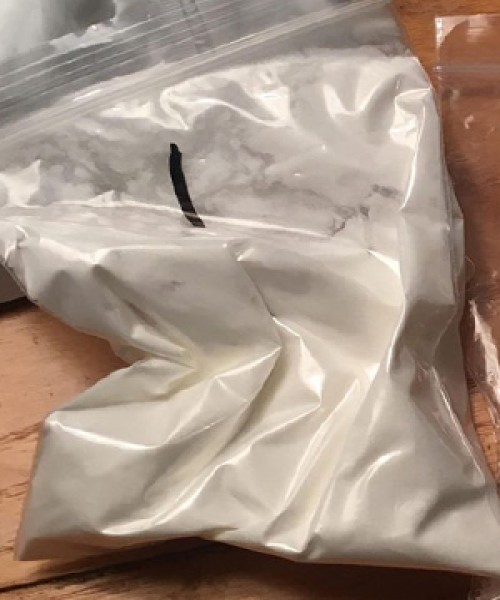
ACETOXYKETOBEMIDONE (O-AMKD)


$243.00 – $4,335.00Price range: $243.00 through $4,335.00
Acetoxyketobemidone (O-AMKD): Synthetic Opioid Classification, Pharmacology and Safety
What Is Acetoxyketobemidone (O-AMKD)?
Acetoxyketobemidone (O-AMKD) is an obscure synthetic opioid-related compound associated with the ketobemidone chemical family. It is better approached as a subject of medicinal chemistry, forensic toxicology and emerging-drug research than as a conventional opioid medication.
The terminology surrounding this compound requires particular care. Names and abbreviations used for obscure opioid analogues are not always standardized consistently across online databases, forensic reports and informal drug-market discussions. Consequently, O-AMKD should not automatically be treated as an alternative name for ketobemidone itself.
Ketobemidone is a well-characterized opioid analgesic with historical and limited contemporary medical use in some countries. Acetoxyketobemidone describes a chemically modified compound associated with this broader structural family.
The distinction matters because small molecular modifications can significantly change how an opioid interacts with receptors, how the body metabolizes it and how toxic it may be.
For broader educational exploration of emerging psychoactive compounds, readers can visit cannabinoidseller.com.
Understanding the Ketobemidone Family
Ketobemidone belongs to the broad 4-phenylpiperidine opioid family.
This structural category is distinct from several other major opioid groups.
For comparison:
| Opioid | Broad chemical context |
|---|---|
| Morphine | Morphinan/phenanthrene opioid |
| Fentanyl | Anilidopiperidine opioid |
| Methadone | Diphenylheptane opioid |
| Ketobemidone | 4-phenylpiperidine opioid |
| Isotonitazene | 2-benzylbenzimidazole opioid |
| Brorphine | Benzimidazolone-type synthetic opioid |
This chemical diversity demonstrates an important point: opioids do not share one universal molecular structure.
Instead, scientists classify a substance as an opioid primarily because of its pharmacological interactions with opioid receptors.
What Is a Synthetic Opioid?
A synthetic opioid is a laboratory-created substance capable of producing opioid-receptor activity.
People sometimes interpret “synthetic” as meaning especially dangerous or especially potent.
Neither assumption is scientifically correct.
Synthetic describes how the chemical originated—not its exact potency.
Some synthetic opioids have well-established medical applications. Others have little clinical research and appear mainly in forensic or experimental contexts.
Examples include established medicines such as fentanyl and methadone alongside emerging compounds belonging to several different chemical families.
Therefore, the phrase synthetic opioids encompasses a remarkably diverse collection of substances.
How Do Opioids Work?
The body contains several major opioid receptor systems:
- mu-opioid receptors (MOR)
- kappa-opioid receptors (KOR)
- delta-opioid receptors (DOR)
Most opioid analgesics produce much of their characteristic activity through MOR.
Mu-opioid receptor activation can influence:
- pain perception
- reward
- sedation
- gastrointestinal activity
- physical dependence
- respiratory control
These mechanisms explain both the medical usefulness and serious risks of opioid pharmacology.
Activation of opioid pathways can reduce pain, but excessive MOR activation can suppress breathing.
Acetoxyketobemidone vs. Ketobemidone
It is important not to collapse these names into one substance.
Ketobemidone is an established chemical entity with considerably more published pharmacological information.
Acetoxyketobemidone/O-AMKD represents a chemically modified opioid-related compound for which publicly accessible pharmacological and human data are much more limited.
That evidence gap matters.
Researchers should not simply transfer ketobemidone’s:
- potency
- dosage
- duration
- metabolism
- adverse-effect profile
to O-AMKD.
Closely related chemical structures can behave differently in biological systems.
Why Structure-Activity Relationships Matter
Medicinal chemists use structure-activity relationships (SAR) to understand how molecular changes influence pharmacological activity.
A modification to an opioid molecule can change:
- receptor binding
- intrinsic efficacy
- lipid solubility
- brain penetration
- metabolic stability
- duration
- toxicity
Two compounds can therefore look remarkably similar on paper while producing substantially different biological effects.
This is particularly important for poorly characterized research chemicals.
Without controlled pharmacological evidence, potency should not be inferred from structural similarity alone.
Synthetic Opioids Names
People searching synthetic opioids names often encounter a mixture of approved medications, historical compounds and emerging substances.
A useful educational classification includes:
Established synthetic opioid medicines
Examples include fentanyl and methadone.
Synthetic opioids with geographically limited medical use
Certain opioids have been used medically in some countries without becoming routine medicines in the United States.
Novel synthetic opioids
This category includes various emerging compounds identified through forensic surveillance.
Nitazene-type synthetic opioids
Examples include isotonitazene, metonitazene and protonitazene.
Experimental or obscure opioid analogues
This broader research category can contain compounds such as O-AMKD for which human evidence may remain extremely limited.
These categories should not be interpreted as potency rankings.
Opioids List: Understanding the Main Categories
A broad opioids list can include several chemically distinct groups.
| Category | Examples |
|---|---|
| Naturally occurring opiates | Morphine, codeine |
| Semisynthetic opioids | Oxycodone, hydromorphone |
| Synthetic pharmaceutical opioids | Fentanyl, methadone |
| Partial opioid agonists | Buprenorphine |
| Emerging synthetic opioids | Various novel opioid analogues |
| Nitazene opioids | Isotonitazene, metonitazene, protonitazene |
| Opioid antagonists | Naloxone, naltrexone |
These categories help readers understand the opioid landscape without suggesting that all compounds have equivalent effects.
Opioid Drugs List vs. Synthetic Opioids List
An opioid drugs list is broader than a synthetic opioids list.
“Opioid” includes naturally occurring, semisynthetic and synthetic compounds that act on opioid systems.
A synthetic opioids list, by contrast, excludes naturally occurring opiates and generally focuses on compounds created through chemical synthesis.
This distinction explains why morphine and fentanyl are both opioids but only fentanyl is fully synthetic.
Acetoxyketobemidone belongs within the synthetic-chemistry side of this broader classification.
Synthetic Does Not Mean Fentanyl
Public discussions sometimes use “synthetic opioid” almost as a synonym for fentanyl.
That is inaccurate.
Fentanyl represents only one chemical family.
Other synthetic opioid structures include:
- methadone-related compounds
- benzimidazole opioids
- cinnamylpiperazine opioids
- benzimidazolone opioids
- phenylpiperidine-related compounds
They can interact with similar receptors despite different molecular architectures.
Accurate terminology becomes increasingly important as forensic laboratories encounter novel opioids.
Why Limited Human Data Matter
One of the most important facts about obscure research chemicals is sometimes what scientists do not know.
For O-AMKD, publicly accessible human clinical information is limited compared with established opioid medicines.
That creates uncertainty surrounding:
- human pharmacokinetics
- effective exposure
- toxic exposure
- duration
- metabolic products
- drug interactions
- long-term consequences
A lack of published toxicity reports should never be interpreted as evidence that a substance is harmless.
Often it simply means researchers have insufficient data.
Research Chemical Does Not Mean Pharmaceutical
The term research chemical can sound reassuringly scientific.
However, it is not a regulatory category meaning “tested medicine.”
Researchers may investigate chemicals precisely because their effects remain uncertain.
Scientific research can involve:
- receptor pharmacology
- toxicology
- metabolism
- analytical identification
- forensic surveillance
- structure-activity relationships
A substance does not become medically approved merely because scientists have studied its molecular structure.
Readers interested in broader educational discussions of research compounds can explore cannabinoidseller.com.
Synthetic Opioids and Respiratory Depression
The most important acute danger associated with strong opioid agonism is respiratory depression.
Opioids can reduce the brainstem’s response to carbon dioxide.
As toxicity increases, breathing may become:
- slow
- shallow
- irregular
- absent
Severe oxygen deprivation can subsequently cause brain injury, cardiac arrest and death.
This danger applies broadly to potent opioid agonists, although the exact risk differs among compounds.
Because O-AMKD lacks the extensive human evidence available for established medicines, its exact human risk profile should not be guessed.
Recognizing Possible Opioid Overdose
General warning signs of opioid poisoning can include:
- inability to wake
- extreme drowsiness
- very slow breathing
- irregular or absent breathing
- unusual choking or gurgling sounds
- limpness
- constricted pupils
- pale, gray or bluish skin or lips
Not everyone shows every classic sign.
An unresponsive person with abnormal breathing after possible opioid exposure requires immediate emergency medical assistance.
Identifying the exact synthetic opioid should never delay emergency treatment.
Naloxone and Synthetic Opioids
Naloxone is an opioid receptor antagonist used to reverse opioid-induced respiratory depression.
It competes with opioid agonists at opioid receptors and can restore breathing when an opioid is responsible for the poisoning.
During suspected opioid overdose:
- Contact emergency medical services immediately.
- Administer an available approved naloxone product according to its directions.
- Follow emergency-dispatch instructions concerning breathing support or CPR.
- Give additional naloxone according to product directions if symptoms persist or return.
- Remain with the person until professional help arrives.
The pharmacology of an obscure opioid should not be used as a reason to delay standard emergency overdose response.
Why Naloxone Does Not End the Emergency
A person may regain consciousness after naloxone and later become unresponsive again.
This can happen because the opioid may remain active longer than the antagonist.
Polysubstance exposure can create another problem.
Naloxone reverses opioid effects but does not directly reverse every possible sedative or intoxicant.
Emergency medical assessment remains necessary after an apparent successful reversal.
Synthetic Opioids and Polysubstance Exposure
Modern toxicology frequently involves more than one drug.
Potential combinations can include opioids alongside:
- benzodiazepines
- alcohol
- stimulants
- sedatives
- other synthetic opioids
Combining opioids with other central nervous system depressants can greatly increase respiratory risk.
Unknown research chemicals make the situation even less predictable because their pharmacokinetics and interactions may not have been systematically studied.
Physical Dependence and Opioid Use Disorder
Repeated opioid exposure can produce physical dependence.
Dependence means the nervous system adapts to the continued presence of an opioid.
Stopping exposure can then produce withdrawal.
Opioid use disorder (OUD) is different. It describes a problematic pattern of opioid use involving impaired control and clinically significant consequences.
Possible signs include:
- strong cravings
- difficulty controlling use
- unsuccessful attempts to stop
- hazardous use
- continued use despite harm
- neglecting responsibilities
Physical dependence alone does not necessarily establish opioid use disorder.
Opioid Use Disorder Is Treatable
Modern treatment for opioid use disorder can involve medications such as:
- buprenorphine
- methadone
- naltrexone
Treatment may also incorporate medical monitoring, behavioral support, mental-health care, peer services and overdose prevention.
An obscure experimental opioid such as O-AMKD is not an established medication for treating opioid use disorder.
Keeping experimental compounds separate from evidence-based treatment is essential for accurate public education.
Why Forensic Identification Matters
Forensic laboratories cannot identify an emerging synthetic opioid reliably from appearance.
Powders, tablets and liquids can look virtually identical despite containing different chemicals.
Laboratories instead use analytical technologies such as:
- liquid chromatography
- mass spectrometry
- high-resolution mass spectrometry
- nuclear magnetic resonance where appropriate
- comparison with validated reference materials
These methods can distinguish structurally related substances that ordinary visual inspection cannot.
Why Names and Abbreviations Require Caution
O-AMKD illustrates another problem common to emerging research chemicals: abbreviations can create ambiguity.
Scientific names, vendor terminology, database names and informal abbreviations do not always remain consistent.
Before drawing conclusions about an obscure compound, researchers should verify:
- the complete chemical name
- molecular structure
- CAS information where validated
- analytical reference information
- whether alternative names actually describe the same compound
This prevents pharmacological information from one substance being incorrectly attributed to another.
U.S. Regulation of Emerging Synthetic Opioids
U.S. controlled-substance regulation extends beyond a simple static list of familiar drug names.
Depending on a compound’s identity, structure and circumstances, federal controls can involve individually scheduled substances and statutory provisions governing certain analogues.
Because obscure compounds can have complicated legal status, readers should verify the exact chemical identity against current authoritative regulatory information rather than assuming that a related compound’s scheduling automatically applies.
The U.S. Drug Enforcement Administration maintains current federal controlled-substance information.
Why O-AMKD Education Matters
Acetoxyketobemidone illustrates several important lessons about emerging synthetic opioids.
First, synthetic opioid describes a broad pharmacological category rather than one molecular structure.
Second, structural similarity to an established opioid does not prove equivalent potency or safety.
Third, limited scientific literature creates uncertainty rather than reassurance.
Fourth, obscure abbreviations require careful verification before researchers attach pharmacological claims to them.
Finally, the most important general danger associated with strong opioid agonism remains respiratory depression.
Educational discussions should therefore prioritize accurate chemical identification, evidence-based pharmacology, overdose recognition and appropriate emergency response rather than unsupported potency claims.
For further educational exploration of emerging psychoactive compounds, readers can visit cannabinoidseller.com.
Frequently Asked Questions
1. What is Acetoxyketobemidone (O-AMKD)?
Acetoxyketobemidone, abbreviated O-AMKD in some contexts, is an obscure synthetic opioid-related compound associated with ketobemidone chemistry. Published human pharmacological information appears considerably more limited than for established opioid medicines.
2. Is O-AMKD the same as ketobemidone?
No. The names should not automatically be treated as interchangeable. O-AMKD describes a chemically modified compound associated with the ketobemidone family, while ketobemidone is a separately characterized opioid.
3. Is Acetoxyketobemidone a synthetic opioid?
It is discussed within synthetic opioid chemistry. However, limited public human data mean that precise claims about its potency, duration and toxicity should be made cautiously.
4. What are some synthetic opioid names?
Examples include established medicines such as fentanyl and methadone and emerging families such as nitazenes, brorphine-related opioids and other novel analogues. These compounds differ greatly in chemistry, potency and regulatory status.
5. What are the major risks associated with synthetic opioids?
Strong opioid agonists can cause sedation and life-threatening respiratory depression. Risk can increase when opioids occur with alcohol, benzodiazepines or other depressants.
6. Can naloxone reverse synthetic opioid overdose?
Naloxone is an opioid antagonist used for suspected opioid overdose. Anyone who is unresponsive with abnormal breathing after possible opioid exposure requires immediate emergency assistance even when naloxone produces an initial response.
Educational Resources
For broader educational exploration of emerging compounds, visit cannabinoidseller.com.
Authoritative background on opioid pharmacology and safety is available through National Institute on Drug Abuse – Opioids, PubMed – Ketobemidone research, and the U.S. Drug Enforcement Administration.
Additional educational exploration is available through cannabinoidseller.com and cannabinoidseller.com research resources.
| Quantity | 10grams, 50grams, 100grams, 500grams, 1kg, 5kg, 10kg |
|---|
Be the first to review “ACETOXYKETOBEMIDONE (O-AMKD)” Cancel reply
Related products

New

New

New

New

Opioids

Opioids

Reviews
There are no reviews yet.